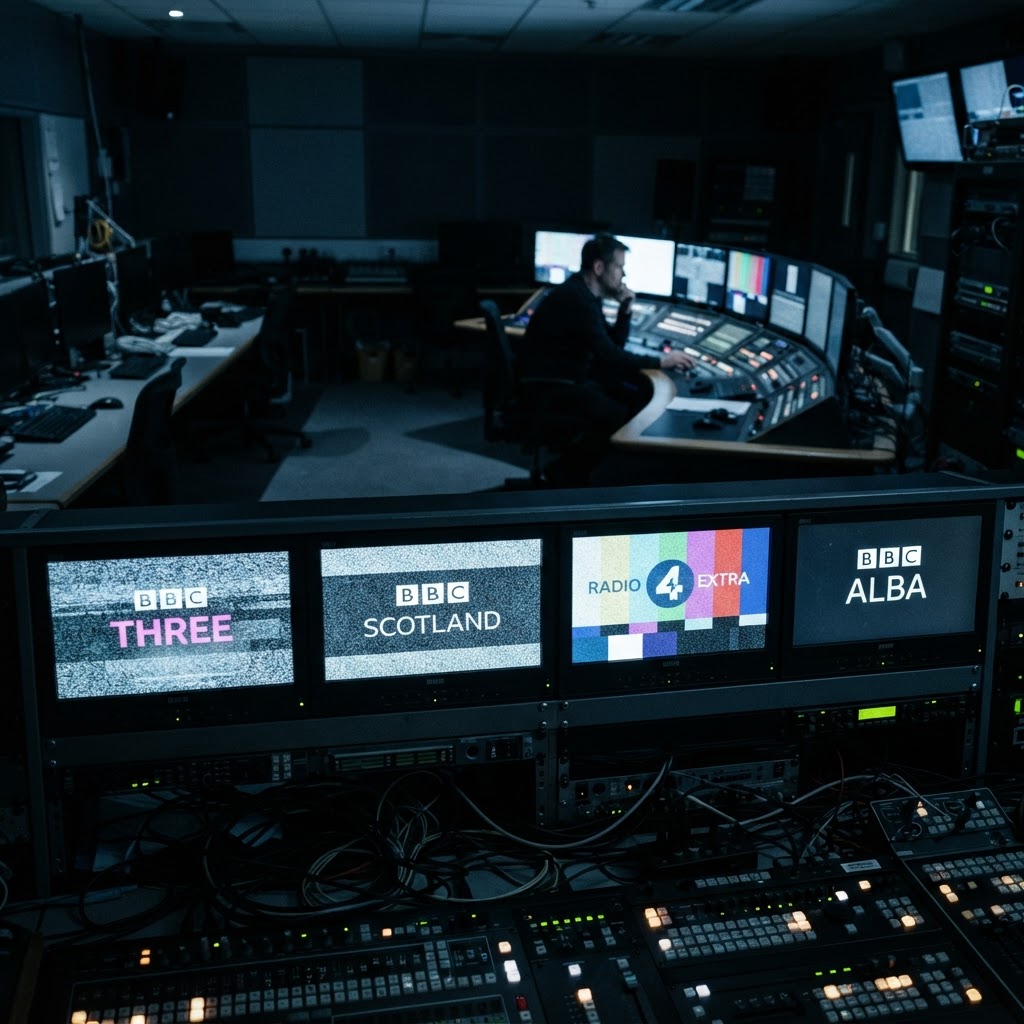
A Diminishing Spectrum: BBC Confirms Sweeping Channel Closures in Efficiency Drive
As the corporation grapples with an ambitious £500 million austerity mandate, the axe has fallen on BBC Three, BBC Scotland, and Radio 4 Extra. This recalibration signals a definitive retreat from linear broadcasting in favour of a digital-first future.
VC
Victoria Cross
Culture Editor
Published 23 October 2026·1 day ago 3 min read
Text
TopicsBBCBroadcastingMediaUK TelevisionLicence FeeDigital Transformation
About the Author
VC
Victoria Cross
Culture Editor
Victoria Cross reports for National Post UK with a focus on rigorous analysis and authoritative journalism — a trusted voice across British public life.
Reader Discussion · 5
Subscribers can join the conversation.
SUBSCRIBE TO COMMENT →J
James L. Sterling23 Oct
The decline of terrestrial television has been obvious for years. The BBC is just finally catching up to the market reality that the current model is no longer sustainable in the digital age.
M
Margaret Foster23 Oct
I suppose we have to accept that times change, but I do hope the funding saved is actually reinvested into quality programming rather than just disappearing into administrative overheads.
D
David Thorne23 Oct
While I understand the need for efficiency, I do worry about the impact on regional representation. BBC Scotland closing feels like a blow to viewers outside of the London-centric bubble who want content that reflects their own daily lives.
S
Sarah Jenkins23 Oct
Honestly, it was inevitable. Most people I know, especially the younger crowd, have moved over to streaming services completely, so clinging to linear channels that nobody watches just doesn't make financial sense.
A
Arthur Penhaligon23 Oct
It is a sad day for broadcasting. Radio 4 Extra provided such a vital service for those of us who appreciate the classics, and losing it feels like another nail in the coffin for public service media.