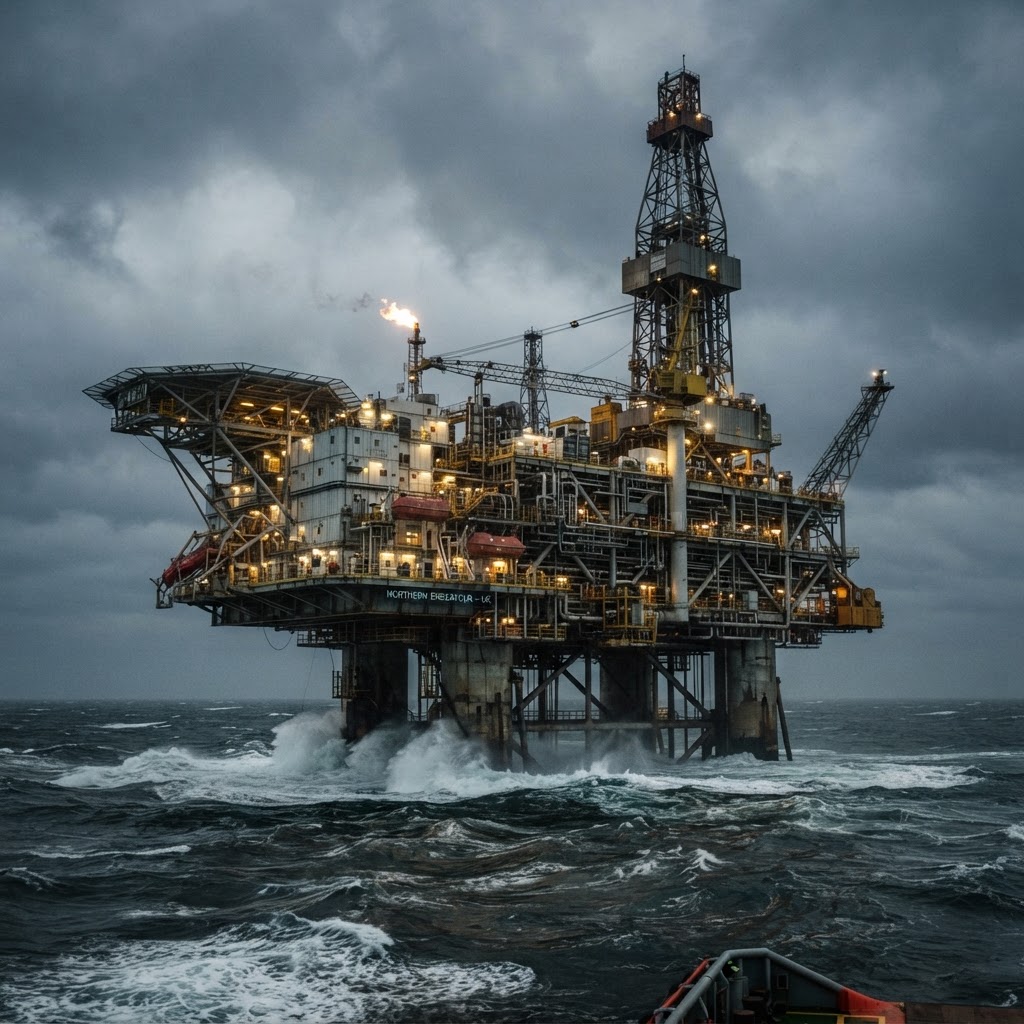
Westminster Greenlights Jackdaw Gas Field to Shore Up National Energy Reserves
The Government has authorised the development of a significant North Sea asset, aiming to insulate the British grid against the volatility of international supply chains. While the move is framed as a critical step for domestic security, it has reignited fierce debate regarding the nation's long-term environmental commitments.
TW
Thomas Ward
Business Editor
Published 22 October 2026·about 2 hours ago 3 min read
Text
TopicsEnergyNorth SeaUK PoliticsClimate ChangeEconomyAberdeen
About the Author
TW
Thomas Ward
Business Editor
Thomas Ward reports for National Post UK with a focus on rigorous analysis and authoritative journalism — a trusted voice across British public life.
Reader Discussion · 9
Subscribers can join the conversation.
SUBSCRIBE TO COMMENT →M
Marcus Sterling22 Oct
The geopolitical reality makes this an unavoidable decision, but it highlights the failure of successive governments to invest in nuclear energy decades ago. We are now left with a difficult choice between being cold or being climate-negligent.
F
Fiona Campbell22 Oct
The government talks about energy security, but will this actually lower our household bills? My concern is that these private operators will simply export the gas to the highest bidder on the continent regardless of our national needs.
D
David Thorne22 Oct
Having worked in the North Sea sector for twenty years, I can tell you that this project is vital for maintaining our domestic supply chain and keeping skilled engineering jobs within the UK. It is a pragmatic step while the transition technology catches up.
S
Sarah Jenkins22 Oct
I am deeply concerned that we are locking ourselves into fossil fuel infrastructure for the next thirty years. Every pound spent on new gas fields is a pound not spent on wind or tidal energy schemes that offer a more sustainable future.
A
Arthur Penhaligon22 Oct
It is about time common sense prevailed. We cannot expect to reach net zero while being entirely dependent on volatile foreign imports for our heating and electricity.
E
Eleanor Rigby22 Oct
It feels like we are constantly kicking the can down the road. I would be interested to see how much of this gas will actually benefit the domestic consumer's energy bills versus being sold off to the highest bidder on the international market.
D
David Thorne22 Oct
Having worked in the North Sea sector for thirty years, I can tell you that local gas is far better for our carbon footprint than importing liquified natural gas on tankers from halfway across the globe. This is the correct decision from an engineering and logistics standpoint.
S
Sarah Jenkins22 Oct
While I understand the need for energy security, I worry this signals that our climate pledges are merely window dressing. We should be investing that capital into renewables instead of doubling down on fossil fuels.
A
Arthur Penhaligon22 Oct
It is about time. We cannot expect to reach net zero while freezing in the dark, so this is a sensible pragmatic move to ensure we have a reliable domestic supply.