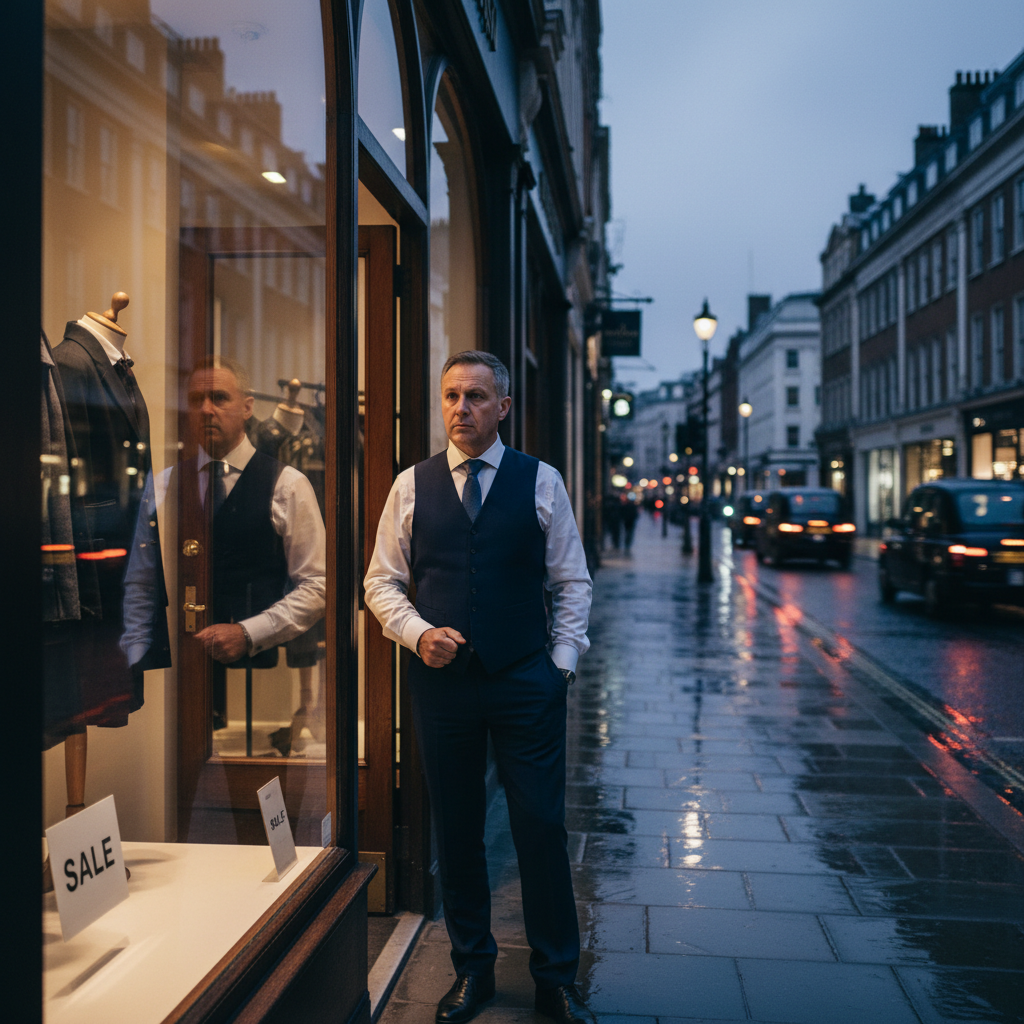
The latest figures from the Confederation of British Industry (CBI) reveal a troubling snapshot of the UK retail sector, which recorded its sharpest sales slump since 2024 in June 2026. According to the CBI's Distributive Trades Survey, retail sales volumes fell well below seasonal norms, raising alarms about economic resilience and consumer spending behaviours.
June's performance drew disappointment from analysts who had hoped for a rebound during the typically buoyant summer months. Instead, the data indicates a year-on-year decline that was sharper than anticipated, as multiple factors conspired to undermine consumer confidence and spending.
The CBI's findings align with the UK Flash Purchasing Managers' Index (PMI) for the same month, which fell to 49.4, signalling the private sector's weakest performance in 14 months. This contraction marks a worrying trend, as a figure below 50 indicates a decline in activity—a development indicative of broader economic stagnation. As financial markets brace for uncertainty and challenges ahead, consumer sentiment appears to be at its lowest ebb in years.
“When political stability is in question, that uncertainty translates into caution at the checkout.”
Persistent Inflation and Economic Pressures
The underlying causes of this steep decline are multifaceted. Persistent inflation in the services sector alongside elevated operational costs continues to squeeze retailer margins. Notably, these pressures are compounded by a reduction in discretionary spending, as consumers tighten their belts in response to ongoing cost-of-living challenges.
“The retail sector is grappling with unprecedented headwinds,” says Laura Green, an economist at the Institute for Fiscal Studies. “With inflation remaining stubbornly high, consumers are prioritising essential goods over discretionary purchases, which has irrevocably skewed spending patterns.”
As inflationary pressures persist—with energy and food prices remaining stubbornly high—retailers are finding it increasingly difficult to maintain profitability. Industry leaders have begun to voice concerns that sustained declines could lead to hard choices, including layoffs and closures, if the situation does not improve.
“A retail environment of this kind is unsustainable without a drastic shift in consumer confidence and economic outlook,” warns Green. “The contrast between consumer essentials and discretionary items is stark, and consumers are feeling the pinch.”
Political Uncertainty Compounds Economic Troubles
The market's uncertainty is further exacerbated by political turmoil following the sudden resignation of Prime Minister Sir Keir Starmer. His unexpected departure from office has left a void in political leadership at a critical moment when cohesive economic strategies are desperately required. Business leaders are bracing for an extended period of uncertainty amid this political upheaval, further impacting consumer sentiment.
Commentators assert that political stability will be integral to restoring confidence among both consumers and investors. The leadership vacuum could deter retail spending, as the public remains cautious regarding future economic directions.
“Consumer confidence is incredibly fragile right now,” states Derek Smith, a retail analyst at London-based consultancy Market Insight. “When political stability is in question, that uncertainty translates into caution at the checkout.”
Industry Responses and Future Outlook
In response to these economic challenges, several major retailers are adjusting their operational strategies. Some companies are re-evaluating their supply chains, while others are exploring price adjustments to cope with increased costs. Retailers are also engaging in promotional campaigns to entice hesitant consumers into stores.
Uncertainties brought on by external factors, including potential changes in fiscal policy, are on the radar of major business players, heightening concerns around the sustainability of current retail practices. “We must adapt swiftly,” urges Sara Jones, CEO of high-street chain Trendy Threads. “The current climate requires innovation and responsiveness to shifting consumer behaviours if we are to survive.”
The road ahead may be rocky for the UK retail sector as it grapples with declining sales volumes, consumer confidence cratering, and a backdrop of political uncertainty. Analysts are keeping a watchful eye on both economic indicators and political developments, as the fabric of the UK's economic landscape continues to evolve.
In this complex environment, retailers will need to be both agile and strategic, navigating the intertwined challenges of consumer behaviour and fiscal constraints. The echo of the June sales slump may be felt long into the future, shaping the strategies that define how retailers engage with an increasingly wary consumer base.
“In an environment of economic contraction and consumer caution, only the most resilient will prevail,” concludes Green as she reflects on the current climate. “Retailers must embrace change to endure this unprecedented landscape.”