National Post UK
State Intervention at Scunthorpe: British Steel Taken Under Government Control as Beijing Issues Stern Warning

The UK government has finalised the nationalisation of the nation’s sole primary steel producer to avert a collapse of t

The National Post

HomeBusiness
Business

State Intervention at Scunthorpe: British Steel Taken Under Government Control as Beijing Issues Stern Warning

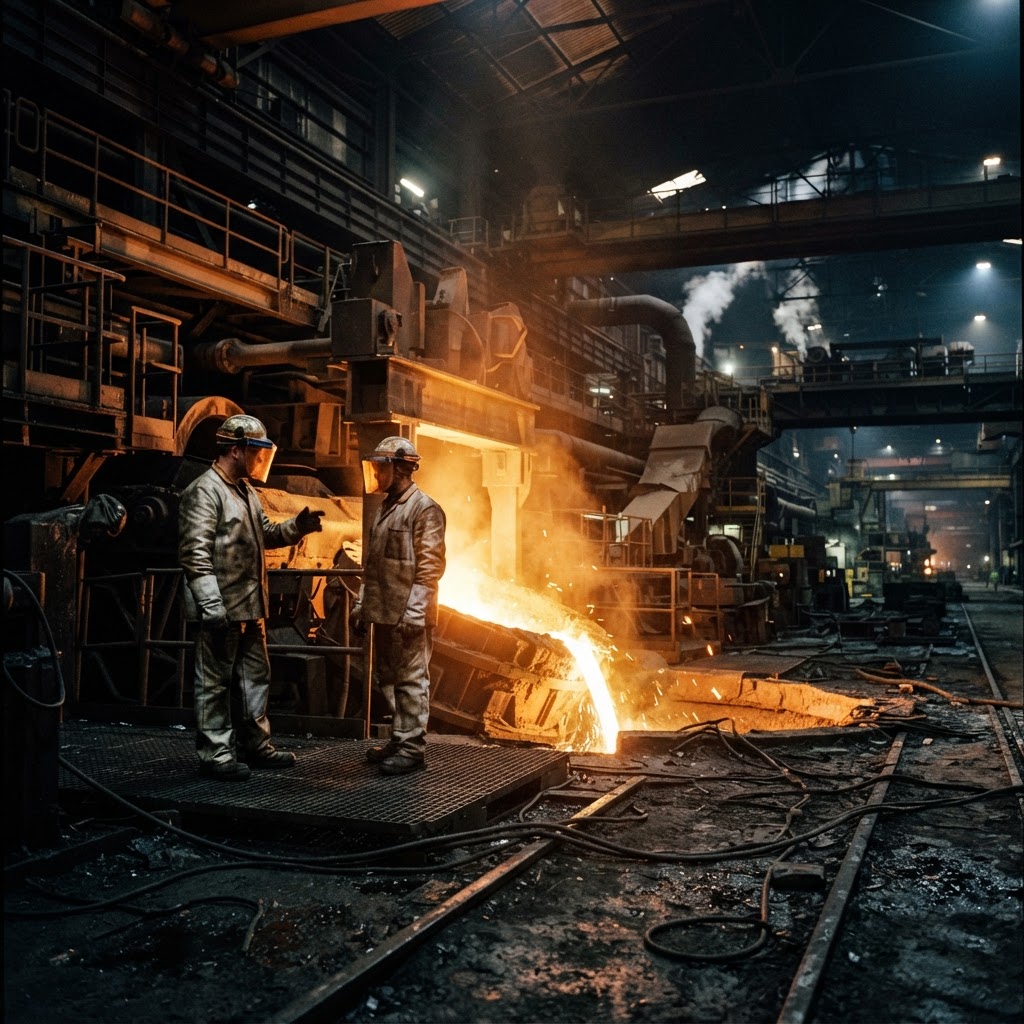
The UK government has finalised the nationalisation of the nation’s sole primary steel producer to avert a collapse of the Scunthorpe works. The move, however, has ignited a sharp diplomatic row with China, casting a pall over future bilateral investment.

RS

Rachel Simmons

Business Editor

Published 17 July 2026·4 months ago 3 min read
Text
Share

A Last Resort for Industrial Strategy In a move that signals a decisive shift toward interventionist industrial policy, the UK government has formally assumed ownership of British Steel. The nationalisation, finalised this morning of 17 July 2026, marks the end of a turbulent six-year tenure for the Chinese conglomerate Jingye Group. Faced with an unsustainable daily haemorrhage of £700,000, the firm had become an economic liability that Whitehall could no longer permit to drift toward liquidation.

The collapse of Jingye’s operational model, which saw the cancellation of critical raw material orders earlier this year, left the government with little room for manoeuvre. With 2,700 high-skilled jobs in Scunthorpe at stake, alongside the precarious stability of the wider domestic supply chain, ministers determined that British Steel’s status as the nation's sole producer of primary steel rendered it a national asset of unavoidable strategic importance.

The Weight of Steel in British Defence The significance of this facility extends far beyond regional employment. As a key supplier to the UK rail network, major construction infrastructure, and the defence sector, the Scunthorpe works are fundamental to national resilience. Recent geopolitical shifts have only heightened the necessity of a sovereign steel supply chain, as reliance on volatile global imports has repeatedly exposed the fragility of British industrial capacity.

Economists have long argued that the UK’s flirtation with 'just-in-time' supply chain reliance in heavy industry has been a strategic oversight. By taking the keys to the Scunthorpe plant, the government is signalling that basic manufacturing, particularly in metallurgy, is no longer a peripheral concern but a central pillar of national security.

A Diplomatic Fracture The decision has not been met with diplomatic silence. Within hours of the announcement, the Chinese embassy in London issued a sharp rebuke, cautioning that the seizure of a Chinese-owned asset has 'severely undermined' the trust of international investors in the UK market. This diplomatic friction adds a complex layer to an already fragile trade relationship between London and Beijing.

Financial analysts suggest that while the nationalisation may stabilise the plant in the immediate term, it carries a risk of deterring foreign direct investment in other sectors. If foreign capital perceives that the threshold for state intervention is now lower, the government may find it more expensive to attract the investment required to green the nation’s industrial base.

“The move signifies a pivot toward an industrial strategy where the preservation of national capability is deemed a higher priority than the fluctuations of private equity ownership.”


The Long Road to Viability The challenges facing the new state-led administration are immense. Beyond the immediate financial losses, the plant requires significant capital investment to transition toward electric arc furnaces and carbon-neutral production. Whether the taxpayer can support such a transformation without a long-term commercial roadmap remains a point of intense scrutiny in Westminster. As the government charts this uncertain path, the spectre of the losses incurred by the previous owners serves as a stark reminder of the volatility inherent in modern global steel markets.

TopicsBritish SteelScunthorpeUK GovernmentJingye GroupIndustrial StrategyChinaManufacturingEconomy
Share

About the Author

RS

Rachel Simmons

Business Editor

Rachel Simmons reports for National Post UK with a focus on rigorous analysis and authoritative journalism — a trusted voice across British public life.

Reader Discussion · 12

Subscribers can join the conversation.

SUBSCRIBE TO COMMENT →
E
Eleanor Rigby17 Jul

The real issue is the lack of energy policy that has made British industry uncompetitive for years. Nationalisation is just a sticking plaster until we fix the underlying costs.

M
Marcus Vane17 Jul

Beijing’s warning is clearly posturing, but we should be mindful of trade retaliations. We need steel for our infrastructure projects, so keeping this domestic is a strategic necessity.

F
Fiona Campbell17 Jul

This is a dangerous precedent to set in a globalised economy. The government should be focused on creating an environment for private enterprise, not picking winners and losers.

D
David Thorne17 Jul

My father worked at the Scunthorpe plant for thirty years. It is a relief to see some security for the workers, though I question how the government plans to modernise the infrastructure.

S
Sarah Jenkins17 Jul

I am worried about the cost to the taxpayer. We have seen this happen before, and it rarely ends with a profit for the public purse.

A
Arthur Penhaligon17 Jul

About time too. Our industrial heritage shouldn't be left to the whims of overseas venture capitalists who have no interest in the long-term stability of the region.

J
James H. Miller17 Jul

I suspect this is merely a sticking plaster on a much deeper structural problem with the UK manufacturing sector. Unless there is a genuine plan to modernise the infrastructure, this will be a money pit.

M
Mark Sterling17 Jul

It is a necessary step to secure the supply chain for our construction and defence sectors. Without domestic steel, we are entirely too vulnerable to global market fluctuations.

E
Eleanor Rigby17 Jul

The geopolitical implications of this are significant. Beijing warning us is rather rich considering their own state subsidies, but it does show we are entering a new era of protectionism.

D
David Thorne17 Jul

My grandfather worked at the Scunthorpe plant for forty years, so this news brings a small amount of relief to the local families. Let us hope the management focus remains on efficiency rather than just keeping the doors open.

S
Sarah Jenkins17 Jul

I am worried about the cost to the taxpayer here. We have seen government-run enterprises fail before and I doubt this will be any different in the long run.

A
Arthur Penhaligon17 Jul

About time too. Our sovereign industrial capability is not something we should be outsourcing to the lowest bidder, regardless of who owns the company.

More from Business

Most Read in Business

Morning Briefing

The day's top stories, before 7am

Join 40,000 readers who start their morning with National Post UK.