National Post UK
Healey’s First Budget: A Delicate Balancing Act for British Enterprise

The Chancellor has pledged targeted relief for the retail and hospitality sectors, alongside a significant wage hike for

The National Post

HomeBusiness
Business

Healey’s First Budget: A Delicate Balancing Act for British Enterprise

The Chancellor has pledged targeted relief for the retail and hospitality sectors, alongside a significant wage hike for the nation’s lowest earners. As the government attempts to stimulate growth, the removal of energy standing charges signals a major shift in household fiscal support.

TW

Thomas Ward

Business Editor

Published 30 October 2026·about 5 hours ago 3 min read
Text
Share

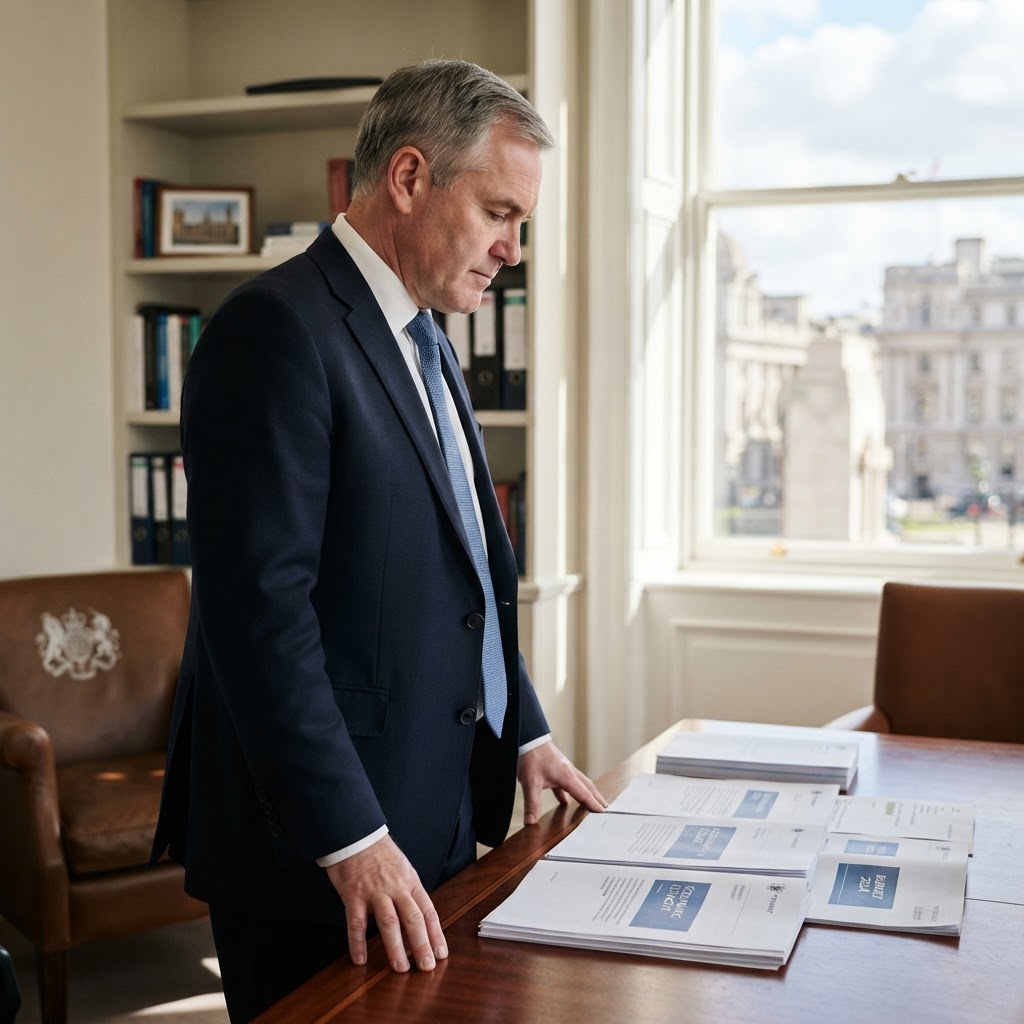
A New Fiscal Direction In a debut Budget that sought to reconcile the competing demands of economic expansion and fiscal prudence, Chancellor John Healey stood at the despatch box on Thursday to outline a vision for the British economy. With the backdrop of sluggish growth and persistent inflationary pressures, the government’s approach was characterised by a cautious optimism, leaning heavily into support for the high street while managing a complex transition in the national energy market.

Business Rates and the High Street The headline announcement for the business community was the significant revision of the business rates relief threshold. By lifting the ceiling for retail, hospitality, and leisure businesses from £12,000 to £18,000, the Chancellor has effectively provided a lifeline to thousands of SMEs operating on razor-thin margins. Analysts suggest this adjustment recognises the reality of the current commercial landscape, where the cost of physical retail space often outpaces profitability. For high street establishments struggling to recover from the post-pandemic slump, the measure offers a tangible, if narrow, reprieve.

The Wage Floor Adjustment Simultaneously, the government confirmed an increase of 3.9 per cent in the National Living Wage and National Minimum Wage. Whilst framed as a necessary intervention to support workers during a period of sustained high living costs, the move has drawn a mixed reaction from business lobby groups. While the Confederation of British Industry noted the positive impact on consumer spending power, many smaller firms have warned that the compounded pressure of increased wage bills, coupled with broader economic uncertainties, may hinder hiring plans in the coming fiscal year.

Addressing the Energy Burden Perhaps the most populist measure announced by the Chancellor was the commitment to abolish standing charges on domestic gas bills by next year. This structural reform represents a significant departure from previous energy market interventions, which often prioritised short-term price caps over fundamental billing transparency. By removing the fixed daily cost regardless of usage, the government aims to alleviate the disproportionate impact on lower-income households who rely on moderate energy consumption. Energy industry analysts have cautiously welcomed the news, noting that whilst the transition will require a re-evaluation of how network infrastructure costs are recovered, it is a clear step toward addressing fuel poverty.

The Spirits and Producers Sector In the realm of alcohol duty, the Chancellor adopted a bifurcated approach. The Small Producer Relief scheme is set to be expanded, offering a welcome stimulus to over 2,000 independent brewers and distillers. This move is expected to foster innovation in the artisan beverage market, reinforcing the UK's reputation for high-quality production. However, this optimism is tempered by the announcement that alcohol duty will rise in line with the Retail Price Index (RPI) from 1 February 2027. Furthermore, with products above 8.5 per cent ABV remaining firmly outside the relief criteria, the industry is bracing for a sustained increase in production costs as the government seeks to bolster tax receipts in the medium term.

Expert Perspectives Economists have pointed to the Chancellor's speech as a classic exercise in political signalling. By focusing on direct business rates relief and household energy bills, Healey is attempting to cultivate a pro-growth image while maintaining the fiscal discipline demanded by international markets. Yet, the lack of a broader strategy for long-term productivity remains a point of contention among opposition benches. As the UK looks toward 2027, the success of this Budget will depend not on the immediate relief provided, but on whether these measures can genuinely stabilise the foundations of British commerce in an increasingly volatile global landscape.

TopicsBudget 2026John HealeyBusiness RatesEconomyUK PoliticsCost of Living
Share

About the Author

TW

Thomas Ward

Business Editor

Thomas Ward reports for National Post UK with a focus on rigorous analysis and authoritative journalism — a trusted voice across British public life.

Reader Discussion · 10

Subscribers can join the conversation.

SUBSCRIBE TO COMMENT →
G
Graham Sterling30 Oct

Economic prudence is all well and good, but you cannot tax your way to prosperity. I hope the government stays the course and doesn't backtrack when the inevitable lobbying begins.

F
Fiona MacLeod30 Oct

As a small business owner in the hospitality sector, I was hoping for more specific support regarding business rates. This feels like a missed opportunity to provide genuine, immediate relief to the high street.

D
David Thorne30 Oct

An interesting balancing act indeed, though the proof will be in the implementation. If he manages to curb inflation while stimulating growth, he will have pulled off a minor miracle.

S
Sarah Jenkins30 Oct

I am not convinced this will actually trickle down to those of us on the ground. Everything costs more now, and this Budget seems to focus far too much on large corporations while the average household continues to struggle.

A
Arthur Penhaligon30 Oct

It is a sensible start from the Chancellor. We desperately needed a move away from stagnation, and this focus on enterprise might finally give small businesses a bit of breathing room.

M
Marcus Sterling30 Oct

Empty rhetoric once again. We have heard promises of growth for a decade, yet the tax burden on enterprise remains at a record high. Actions speak louder than budget speeches.

E
Eleanor Rigby30 Oct

My small manufacturing business has been waiting for some clarity on tax relief for years now. This is a welcome step in the right direction, provided the implementation is straightforward.

D
David Thorne30 Oct

I am interested to see how the fiscal prudence measures hold up once the Office for Budget Responsibility publishes their full forecast. Balancing the books without stifling growth is rarely as simple as a speech makes it sound.

S
Sarah Jenkins30 Oct

All well and good in theory, but where is the actual support for those of us struggling with rising energy costs? It feels like another budget built for the City while the high street is left behind.

A
Arthur Penhaligon30 Oct

It is a tough needle to thread, but Healey seems to have avoided the worst-case scenarios. I am cautiously optimistic about the proposed investment incentives for SMEs.
More from Business

Most Read in Business

Morning Briefing

The day's top stories, before 7am

Join 40,000 readers who start their morning with National Post UK.