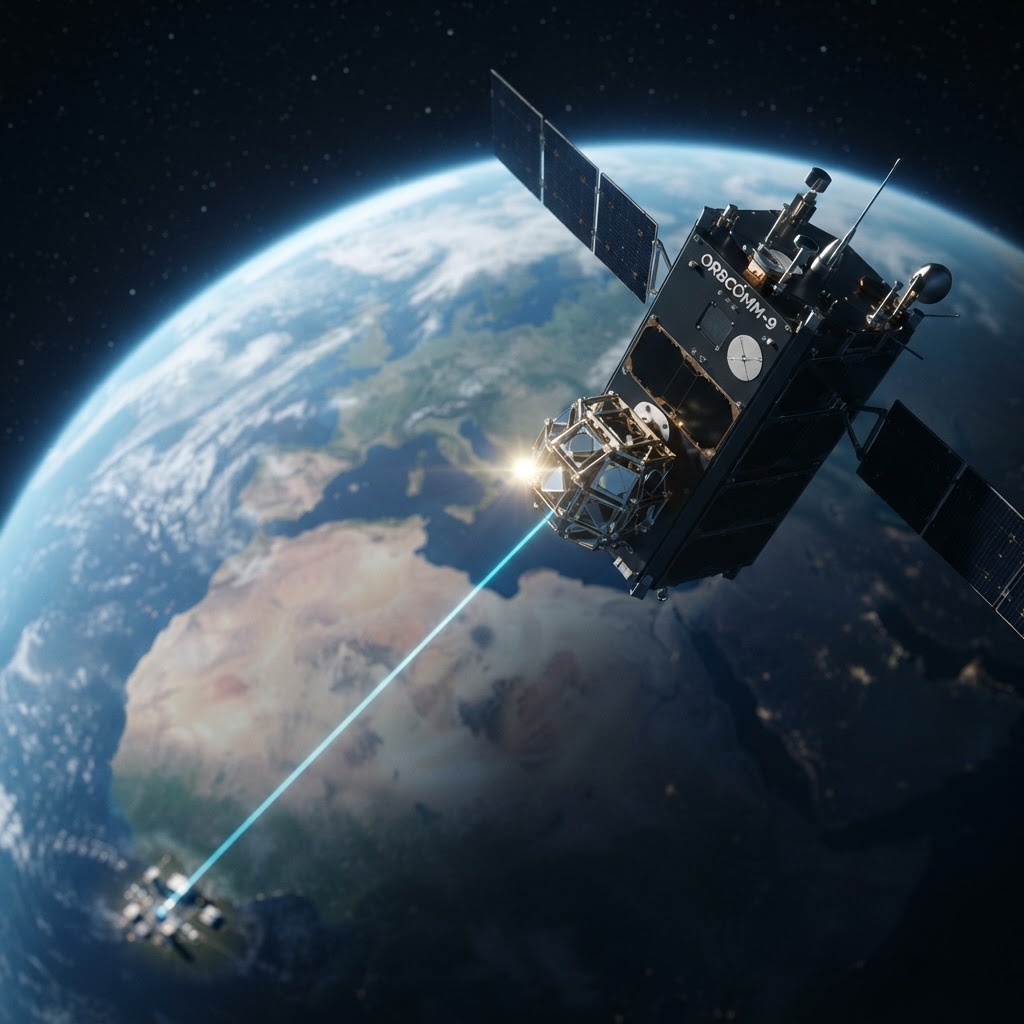
A New Chapter for Orbital Stewardship In the quiet corners of the British space sector, a quiet revolution is taking shape. Foundational.Space, the London-based startup that emerged from stealth just last month with an impressive 8.2 million pounds in pre-seed funding, has officially unveiled its flagship technology. The Retro-2 device, a masterclass in minimalist engineering, promises to solve one of the most persistent headaches facing space agencies and private operators alike: how to accurately track satellites without relying on power-hungry or failure-prone onboard systems.
The device, which weighs a mere 50 grams, is a passive laser retroreflector. Unlike the traditional suite of electronic sensors, transponders, and GPS receivers that occupy the limited real estate of a small satellite, the Retro-2 requires no electricity, no command signals, and zero maintenance. It is an elegant, fixed-hardware solution to a dynamic, high-velocity problem.
The Gold Standard of Ranging Laser ranging has long been considered the gold standard for orbital measurement. By bouncing pulses of light off a target and measuring the round-trip time, ground stations can determine a satellite’s position with a degree of accuracy that makes traditional radar look rudimentary. While radar and optical tracking systems have served the industry for decades, they often fall short when pinpointing small objects in low Earth orbit (LEO), an environment currently undergoing unprecedented levels of congestion.
During recent demonstration missions, the Retro-2 system demonstrated its mettle, recording 6,111 laser returns with an average uncertainty of a staggering 0.6 millimetres. This level of precision is not merely a technical novelty; it is a vital necessity for the future of space traffic management. As the number of commercial constellations increases, the risk of orbital collisions becomes a genuine economic and environmental threat to the global satellite infrastructure that powers our telecommunications and navigation networks.
Engineering for the Horizon One of the primary challenges with existing ground-to-space tracking has been the window of opportunity for detection. Traditional reflectors often suffer from narrow fields of view, making it difficult to maintain a lock as a satellite crosses the sky. The Foundational.Space team has bypassed this limitation with a 160-degree acceptance angle. This wide-angle performance ensures that ground stations can track a craft from the moment it clears the horizon until it passes directly overhead.
For the UK government, which has placed the national space strategy at the heart of its post-Brexit innovation agenda, this technology arrives at a critical juncture. The Department for Science, Innovation and Technology has been vocal about the need for better situational awareness to protect domestic assets. Foundational.Space, by building a lightweight and low-cost solution, is positioning itself as a key supplier for both commercial providers and sovereign space missions.
“By stripping away the need for electronics, they have removed the risks of system failure and radiation damage that plague traditional hardware.”
The Path Ahead While the initial success at the Space Tech Expo Europe has provided a launchpad for the company, the real test will be scaling production for the burgeoning market of small-satellite manufacturers. The team, led by a cadre of engineers and former academic researchers, appears to understand the imperative of affordability. By stripping away the need for electronics, they have also removed the risks of system failure and radiation damage that plague traditional hardware.
As we look toward 2027 and beyond, the data provided by these reflectors will form the backbone of a new generation of traffic management systems. In an era where space debris is no longer a theoretical concern but a operational reality, the ability to know precisely where every object in orbit is located is not just a luxury—it is an essential requirement for the sustainable exploration and exploitation of the final frontier.