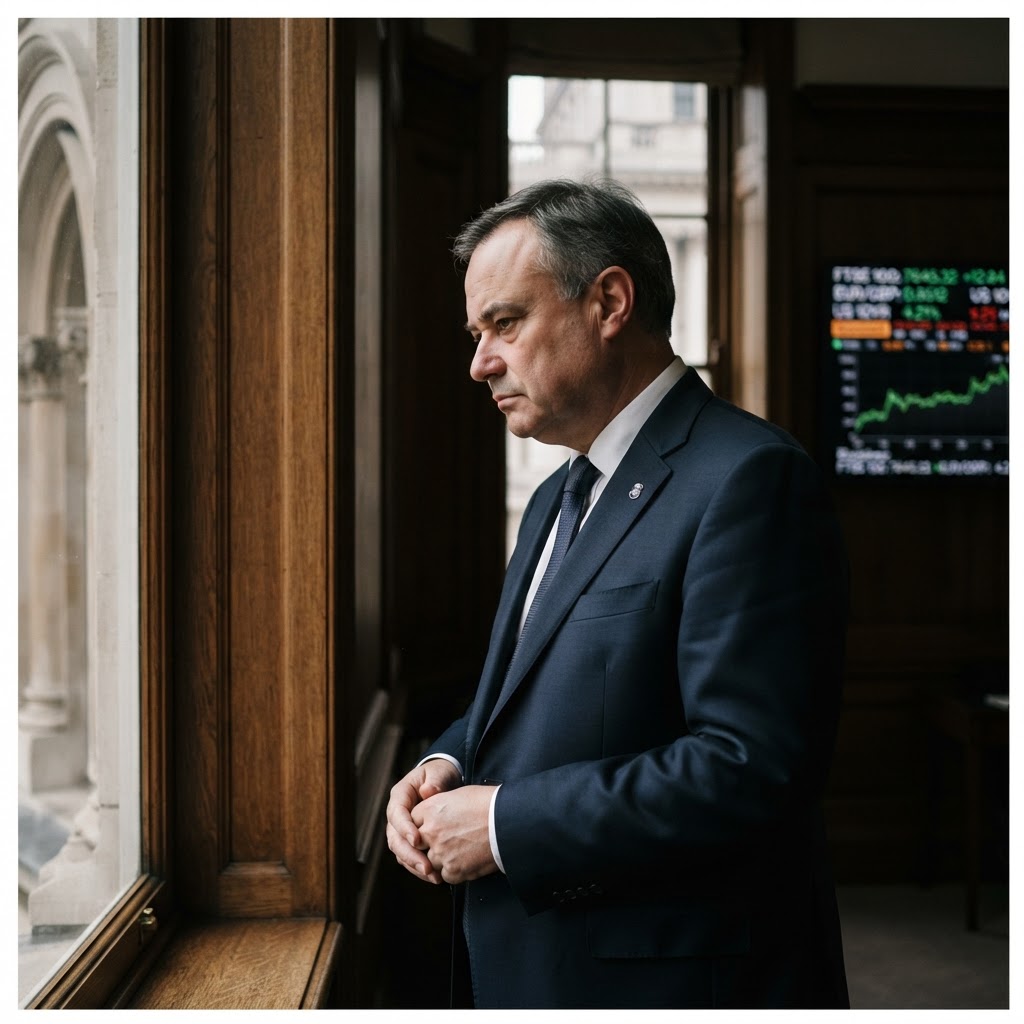
Monetary Policy Committee Signals Long-Term Tightening as Rates Climb to 4%
The Bank of England has ended its three-year period of monetary stasis with a quarter-point increase. Policymakers cite persistent inflationary pressures that threaten to overshoot the 2% mandate well into the coming year.
MS
Marcus Stone
Finance Correspondent
Published 6 November 2026·about 4 hours ago 3 min read
Text
TopicsBank of EnglandInterest RatesUK EconomyInflationFinanceMonetary Policy
About the Author
MS
Marcus Stone
Finance Correspondent
Marcus Stone reports for National Post UK with a focus on rigorous analysis and authoritative journalism — a trusted voice across British public life.
Reader Discussion · 6
Subscribers can join the conversation.
SUBSCRIBE TO COMMENT →F
Fiona Campbell6 Nov
I am struggling to see how this will help with the supply-side issues that are actually driving most of the inflation. Raising rates seems like a blunt instrument for a very complex economic problem.
G
Graham Miller6 Nov
The base rate alone isn't the whole story. Commercial lenders are widening their margins regardless of what Threadneedle Street does, so the real-world impact is always worse than the headlines suggest.
E
Elena Rodriguez6 Nov
It is about time savers saw a decent return on their capital. For years we have been punished by near-zero rates, so this shift is a long overdue normalization.
D
David Thorne6 Nov
While I understand the logic behind the increase, I worry that we are risking a deep recession. The lag effect of these hikes is significant, and I fear the Committee is over-correcting.
S
Sarah Jenkins6 Nov
Another interest rate hike is the last thing my family needs right now with our fixed-rate deal ending in June. It feels like the Bank of England is just squeezing the life out of middle-income households to solve a problem that wasn't of our making.
A
Arthur Sterling6 Nov
Finally, the MPC is showing some backbone. Controlling inflation has to be the absolute priority, even if it makes borrowing more expensive for a while.