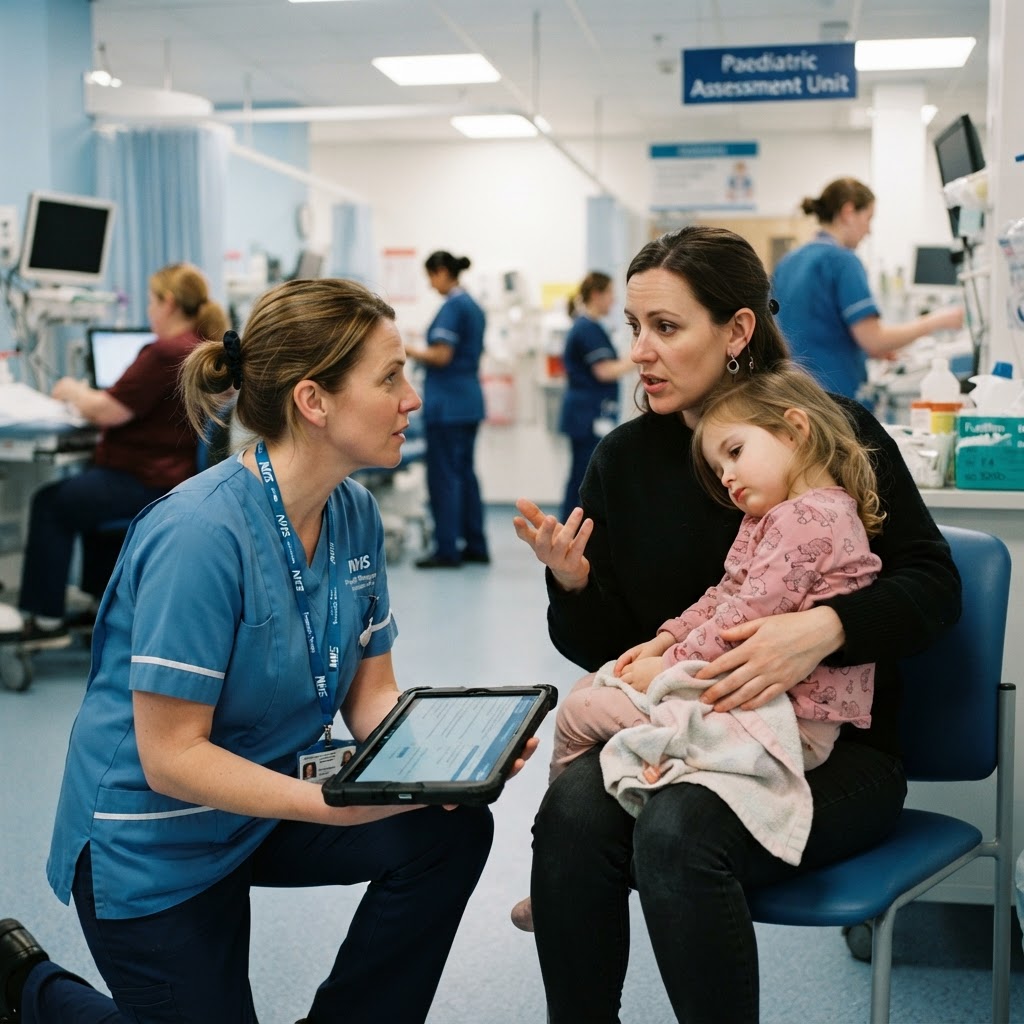
A new national initiative mandates that clinical teams prioritise the intuition of parents and children during A&E visits. This structural change seeks to bridge the gap between medical assessment and the lived experience of those closest to the patient.
A Shift in Clinical Culture
For decades, the standard operating procedure within the National Health Service has relied almost exclusively on the clinical intuition and empirical diagnostic tools of medical professionals. However, a significant policy shift unveiled this week marks a fundamental change in how emergency departments across England will manage the care of paediatric patients. Under the new protocol, the concerns of parents, carers, and children themselves are no longer secondary observations; they are now mandated triggers for an immediate, senior-led review of care.
Valuing the Parental Instinct
The impetus for this change stems from a growing body of evidence suggesting that those closest to a child are often the first to recognise when a deterioration is imminent, even when clinical indicators may appear stable. NHS England has formally integrated this perspective into emergency department workflows, creating a systemic safeguard against the diagnostic oversight that can occur in high-pressure environments. By enshrining the right to a second opinion or an escalation of care, the service is acknowledging that medical expertise and parental instinct are complementary, rather than competing, sources of diagnostic value.
Addressing Systemic Gaps
Health professionals have long navigated the fine line between proactive intervention and the resource constraints of an overwhelmed emergency system. Critics of the current model often highlight the 'diagnostic overshadowing' that can occur when busy clinicians move quickly from one case to the next. The new guidance provides a formal framework for families to halt that momentum. If a parent senses that their child is not receiving the appropriate level of attention, or if they observe a decline that has not been captured by the triage nurse or attending doctor, the new mandate requires a senior consultant to intervene and re-evaluate the patient's status.
Expert Perspectives
Medical advocates have broadly welcomed the policy, noting that it aligns with a wider cultural shift towards patient-centred care. Dr Sarah Jenkins, a paediatric specialist, noted that the initiative acts as a safety net in the most challenging environments. It is a matter of integrating the expertise of the parents with the technical knowledge of the consultant to ensure nothing is missed in the assessment process. By standardising this, the NHS is creating a culture where staff are encouraged to listen more closely and act with greater transparency.
The Road Ahead
As these protocols are rolled out across the country, the challenge for NHS trusts will be the practical implementation of such a high-stakes directive. With emergency departments consistently facing unprecedented demand, ensuring that senior staff are available to handle escalated concerns will require careful operational planning. Yet, the consensus remains that the risk of failing to listen to a parent far outweighs the operational cost of an additional review. This initiative represents a maturing of the service, placing trust in the family as a partner in the clinical journey, and potentially setting a precedent for wider changes in how the NHS approaches its most vulnerable patients.