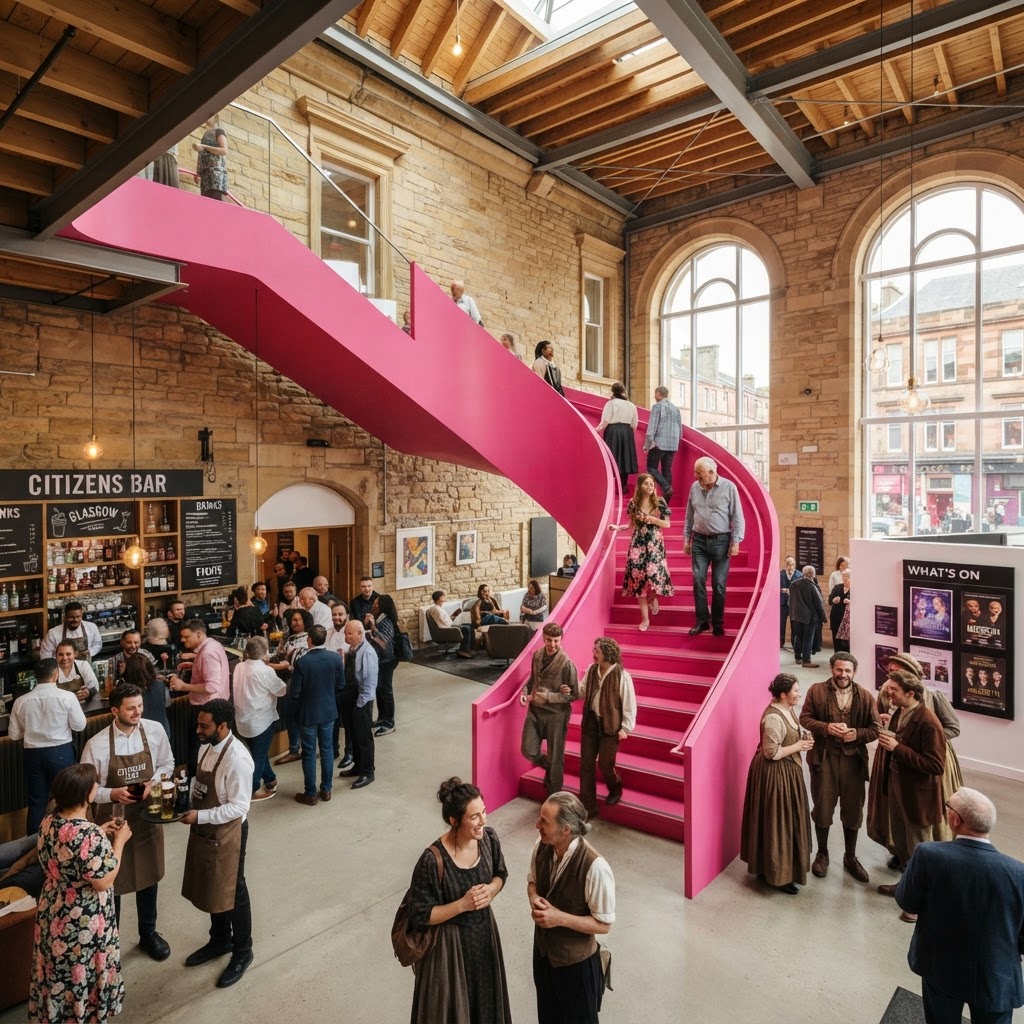
A Testament to Artistic Resilience In the heart of Glasgow, a district once defined by industrial struggle now stands as the epicentre of British theatrical excellence. On 2 November 2026, the Citizens Theatre—affectionately known as 'The Citz'—was named the overall winner at the inaugural Great British Theatres Awards. The ceremony, hosted by the Theatres Trust in London, served as the centrepiece of the organisation's 50th-anniversary celebrations, marking half a century of advocacy for the UK's performance spaces.
The award recognises more than mere box-office receipts or production value; it evaluates the profound impact an institution has on its local community and the broader cultural topography of the nation. For a theatre that emerged from the social fabric of the Gorbals, this accolade is a vindication of its enduring commitment to accessible, challenging, and socially conscious art.
The Evolution of a Cultural Icon Founded in 1943, the Citizens Theatre has long been regarded as a crucible for radical theatre. Its history is entwined with the likes of Giles Havergal, Philip Prowse, and Robert David MacDonald, who famously transformed the theatre into an internationally renowned powerhouse during the 1970s and 80s. Today, under the current leadership, the theatre continues to bridge the gap between experimental performance and the aspirations of the local Glasgow population.
The Theatres Trust noted that the Citizens Theatre's recent programme demonstrated an exceptional ability to engage diverse audiences while maintaining rigorous artistic standards. As the UK theatre sector faces unprecedented fiscal pressures, the 'Citz' has managed to sustain its relevance by positioning itself not merely as a venue, but as a community anchor. Its outreach programmes, which serve schools and marginalised groups across the West of Scotland, were highlighted by the judges as a model for regional institutions nationwide.
Sustainability and the Future of the Stage The awards evening also turned its gaze toward the environmental future of the performing arts. While the Citizens Theatre took the premier prize, the Chichester Festival Theatre was lauded as the 'Great Green Theatre', a category that reflects the industry's pivot toward sustainable production methods. Chichester’s implementation of energy-efficient lighting and waste-reduction protocols signifies a broader trend among major venues to address their carbon footprints without compromising the spectacle that audiences expect.
This dual focus—on social accessibility and environmental responsibility—suggests that the modern theatre must function as a microcosm of society. Jon Morgan, Director of the Theatres Trust, remarked that the inaugural awards were designed to highlight the resilience of venues in a post-pandemic, inflation-stricken economy. He noted that the survival of such institutions is a prerequisite for a healthy public sphere, providing spaces where citizens can engage with complex, often uncomfortable, ideas in a communal setting.
“The Citizens Theatre has managed to sustain its relevance by positioning itself not merely as a venue, but as a community anchor.”