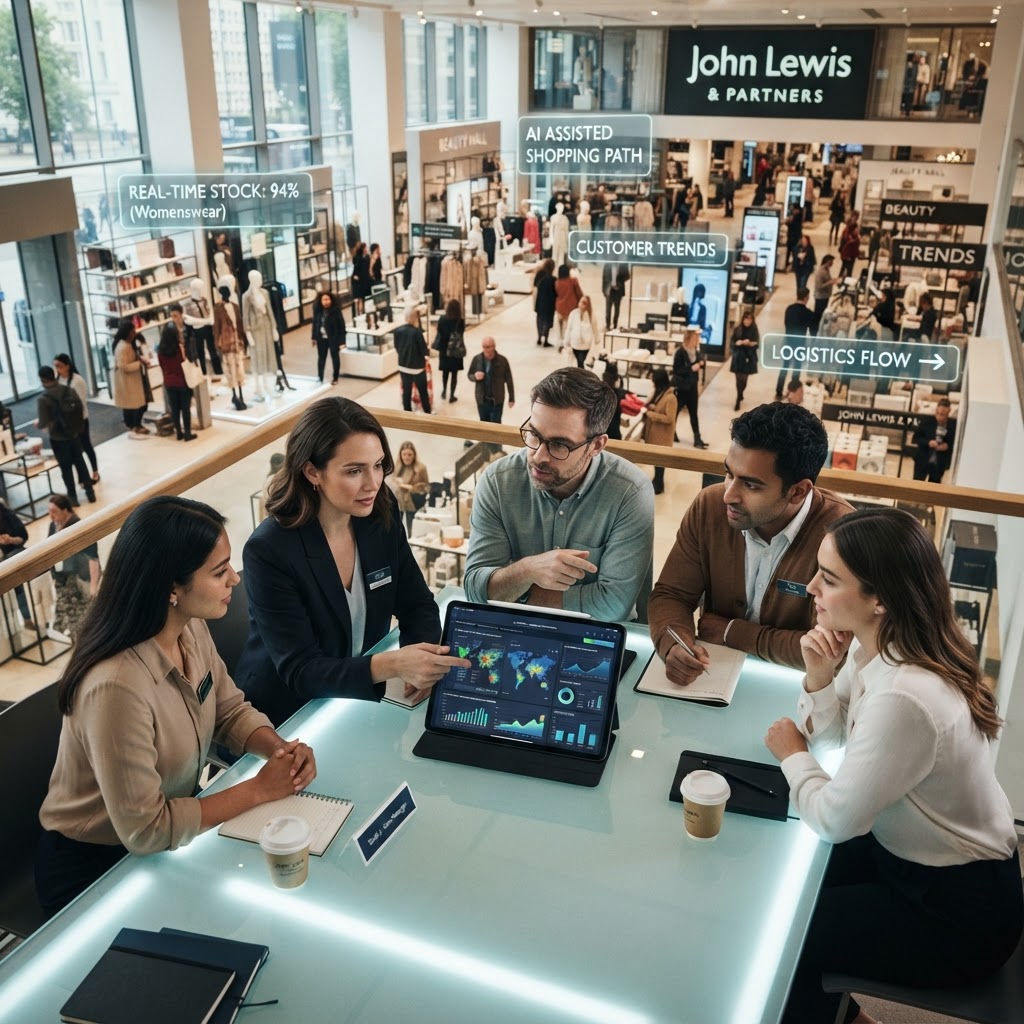
The End of Experimentation For several years, the British high street and its digital counterparts have treated artificial intelligence as a peripheral laboratory exercise—a suite of interesting but non-essential pilots designed to test the limits of automation. That era has now drawn to a definitive close. On November 3, 2026, the retail sector officially moved beyond the trial phase, signaling a transition from isolated experimentation to the deployment of AI as core operational infrastructure.
The announcement follows a sustained period of rapid technological adoption across the FTSE 350, where major retailers have moved to integrate algorithmic processing into their supply chains, customer service portals, and inventory management systems. According to data released by Google, the industry has hit a decisive tipping point. It is no longer a question of whether these firms will implement machine learning, but rather how deeply they can embed these systems into the fabric of their daily commerce.
Reframing the Consumer Experience This structural shift is particularly evident in how British retailers are now managing the intersection of online convenience and physical storefront management. Historically, automated retail solutions were largely focused on simple chatbots or basic demand forecasting. Today, the scale of integration has broadened. Retailers are deploying generative models to personalize shopping experiences in real-time, matching individual consumer profiles with bespoke product offerings that evolve as the customer navigates the digital interface.
For the consumer, the transition is subtle but profound. Predictive logistics are now standard, ensuring that stock levels in regional distribution hubs are managed with a precision that was unattainable only five years ago. This efficiency is critical for a UK economy struggling with complex supply chain pressures and fluctuating consumer confidence. By utilizing AI to anticipate demand surges before they manifest, retailers are significantly reducing the capital tied up in excess inventory.
Expert Analysis on Economic Impact Dr. Elena Vance, a senior economist tracking retail innovation, suggests that this shift is a necessary evolution for the British market. 'The pilot phase was essentially a period of digital literacy training for the sector,' she observes. 'Now, we are seeing the application of that literacy at scale. We are moving from the era of digital tools to the era of digital backbone. The companies that fail to integrate these systems into their core operations will find themselves at a severe structural disadvantage within the next twenty-four months.'
Indeed, the pressure to integrate is not merely about cost-cutting. It is about the fundamental transformation of the retail business model. With labour costs rising and the competition for talent intensifying, firms are leveraging AI to automate back-office functions, from payroll management to complex vendor contract analysis. This allows retail groups to refocus their human capital on areas that require empathy, creative strategy, and direct brand-building—elements that continue to define the premium British retail experience.
“We are moving from the era of digital tools to the era of digital backbone, where the companies that fail to integrate these systems into their core operations will find themselves at a severe structural disadvantage.”
The Road Ahead Despite the optimism surrounding this transition, significant challenges remain. The integration of high-level AI requires robust cybersecurity protocols and a transparency framework that satisfies increasingly stringent UK regulatory standards. Furthermore, the migration of operational data into unified AI systems necessitates a level of technical debt management that many traditional retail firms have previously deferred. As the industry crosses this tipping point, the distinction between a 'tech company' and a 'retailer' will become increasingly blurred, with the most successful firms operating as entities that are, first and foremost, data-driven platforms.
As we close the chapter on the experimental pilot phase, the UK retail landscape stands on the precipice of a broader, more integrated industrial evolution. The coming years will be defined by those who can best balance the efficiency of automation with the unique nuances of the British consumer, proving that technology, when deployed with purpose, remains the most powerful tool for commercial resilience.