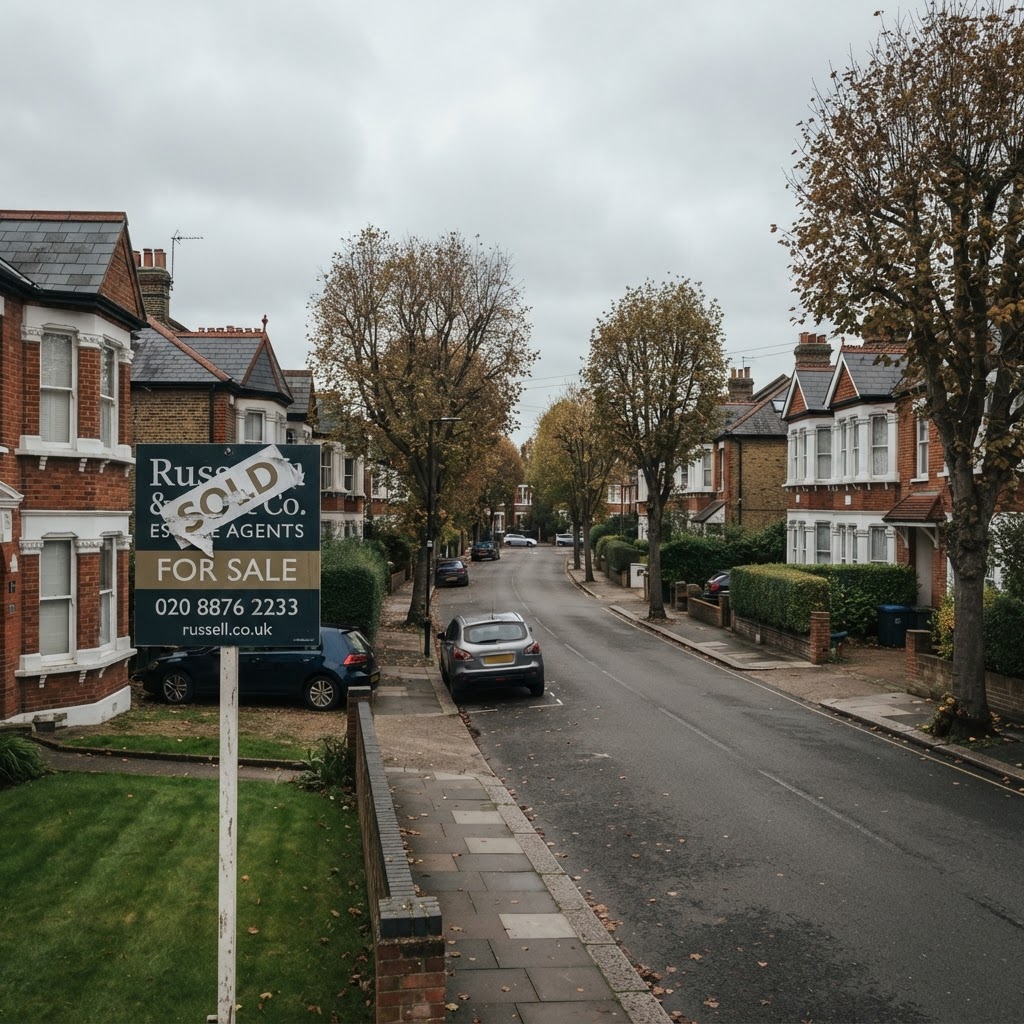
A Landscape of Caution The British property market, often regarded as the bellwether for the wider national economy, is exhibiting clear signs of exhaustion. Data released on 30 October 2026 confirms that annual house price growth has decelerated to its weakest point since January 2024. This cooling effect is not merely a seasonal fluctuation but reflects a profound shift in sentiment among both prospective buyers and established homeowners.
The stagnation follows in the wake of the latest UK Budget, which appears to have introduced a measure of fiscal trepidation into the market. As households digest the implications of the government's economic agenda, the buoyancy that defined the early months of the year has largely evaporated. Where developers and estate agents previously spoke of resilient demand, the conversation has shifted toward the limitations of mortgage affordability and the cautious approach being adopted by major lenders.
The Weight of Economic Uncertainty Central to this deceleration is a confluence of macro-economic pressures. Inflation remains a persistent, if controlled, concern, forcing the Bank of England to maintain a guarded stance on interest rates. Potential homeowners are finding themselves in a difficult position: while the days of rapid, double-digit growth are over, the cost of borrowing remains high enough to necessitate a rigorous reappraisal of budgets. For many, the decision to commit to a long-term mortgage has been deferred until there is greater clarity regarding future rate adjustments.
Economists have noted that the current environment is one of 'wait and see'. The uncertainty stemming from the October fiscal statement has created a paralysis of sorts. Sellers, who have grown accustomed to the high valuations of the previous cycle, are finding that buyers are no longer willing to bridge the gap between historical price expectations and current economic reality. Consequently, the volume of property transactions has begun to dip, a trend that typically precedes further softening in price growth.
Regional Divergences and Future Outlook While the national picture suggests a uniform cooling, the reality across the United Kingdom remains nuanced. Areas that witnessed the most aggressive price hikes in 2024 and 2025 are now seeing the sharpest corrections. Conversely, regions that lagged during the previous boom are demonstrating a surprising degree of resilience, as buyers look for value outside the capital and major urban centres. However, the overall trajectory is indisputably one of consolidation.
As we move into the final quarter of 2026, the industry is looking for signals from the Treasury and the Bank of England. The market is currently missing the catalytic effect of lower interest rates, which many commentators had hoped would coincide with the current fiscal period. Without a shift in monetary policy or a significant improvement in disposable income levels, it is unlikely that we will see a return to the growth rates of recent years in the near term.
“The era of cheap credit and rapid asset appreciation has come to a definitive end, replaced by a climate of prudence.”
Ultimately, the cooling of the housing market is a reflection of a broader economic transition. The era of cheap credit and rapid asset appreciation has come to a definitive end, replaced by a climate of prudence. For the average British household, the focus has shifted from capital gains to the fundamental necessity of housing, a reality that the market must now accommodate as it adjusts to this new, more temperate phase.