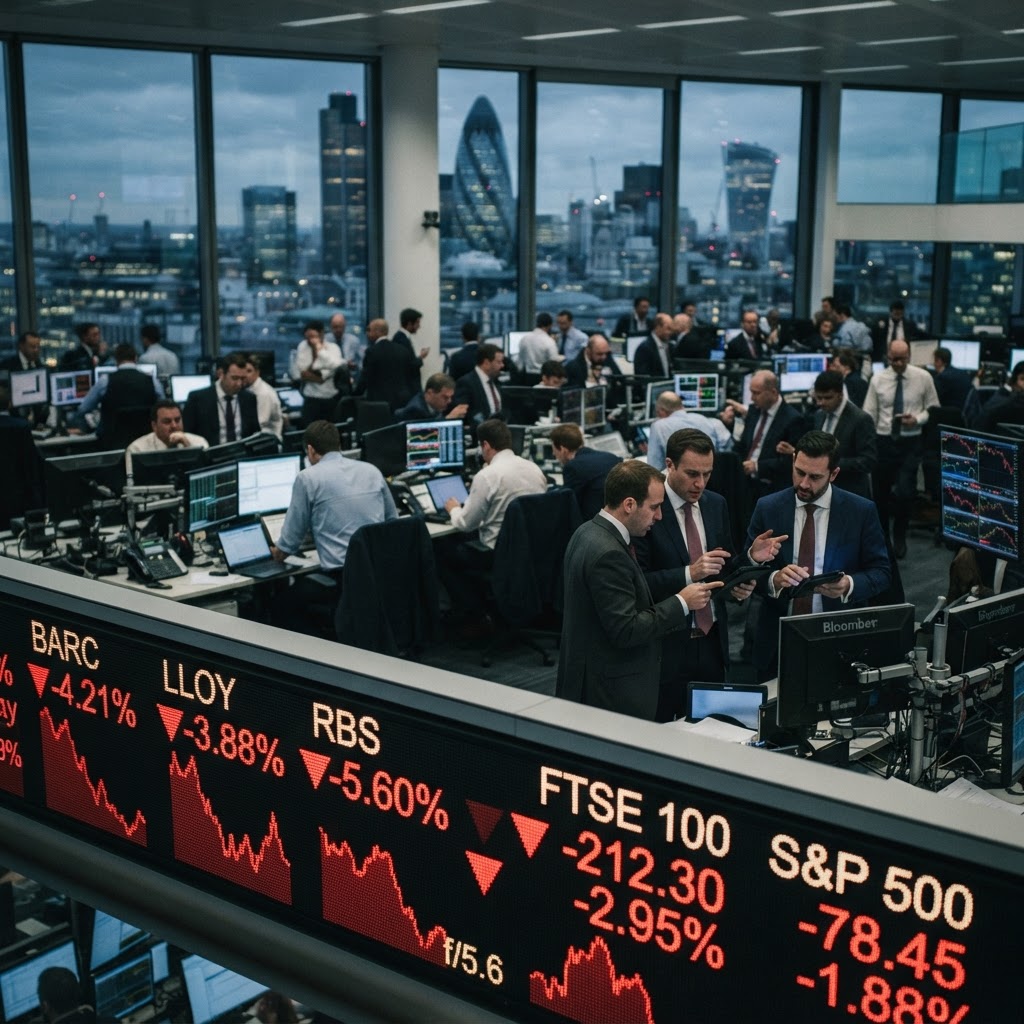
A Troubling Trend for the Square Mile The London Stock Exchange suffered a significant setback on Tuesday, as the FTSE 100 index shed 80.79 points to close at 10,686.54. This 0.75 per cent decline represents the most severe single-day contraction the index has endured since 19 October 2026, marking a period of heightened volatility that has now seen the index retreat in five of the last seven trading sessions. The gloom was compounded by a broader malaise affecting global equities, but the sell-off in London was distinctly home-grown, driven by two of the market’s most prominent constituents.
The HSBC Conundrum In a turn of events that baffled many market observers, HSBC shares plunged by 7.5 per cent despite the banking behemoth reporting an impressive 32 per cent surge in quarterly profits. Management, led by the chief executive, attempted to placate shareholders by announcing a fresh $1 billion share buyback programme, a move usually greeted with enthusiasm by the City. However, the market’s reaction was decidedly lukewarm, reflecting a growing scepticism regarding the bank’s ability to sustain such growth amidst rising regulatory pressures and an uncertain interest rate environment in Asia.
"The market is looking past the headline profit figures and focusing on the underlying margins," noted one senior banking analyst at a leading London brokerage. "When a bank of this stature delivers such significant capital returns yet sees its valuation slashed, it is a clear indicator that investors are worried about the medium-term outlook for global trade and credit quality."
Reckitt Benckiser’s Warning The sentiment was further soured by consumer goods titan Reckitt Benckiser. Shares in the company, which owns brands ranging from Dettol to Nurofen, fell sharply following an unscheduled revision to their full-year guidance. The company cited supply chain bottlenecks and inflationary pressures on raw materials as the primary drivers behind the downward adjustment. This warning served as a chilling reminder that the cost-of-living crisis, though evolving, continues to weigh heavily on the margins of even the most established household names.
For the FTSE 100, which has been attempting to navigate a difficult macroeconomic landscape defined by stubborn inflation and shifting monetary policy, the dual blow from these industry giants proved insurmountable. The index struggled to find any meaningful support throughout the day, as selling pressure persisted from the opening bell through to the closing auction.
A Broader Perspective on Market Fragility The decline brings the FTSE 100 back to levels that have prompted significant debate among institutional investors regarding the current valuation of UK equities. While the index remains relatively cheap compared to its international counterparts in New York and Frankfurt, the lack of positive catalysts is becoming a structural concern. Strategists suggest that the current wave of selling reflects a 'risk-off' mentality that is pervasive among pension funds and retail investors alike.
Economic headwinds remain the dominant theme. With the Bank of England maintaining a cautious stance on interest rate cuts, corporate leaders are finding it increasingly difficult to navigate the balance between growth and debt servicing. As we head into the final quarter of 2026, the fragility of these market-leading companies suggests that shareholders are losing patience with missed targets and uncertain guidance.
“The market is looking past the headline profit figures and focusing on the underlying margins, which is a clear indicator of investor anxiety regarding the medium-term outlook.”
Looking ahead, all eyes will be on the upcoming earnings reports from the retail and energy sectors, which may offer a clearer picture of whether this market correction is a temporary adjustment or the beginning of a sustained downturn. For now, the FTSE 100 remains in the doldrums, awaiting a catalyst that can restore confidence to a market that currently appears to be favouring caution over growth.