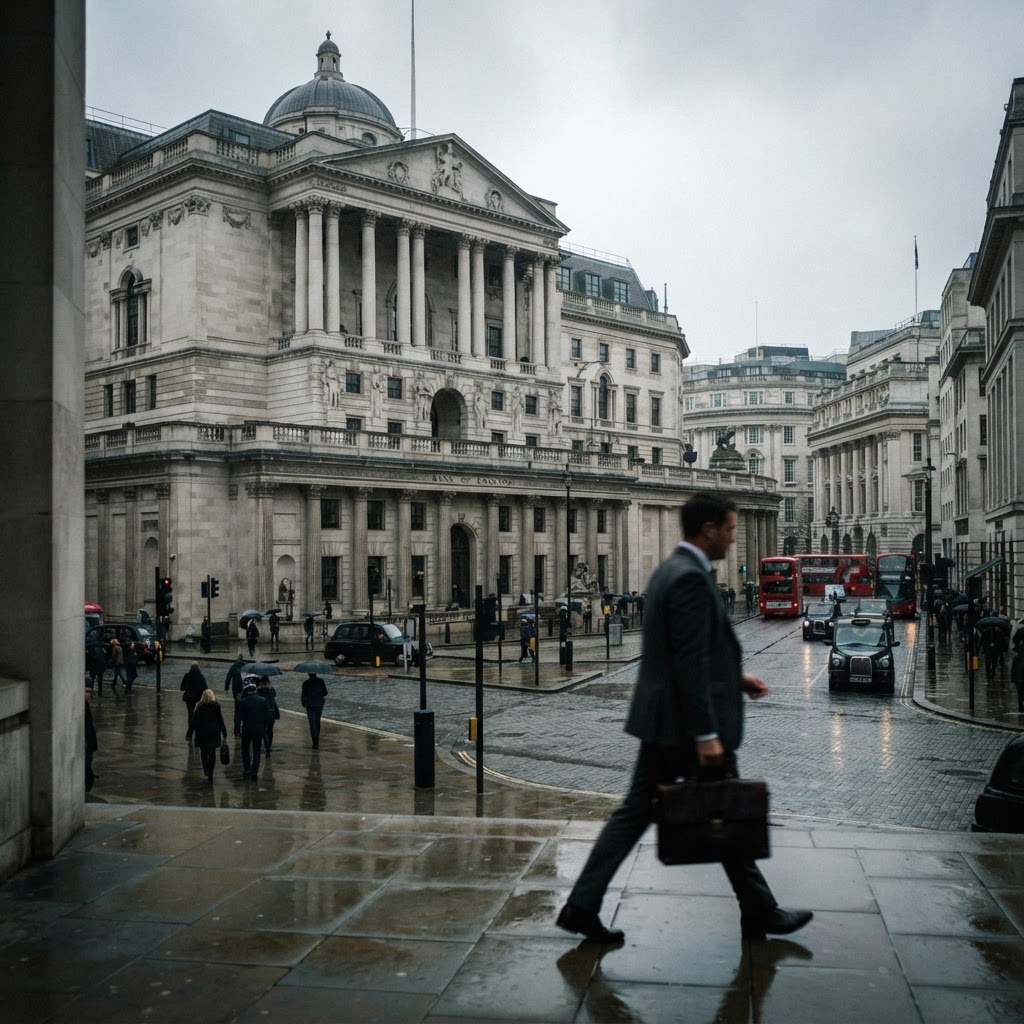
The Shadow Over the Treasury As the leaves turn and the political corridors of Whitehall prepare for the arrival of the Chancellor’s latest budget, a cold wind is blowing from Threadneedle Street. The Bank of England, tasked with the singular, arduous duty of tempering the nation’s inflationary fires, finds itself at a crossroads that threatens to derail the government’s fiscal roadmap. The central bank is under mounting pressure to escalate interest rates, a move that would not only bolster the pound but also dampen the nascent hopes for a robust economic recovery.
Economists are increasingly vocal in their warnings that the current trajectory is unsustainable. With headline inflation projected to breach the four percent barrier in early 2027, the Monetary Policy Committee is widely expected to adopt a hawkish stance. For the average household, this implies continued upward pressure on mortgage repayments and a prolonged squeeze on disposable income, but for the Treasury, the implications are far more profound. Every increment in the base rate translates into higher debt servicing costs for the Exchequer, complicating the Chancellor’s ambition to balance the books.
A Mounting Debt Burden The latest public finance data paints a sobering picture. UK borrowing has outpaced official forecasts by over £8 billion, a shortfall largely attributed to the compounding interest on the national debt. This structural deficit forces the government into a precarious position: to spend is to fuel further inflation, yet to austerity-trap the economy during a period of sluggish growth could lead to a recessionary spiral.
Market participants are already reflecting this anxiety. The FTSE 100, traditionally a barometer of City confidence, has spent the week trading on the back foot. Investors are not merely reacting to domestic policy; they are calibrating their expectations to a new era of higher-for-longer interest rates. The uncertainty permeating the Square Mile is palpable, with traders betting that the Bank of England will prioritise monetary stability over the short-term growth targets championed by government ministers.
The Conflict of Objectives The fundamental disconnect between fiscal expansion and monetary contraction has rarely been more visible. While the Chancellor seeks to incentivise investment through targeted tax reliefs and capital allowances, the central bank’s tightening cycle acts as a powerful headwind. This institutional tug-of-war is precisely what worries financial strategists. If the government opts for a populist budget, it may inadvertently force the Bank’s hand further, necessitating even steeper rate hikes to neutralise the liquidity injected into the economy.
Experts argue that the current landscape requires a more cohesive strategy. The era of cheap money is firmly behind us, and both the Treasury and the Bank of England must find a way to navigate a path that does not sacrifice long-term productivity for the sake of temporary headline figures. As we approach the Budget, the rhetoric from Number 11 Downing Street will be scrutinised for signs of fiscal responsibility. Any deviation from a disciplined approach is likely to be met with a swift, punishing response from the bond markets.
“The fundamental disconnect between fiscal expansion and monetary contraction has rarely been more visible, creating a institutional tug-of-war that threatens to stifle Britain’s long-term economic prospects.”