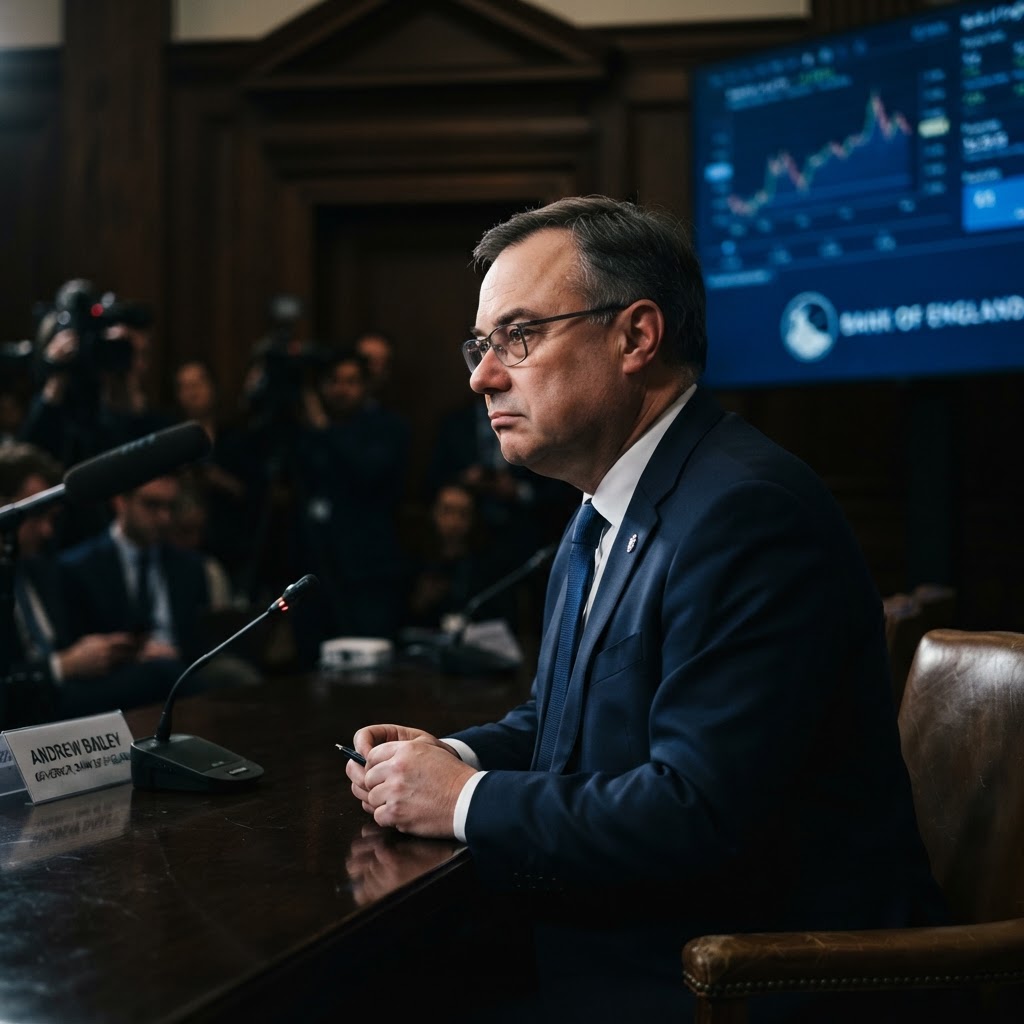
London Markets Stumble as Bond Market Turbulence Rattles Investor Resolve
The FTSE 100 has slipped to its lowest point in a quarter as global yield spikes ignite fresh fears over borrowing costs. Investors are bracing for a difficult final three months of the year as domestic economic headwinds intensify.
AP
Alice Pemberton
Finance Correspondent
Published 8 October 2026·about 2 hours ago 3 min read
Text
TopicsFTSE 100FinanceMarketsUK EconomyBondsBankingInvestment
About the Author
AP
Alice Pemberton
Finance Correspondent
Alice Pemberton reports for National Post UK with a focus on rigorous analysis and authoritative journalism — a trusted voice across British public life.
Reader Discussion · 5
Subscribers can join the conversation.
SUBSCRIBE TO COMMENT →J
James Sterling8 Oct
The correlation between the gilt sell-off and the index drop is clear as day. Until the Bank of England gives some clearer guidance on rates, I expect this gloomy trend to persist throughout the quarter.
M
Margaret Hughes8 Oct
My pension fund has taken a real hit over the last few days. It is deeply worrying to see the markets behaving this erratically when we were promised a period of economic recovery.
D
David Thorne8 Oct
I think the knee-jerk reaction from investors is a bit overblown. The FTSE 100 is filled with multinational firms that are actually quite insulated from domestic debt issues, so this dip might be a decent buying opportunity.
S
Sarah Jenkins8 Oct
Is this really a surprise to anyone? The current fiscal policy has been teetering on a knife edge for months and the bond markets are just finally reacting to the reality of the situation.
A
Arthur Pendelton8 Oct
It feels like we are back to square one with the gilt markets. I have shifted more of my portfolio into cash this week, as the volatility is simply too high for anyone looking for stability.