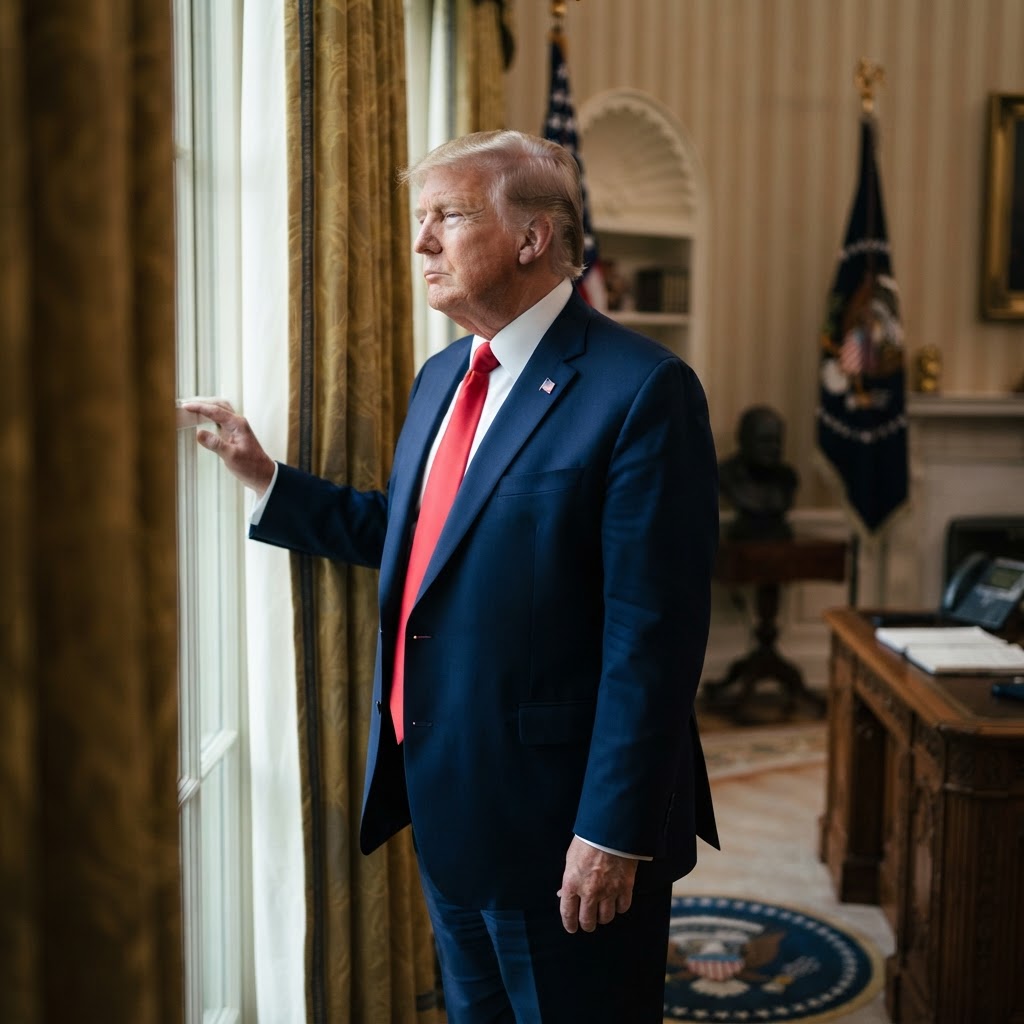
Trump’s Executive Order Signals Unprecedented Pivot on Russian Sanctions
In a move that has sent shockwaves through the corridors of power in London and Kyiv, President Trump has issued an executive order bypassing long-standing sanctions legislation against Moscow. The sudden shift marks a decisive departure from established Western policy, prompting urgent questions regarding the stability of the trans-Atlantic alliance.
RB
Richard Baxter
Foreign Correspondent
Published 18 October 2026·3 days ago 3 min read
Text
TopicsTrumpRussiaSanctionsUkraineForeign PolicyGeopolitics
About the Author
RB
Richard Baxter
Foreign Correspondent
Richard Baxter reports for National Post UK with a focus on rigorous analysis and authoritative journalism — a trusted voice across British public life.
Reader Discussion · 5
Subscribers can join the conversation.
SUBSCRIBE TO COMMENT →J
James Sterling18 Oct
It is worth noting that this executive order is likely to face intense legal scrutiny back in the States. We should wait to see if it actually holds up in the courts before we assume it is a permanent pivot.
E
Eleanor Rigby18 Oct
I worry that we are compromising our values for short-term gain. History rarely looks kindly on those who appease expansionist powers when they are under pressure.
D
David Thorne18 Oct
From a purely economic perspective, this is going to be incredibly complex to untangle. I’ll be watching to see how the City of London responds to these shifting regulatory requirements.
S
Sarah Jenkins18 Oct
Finally, someone is trying a different approach instead of the same old tired rhetoric. Maybe we can actually start having a functional dialogue with Moscow for a change.
A
Arthur Penhaligon18 Oct
This seems like a massive gamble with our geopolitical stability. I fail to see how easing these sanctions benefits the UK or our European allies in the long run.