
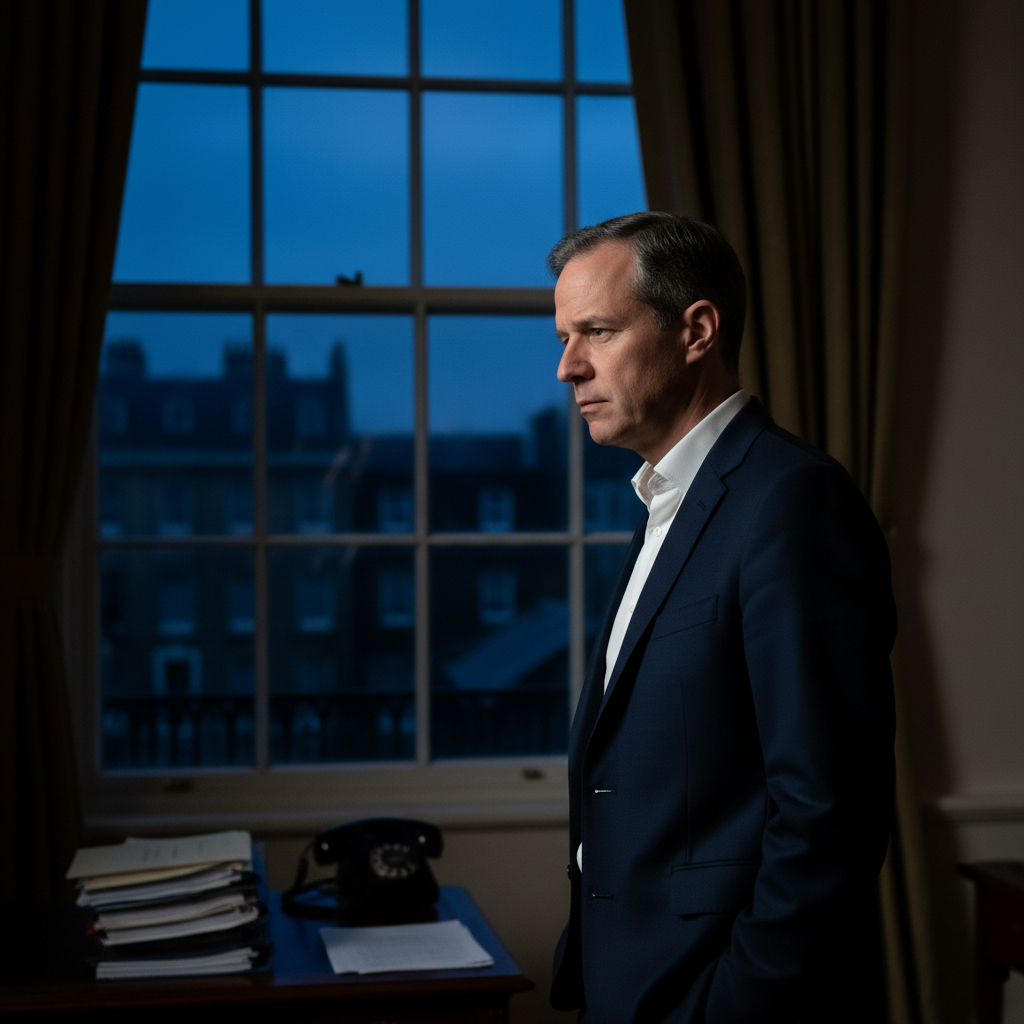
The British government finds itself in the midst of a profound crisis following the resignation of Defense Secretary John Healey on Thursday evening. Healey's departure signals deepening tensions within Prime Minister Keir Starmer's Cabinet, particularly concerning military funding amidst a backdrop of global insecurity. His resignation, coupled with alarming economic indicators released by the Office for National Statistics (ONS) on Friday, with the UK economy contracting by 0.1% in April, represents the most significant challenge to Starmer's leadership since the 2024 electoral victory.
In his statement, Healey emphasised that the current Defense Investment Plan is inadequate to meet the pressing threats posed by conflicts, particularly in Iran and the ongoing aggression from Russia. "We face unprecedented challenges that require a robust and well-funded defence strategy," Healey remarked, underscoring a growing discontent with the government’s approach to national security. His resignation also follows burgeoning concerns raised by his colleagues regarding military preparedness and resource allocation, particularly amidst reports of a multibillion-pound funding gap between the Ministry of Defense and the Treasury.
Economic Concerns Mount
The situation is further compounded by disappointing economic data. The ONS reported the first contraction of the UK economy this year, reversing earlier growth trends. The contraction is largely attributed to a sharp squeeze on household incomes, driven by soaring fuel prices and a staggering 1.3% drop in retail sales, the fastest decline witnessed in nearly a year. This economic slowdown is sure to exacerbate public dissatisfaction and presents a growing challenge for Starmer as he attempts to navigate both economic and security crises simultaneously.
“This is a pivotal moment for Starmer; how he navigates these crises could determine his future as Prime Minister.”
Experts point out that the combination of Healey's resignation and economic recession presents a perfect storm for the Labour government. "Starmer’s administration is now at a crossroads," commented Dr. Emma Sinclair, a political analyst at the University of London. "If the party fails to effectively address the budgetary issues related to defence alongside pressing economic concerns, it risks alienating its core base and delivering a fatal blow to Starmer's leadership credibility."
Internal Dissent and Calls for Change
In the wake of Healey's exit, several Labour MPs have reportedly begun advocating for a change in leadership. The pressure is mounting as internal fractures widen over the government’s military funding policies and its broader economic strategy. Disagreements are surfacing between various factions within the party, reflecting a lack of unified direction amidst increasing disparities between the Treasury's priorities and the demands for enhanced military investment.
As tensions rise, some Labour insiders are beginning to question Starmer's suitability as leader, given the series of unfolding crises that have not only eroded public confidence but have also resulted in a worrying trend in opinion polls. The latest polling indicates diminishing support for Labour, with opponents seizing upon the government's struggles to press their case for alternative leadership.
Following Healey's departure, discussions have emerged about potential successors, with names like Shadow Foreign Secretary Hilary Benn and Shadow Chancellor Rachel Reeves being floated as possible contenders to rally the party back to coherence and confidence.
Contextualising the Crisis
Starmer’s government, which had initially presented itself as a progressive alternative to the previous Conservative administration, now faces existential questions about its policies and priorities. The recent interplay between national security and economic stability illuminates the delicate balance that must be maintained by a government in times of crisis.
In this context, Starmer must articulate a clear vision that reconciles the pressing need for robust defence mechanisms alongside concerted efforts to alleviate the burdens faced by UK households. While addressing these issues head-on, the Prime Minister must also be cautious of fostering the dissent brewing within party ranks, which could destabilise his leadership further.
As the political landscape continues to shift, experts caution that failure to adopt an effective response could embolden both the opposition and internal critics, further undermining Starmer's authority. In the words of policy analyst Simon Gresham, "This is a pivotal moment for Starmer; how he navigates these crises could determine his future as Prime Minister. If he cannot unify his party and present a resolute strategy, history may judge him harshly."
Conclusion
With the resignation of John Healey and the alarming economic indicators now facing the government, Keir Starmer’s administration is undoubtedly at a crucial juncture. As pressure mounts from critics inside and outside the party, the coming weeks will be decisive in determining not only the leadership of the Labour Party but also the future direction of the UK at a time of significant global uncertainty.