
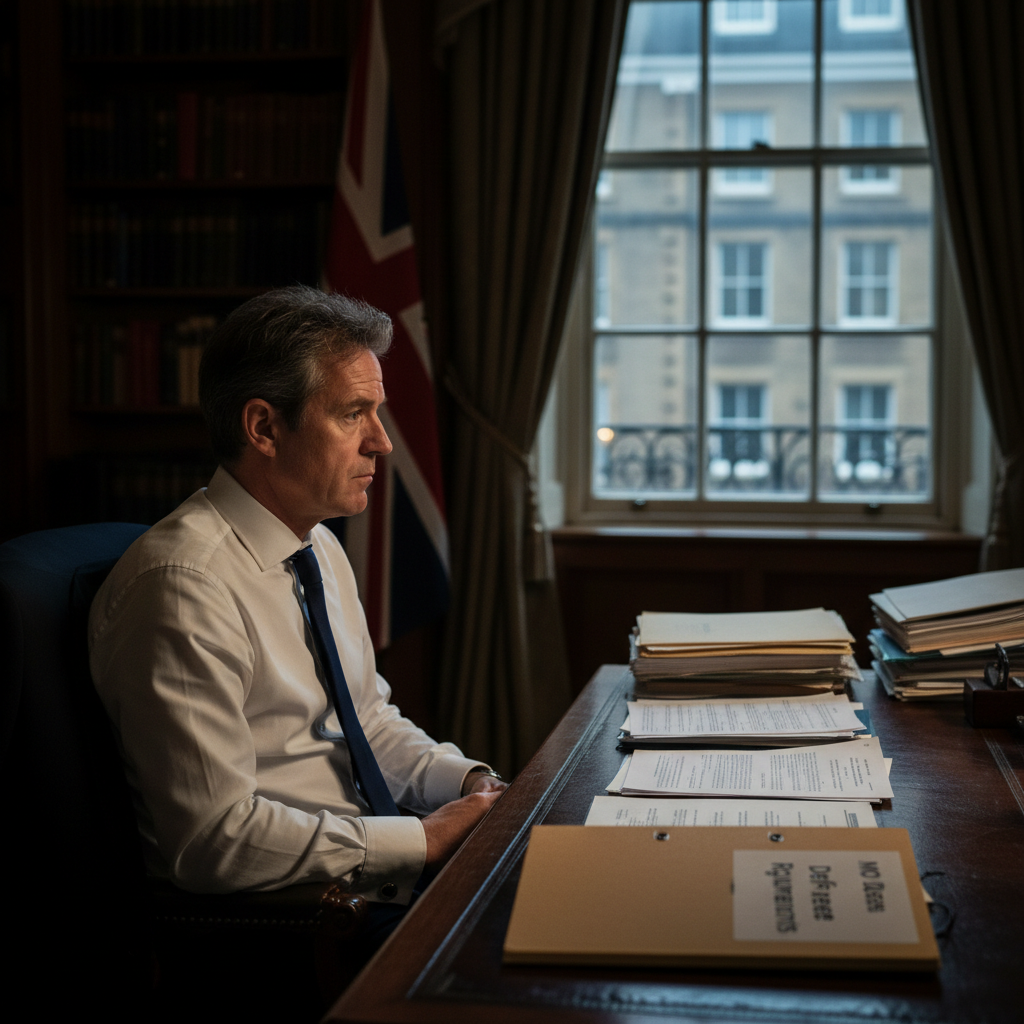
On the heels of a turbulent day in Westminster, Prime Minister Keir Starmer’s government is grappling with a significant crisis as Defence Secretary John Healey and his ministerial colleague Al Carns resigned, citing inadequate funding for the United Kingdom's defence requirements. Their unexpected departures on June 17, 2026, follow several months of mounting pressures regarding military spending amid deteriorating geopolitical tensions.
The resignations compound an already precarious situation for the Starmer administration. Earlier today, the Office for National Statistics (ONS) reported a jump in the Consumer Prices Index (CPI) inflation rate to 3%, up from 2.8% in April, raising alarms about the state of the UK economy. Additionally, data revealed that the UK economy contracted by 0.1% in April, largely attributed to the repercussions of ongoing conflicts in the Middle East, further complicating an already fraught political landscape.
Defence Ministerial Departures: A Critique of Funding Priorities
Healey emphasised in his resignation statement that his decision stemmed from the Treasury's refusal to allocate necessary funds to bolster the UK’s defence capabilities. "In light of escalating threats, a lack of adequate resources jeopardises our national security," he asserted, underscoring a growing concern shared across various sectors. Al Carns, who served as Minister of State for Defence Procurement, echoed this sentiment, stressing that the commitment to national security should not be overshadowed by economic austerity.
“"In light of escalating threats, a lack of adequate resources jeopardises our national security."”
These resignations come on the back of a serious incident in the English Channel, where a Russian frigate fired warning shots at a British yacht, prompting discussions surrounding the adequacy of current military provisions. Critics of the government have linked the incident to the chronic underfunding of the armed forces, forecasting that without urgent investment, further incidents may become commonplace.
Inflation and Economic Contraction
The economic backdrop of these political shifts is daunting. The rise in inflation to 3% signals a significant hurdle for British consumers and businesses alike. Analysts warn that this uptick could stifle consumer spending, which is pivotal for the economy’s recovery.
Moreover, the recent contraction of 0.1% in April, attributed to external pressures including unrest in the Middle East, raises further questions about the UK's economic resilience. "The economic impact of geopolitical instability cannot be ignored," noted Dr. Emily Carter, a senior economist at the Institute for Fiscal Studies. She elaborated, "With inflation rising and GDP shrinking, the government faces a challenging balancing act between fiscal prudence and pressing economic support for its citizens."
The Bank of England's Stance
As the government faces internal strife amidst economic challenges, the Bank of England is slated to announce its decision regarding interest rates on June 18. Economists predict the rates will remain unchanged at 3.75%, a level that has been maintained in response to inflation and the country's economic performance. Analysts are keenly observing the Bank's stance, as any shift could further influence financial markets and consumer confidence.
Political Implications
Starmer's government, which came to power on promises of reform and stability, is now facing a credibility crisis. The resignations of Healey and Carns amplify concerns regarding Starmer's leadership as dissent brews within his own party about defence priorities.
“This is a pivotal moment for the Labour Party,” said political analyst Jonathan Ashford. “Starmer must reclaim control and ensure that he addresses both the defence funding crisis and the economic landscape that threatens to derail his administration.”
The Labour Party leader has made strides to address concerns surrounding national security, yet the real test lies in his ability to navigate the dual pressures of internal dissent and an economic landscape marred by inflation and stagnation.
The resignations may also embolden opposition figures, who have frequently challenged the government’s defense strategies. The forthcoming parliamentary sessions are expected to be particularly heated, as both Labour and opposition parties confront Starmer on issues related to funding and foreign policy responses.
Looking Ahead
As the nation watches closely, the political fallout from these resignations will likely extend beyond Westminster. How Starmer responds to the calls for enhanced defence spending while managing economic demands will define his administration’s legacy and shape the political landscape ahead of the next general election.
In this moment of uncertainty, one thing remains clear: the UK government stands at a crossroads, with significant questions regarding its capacity to safeguard both its national interests and the welfare of its citizens.
“We must prioritise our nation’s security, alongside addressing the immediate economic concerns of our populace,” Healey noted in his resignation speech, a sentiment that now resonates even more profoundly in the current context.