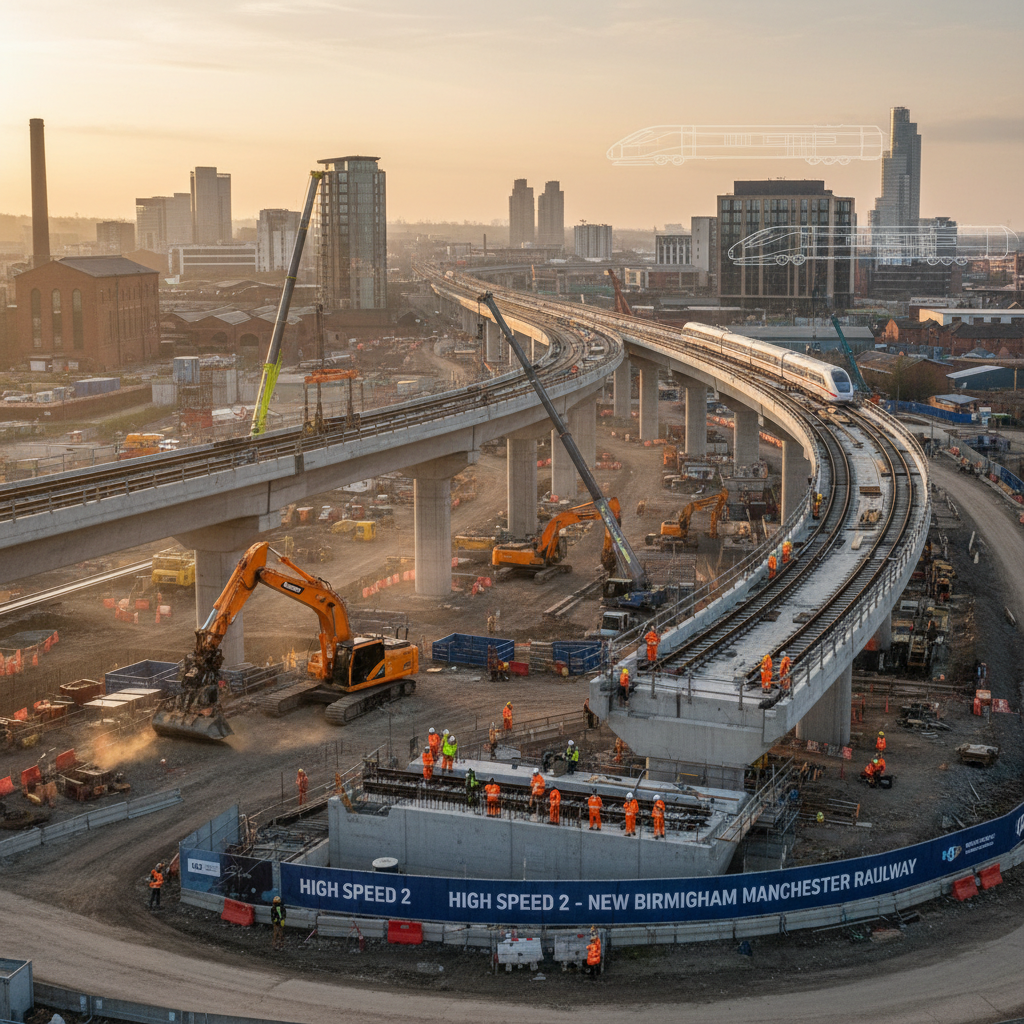
The government's commitment to a new direct rail link between two of England's largest cities has been broadly welcomed — but the memory of HS2 means nobody is celebrating just yet.
The government has confirmed its intention to build a new direct rail link between Birmingham and Manchester — effectively reviving the northern phase of the cancelled HS2 project, albeit under a different name, a different route specification, and with conspicuously different expectations attached. The announcement was made on Tuesday by Transport Secretary Yvette Marshall, who described the project as 'a commitment to the economic future of the North and Midlands that this government will honour in full'.
The reaction from regional leaders was cautious but broadly positive. Greater Manchester Mayor Andy Burnham, who has campaigned for the northern rail connection since HS2's partial cancellation under the previous government, called it 'a step in the right direction that must now be followed by a credible construction timeline and a credible budget'. West Midlands Mayor Richard Parker struck a similar note, welcoming the announcement while noting that 'the North has been promised railways before'.
The HS2 Shadow
The spectre of HS2 hangs heavily over any new rail infrastructure announcement in England. The original project, which promised a high-speed connection between London, Birmingham, Manchester and Leeds, was progressively scaled back before its northern phases were cancelled entirely in 2023 at a cost to the taxpayer estimated at £22 billion. The new Birmingham-Manchester line is understood to be designed at lower speeds and lower costs, prioritising capacity and frequency over the headline travel times that defined — and ultimately doomed — HS2's political pitch.
Leeds Still Waiting
Separately, a leaked government report has revealed that a secret internal review delayed Leeds's long-awaited tram network by at least eighteen months, prompting renewed anger in West Yorkshire. Tracy Brabin, the West Yorkshire Mayor, said the delay was 'completely unacceptable' and demanded the report be published in full.