National Post UK
The End of the Queue: Britain Prepares for Frictionless Border Travel

By early 2027, the traditional passport check at UK borders will be consigned to history for many travellers. The govern

The National Post

HomeTravel
Travel

The End of the Queue: Britain Prepares for Frictionless Border Travel

By early 2027, the traditional passport check at UK borders will be consigned to history for many travellers. The government’s ambitious modernisation scheme promises to replace physical documentation with advanced biometric recognition systems.

NF

Natalie Forsythe

Travel Editor

Published 22 October 2026·about 2 hours ago 3 min read
Text
Share

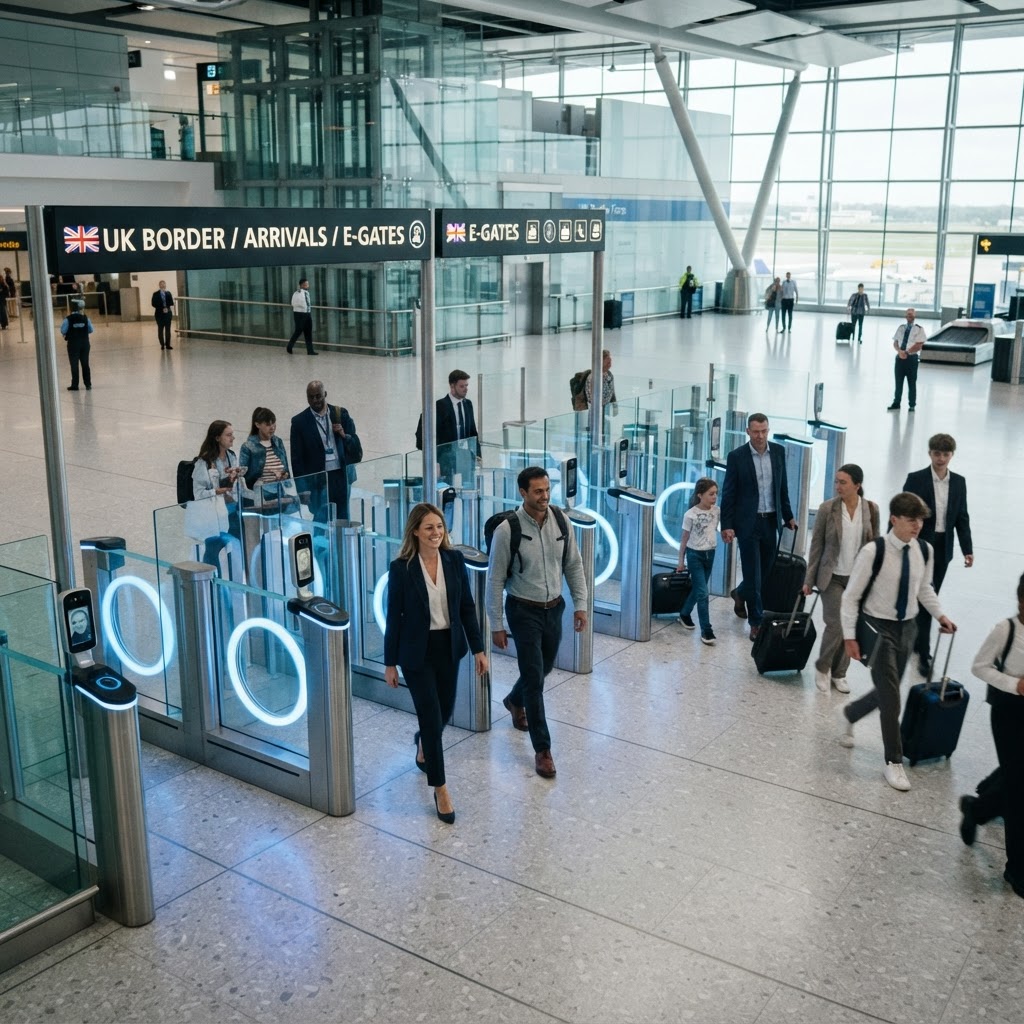
A Digital Revolution at the Border For millions of travellers, the arrival at a British port of entry has long been defined by the familiar rhythm of shuffling queues and the anxiety of reaching for a physical passport. However, the Home Office has confirmed that this ritual is set to undergo a radical transformation. By the first quarter of 2027, major UK airports will transition to contactless, passport-free e-gates, leveraging high-fidelity facial recognition technology to expedite the immigration process for eligible arrivals.

Modernising the Infrastructure This initiative represents the most significant overhaul of UK border infrastructure in a generation. The deployment follows a period of rigorous testing and serves as a cornerstone of the government’s wider strategy to digitise the travel experience. By moving away from physical document verification, authorities intend to alleviate the persistent congestion that has plagued major hubs, particularly during the peak summer months. Civil servants involved in the project suggest that the new gates will significantly increase passenger throughput, potentially processing arrivals with an efficiency hitherto unseen at Heathrow, Gatwick, and Manchester.

The Policy Context The announcement arrives amidst a broader shift in UK aviation policy, signalling a concerted effort to enhance the passenger experience. Earlier this year, the government successfully pushed for the abolition of ancillary charges for seating children with their parents, a move that addressed long-standing grievances regarding family travel. This latest policy intervention regarding border security suggests a cohesive strategy: removing the administrative friction that has long defined the British travel experience.

Expert Perspectives Industry analysts have greeted the news with cautious optimism. Dr. Alistair Finch, a senior consultant in transport infrastructure, notes that while the technology is robust, the challenges of integration remain considerable. It is not merely about the hardware at the gates, but the sophisticated backend databases that must verify biometric data in milliseconds, he remarked. There is also the matter of public trust and data privacy. The Home Office has emphasised that the system will adhere to stringent privacy standards, noting that data will be stored securely and deleted in accordance with existing regulations.

What to Expect by 2027 Eligible passengers—likely those holding biometric passports who have pre-registered their details—will simply walk through a checkpoint where cameras will match their facial geometry against official records. For many, this will mean a seamless transition from the aircraft to baggage reclaim. However, the government has been quick to manage expectations, confirming that traditional desks will remain in operation for those who require manual assistance or for travellers from nations not yet covered by the new digital framework. As the deadline approaches, the UK aviation sector stands on the precipice of a new era, one that prioritises the fluid movement of people in an increasingly interconnected, high-tech global economy.

TopicsAviationTravelUK GovernmentBorder ControlInfrastructureTechnology
Share

About the Author

NF

Natalie Forsythe

Travel Editor

Natalie Forsythe reports for National Post UK with a focus on rigorous analysis and authoritative journalism — a trusted voice across British public life.

Reader Discussion · 6

Subscribers can join the conversation.

SUBSCRIBE TO COMMENT →
C
Clare Higgins22 Oct

While the technology sounds impressive, I hope the Home Office is investing enough in the staff to assist passengers when the automated gates inevitably cause confusion. It is never as frictionless as they claim in the press releases.

M
Marcus Vane22 Oct

This is a significant step forward for efficiency. As someone who travels for business every month, removing the bottleneck at the border will make a massive difference to my productivity.

E
Eleanor Rigby22 Oct

This sounds wonderful in theory, but I suspect it will be a nightmare for the elderly or those who are not particularly tech-savvy. There must be a physical alternative kept in place for those who need it.

D
David Thorne22 Oct

My main worry is the privacy aspect of it all. Once this digital infrastructure is in place, how long until it is expanded for other purposes beyond just border control?

S
Sarah Jenkins22 Oct

I do have concerns about the reliability of this technology. We all know how often government IT systems fall over, and I would hate to see total gridlock at the border when the scanners fail.

A
Arthur Penhaligon22 Oct

It is about time we joined the rest of the world. Standing in a two-hour queue at Heathrow after a long-haul flight is no way to welcome visitors or residents back home.


More from Travel

Most Read in Travel

Morning Briefing

The day's top stories, before 7am

Join 40,000 readers who start their morning with National Post UK.