National Post UK
Grand Slam Peace: Tennis Titans Reach Landmark Financial Accord

After months of fractious negotiations, the world’s elite tennis players have struck a temporary truce with tournament o

The National Post

HomeSport
Sport

Grand Slam Peace: Tennis Titans Reach Landmark Financial Accord

After months of fractious negotiations, the world’s elite tennis players have struck a temporary truce with tournament organisers. This resolution brings a welcome reprieve to the professional circuit, establishing a framework for revenue sharing following the conclusion of the 2026 Wimbledon championships.

FS

Fiona Shaw

Sports Correspondent

Published 21 September 2026·23 days ago 3 min read
Text
Share

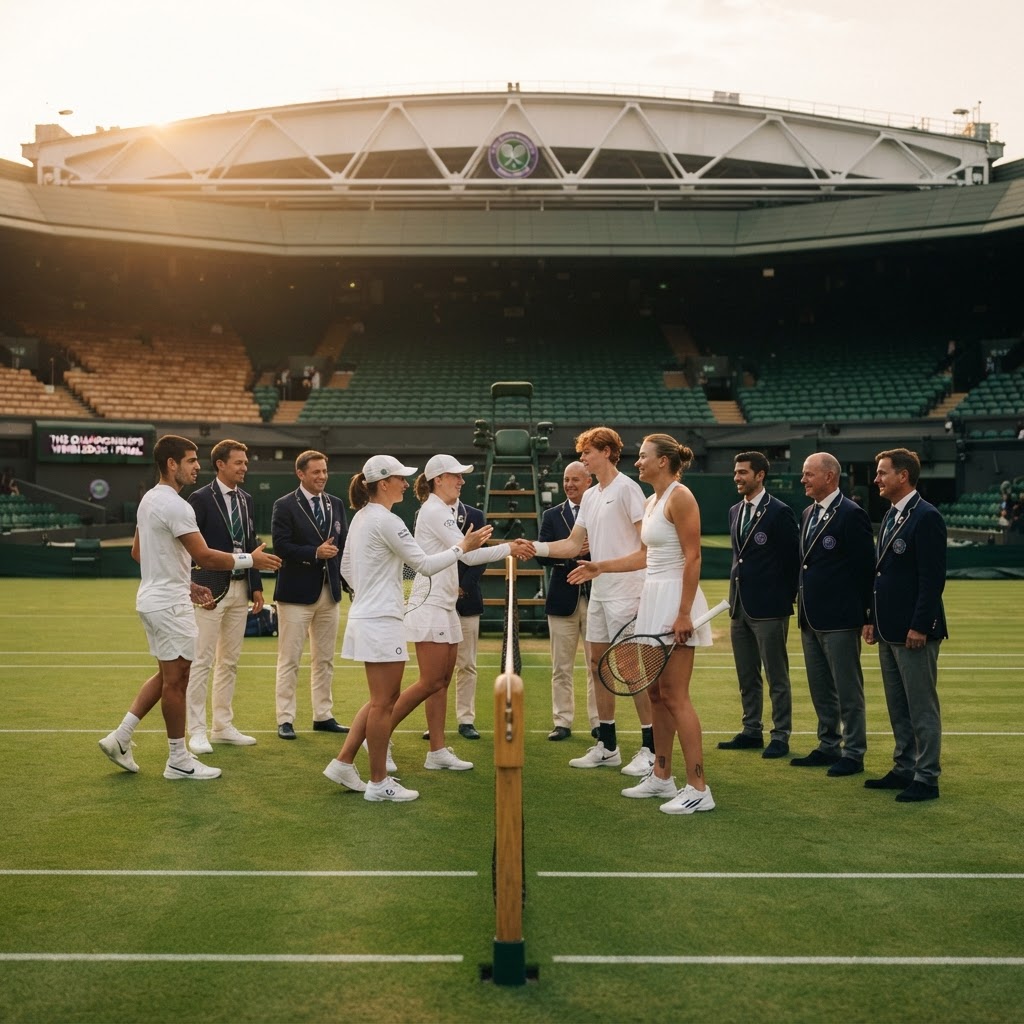
A Watershed Moment for the Professional Circuit In a move that promises to alter the financial architecture of international tennis, the sport’s leading names have finally moved to bury the hatchet with Grand Slam administrators. For over two years, the friction between the players' associations and the four major tournament committees—including our own All England Lawn Tennis Club—has threatened the stability of the game. Now, as the dust settles following the 2026 Wimbledon tournament, a temporary truce has been brokered, marking a rare moment of unity in a sport often fractured by competing commercial interests.

The dispute, which centred on the perceived imbalance in the distribution of tournament revenues, had reached a fever pitch in recent months. Elite athletes, representing the interests of both the ATP and WTA tours, had argued that while broadcasting rights and sponsorship deals have ballooned to record valuations, the percentage of these revenues trickling down to the competitors remained stagnant. With the threat of player boycotts and organisational stand-offs looming over the late-season schedule, the consensus to engage in formal mediation was a necessary capitulation from both parties.

The Burden of Success For the casual spectator, the glittering facade of the Grand Slams often masks a complex political reality. While the prize cheques handed out on Centre Court are substantial, leading players have long contended that their contribution to the brand equity of the tournaments warrants a more significant share of the pie. Dr Julian Vance, a sports economist specialising in professional leagues, suggests that this truce is as much about long-term sustainability as it is about immediate remuneration. 'The players recognise that the prestige of the Grand Slams is the lifeblood of their own marketability,' Vance explains. 'Conversely, the organisers have realised that they cannot maintain the aesthetic and competitive excellence of the sport while alienating the stars who drive their television ratings.'

The agreement reached this week provides a pause button on what many feared would be a permanent schism. Crucially, the terms specify a commitment to a transparent audit of tournament income, a demand that the players' unions have championed since 2024. By agreeing to this oversight, the Grand Slam boards have made an unprecedented concession, acknowledging that the era of opaque revenue reporting is drawing to a close.
Looking Beyond the Baseline What does this mean for the future of the sport? For the next eighteen months, the focus is expected to shift from boardroom skirmishes back to the court. Stability is the primary currency of professional sport, and for sponsors—many of whom were becoming increasingly nervous about the public spat—the news is a resounding success. There is a palpable sense of relief within the corridors of the Lawn Tennis Association, where officials had been bracing for a potential disruption to the autumn calendar. However, critics note that this is merely a temporary reprieve. The accord is designed to function as a bridge, allowing both sides to harmonise their interests without the looming pressure of industrial action. Whether this will lead to a more permanent, codified structure for financial equity remains to be seen. As one veteran player noted, the truce is a testament to the fact that when the stakes are high, the pragmatism of the athlete often outweighs the idealism of the negotiator.

TopicsTennisWimbledonSports BusinessATPWTAFinancial Dispute
Share

About the Author

FS

Fiona Shaw

Sports Correspondent

Fiona Shaw reports for National Post UK with a focus on rigorous analysis and authoritative journalism — a trusted voice across British public life.

Reader Discussion · 10

Subscribers can join the conversation.

SUBSCRIBE TO COMMENT →
M
Marcus Sterling21 Sept

Having played on the circuit in the nineties, the growth in revenue has been astronomical. It is only logical that the administrative framework evolves to match that scale, provided the money is reinvested wisely rather than just lining executive pockets.

M
Mark Sterling21 Sept

It feels like a classic case of corporate manoeuvring disguised as progress. I will wait to see the details of the actual contract before celebrating a watershed moment.

F
Fiona Clarke21 Sept

Having played at the club level for thirty years, I think anything that secures the financial future of the professional circuit is a win for the sport. Hopefully, some of this stability trickles down to grassroots funding.

E
Eleanor Rigby21 Sept

While stability is good, I do worry that this corporate alignment will further distance the game from the fans. Tennis is already becoming prohibitively expensive to attend, and I doubt this new deal will lower ticket prices for the average supporter.

D
David Thorne21 Sept

This is a significant step for the sport's longevity. By securing this financial stability now, we can hopefully see more investment in the grassroot pathways that actually produce these talents.

D
David Thorne21 Sept

Let's be realistic, this is just a way for the governing bodies to keep the big earners happy so they don't jump ship to a breakaway league. I doubt the average spectator at Wimbledon will notice any difference in their ticket prices.

S
Sarah Jenkins21 Sept

I will believe it when I see the actual distribution figures. Historically, these governing bodies are masters of creative accounting, and I suspect the lower-ranked players will still be left fighting for crumbs.

S
Sarah Jenkins21 Sept

I am curious to see how this affects the prize money distribution for the lower-ranked qualifiers. It is all well and good for the stars, but the tour relies on the people grinding out a living on the fringes.

A
Arthur Penhaligon21 Sept

It is about time common sense prevailed. The players are the ones putting their bodies on the line every single week, so they absolutely deserve a fairer slice of the commercial pie.

A
Arthur Penhaligon21 Sept

It is about time they sorted this out. The constant bickering was overshadowing the actual matches and making the sport look unprofessional.

More from Sport

Most Read in Sport

Morning Briefing

The day's top stories, before 7am

Join 40,000 readers who start their morning with National Post UK.