
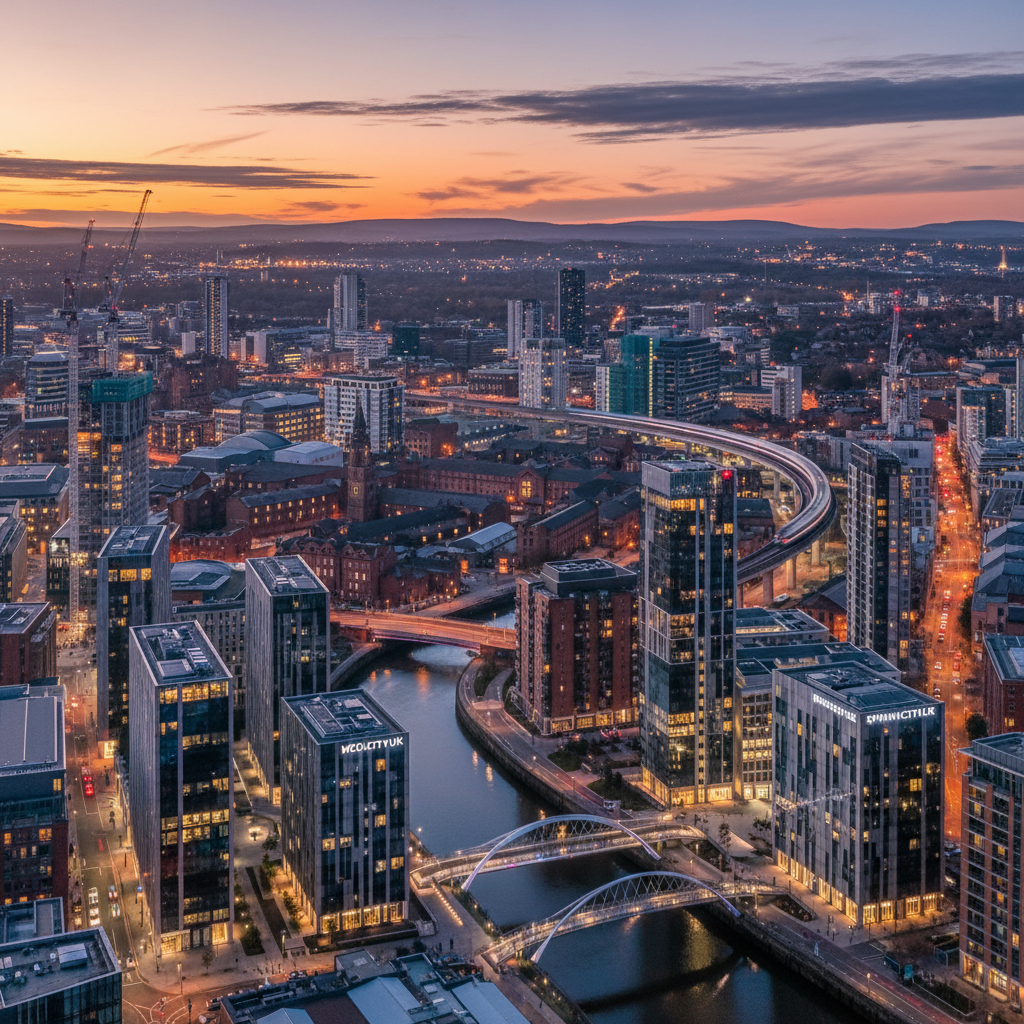
There is a moment, arriving by train from London into Manchester Piccadilly, when the scale of the city's transformation becomes viscerally apparent. The cranes above the station approach. The new towers rising from what was until recently vacant land. The energy of a city that has, in the space of a generation, remade itself from post-industrial decline into one of the most dynamic urban economies in Europe.
Manchester is not simply growing. It is developing a distinct economic and cultural identity that increasingly challenges the assumption that England's story is essentially London's story with a provincial footnote.
The Piccadilly regeneration zone, now in its second phase, is expected to deliver over 10,000 new homes and three million square feet of commercial space over the next decade. The scheme has attracted investment from international developers and financial institutions who regard Manchester as one of the most credible alternative locations to London for professional services, technology and creative industries.
“Manchester is not simply growing. It is developing a distinct identity that challenges the assumption that England's story is essentially London's story.”
Mayor Andy Burnham — who looks increasingly likely to make a return to Westminster politics — has overseen a period in which Greater Manchester has developed genuinely distinctive policy in areas including transport, housing, health integration and skills. The Bee Network, the city-region's integrated transport system, has won international recognition as a model for the kind of joined-up metropolitan governance that most English cities can only aspire to.
The creative and digital economy has been particularly strong. MediaCityUK in Salford continues to attract broadcasters, technology companies and creative businesses, while the broader city centre tech cluster has grown significantly as companies have found that Manchester can offer London-comparable talent at a fraction of the cost.
There are caveats. Parts of Greater Manchester remain among the most deprived communities in England, and the benefits of the city's renaissance have not been evenly distributed. Transport connectivity between Manchester and the wider North remains constrained by the effective cancellation of HS2's northern legs. And the housing affordability crisis, while less severe than London's, is worsening as demand outpaces supply.