
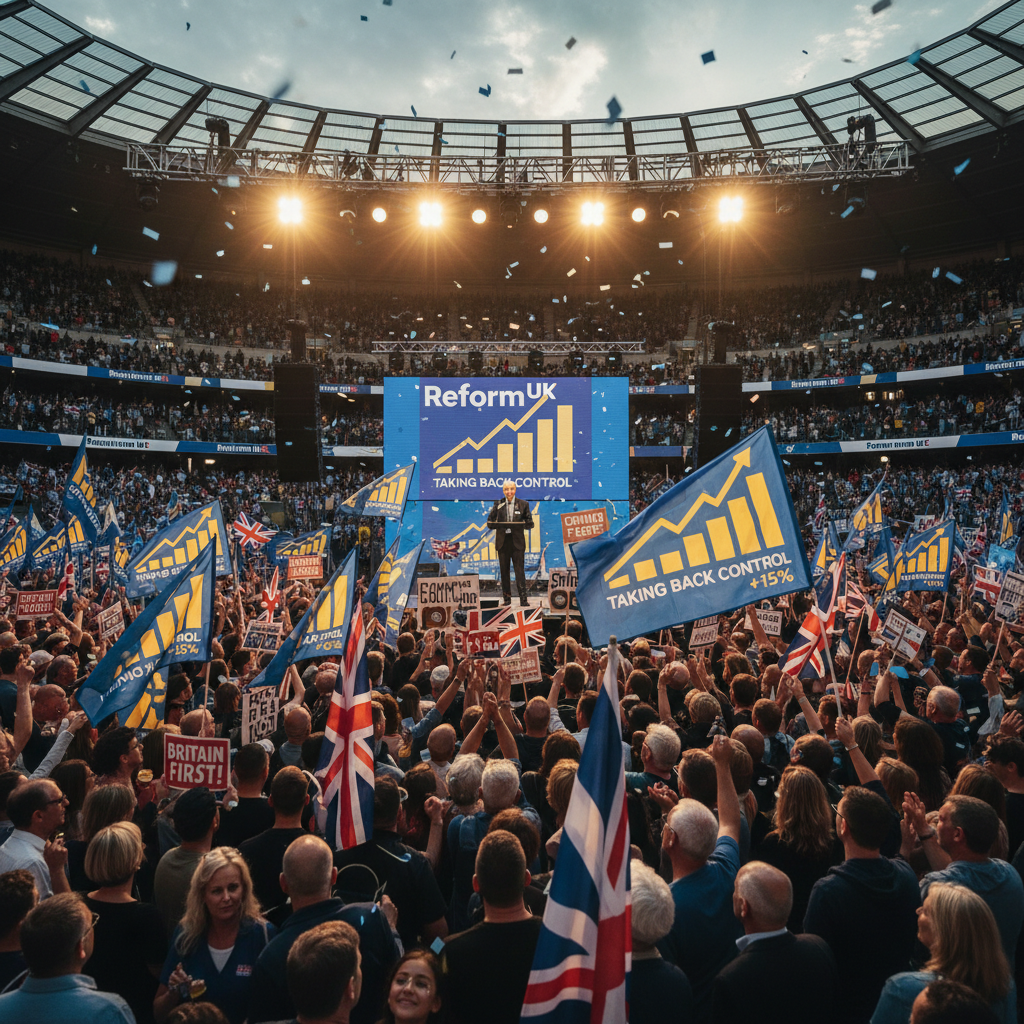
A recent Ipsos poll released on May 29, 2026, has sent shockwaves through the British political landscape as Reform UK, led by Nigel Farage, surges to 27%, leaving the Labour Party trailing at 20% and the Conservatives languishing at 19%. This remarkable turnaround for Reform UK epitomises a significant shift in voter sentiment, particularly after a fraught local election cycle that saw Labour suffering substantial losses in council seats while Reform UK achieved an unprecedented gain of over 1,450 seats nationwide.
The latest figures arise amidst increasing discontent over Labour’s handling of core issues such as the National Health Service (NHS), which has become a focal point of public concern and political debate. On the same day as the poll's release, former Prime Minister Tony Blair delivered a scathing critique of Labour's present trajectory in a 5,700-word essay, where he argued for a 'whole-system' reform of Britain's healthcare provisions to avert electoral failure. Blair's analysis suggested a fundamental realignment of public and private healthcare services, warning that Labour’s current policies were insufficient to meet the challenges facing the NHS.
Keir Starmer's immediate dismissal of Blair's intervention highlights an ongoing rift within Labour. The Prime Minister contended on May 29 that much of Blair’s analysis was "wrong," firmly standing by the direction of his administration. Starmer emphasised that the party has made significant strides in healthcare resilience and acknowledged reform needs, yet he insisted that the frameworks in place are effective and democratic. However, this response has done little to quell speculation about Starmer’s leadership, with whispers of a potential challenge gaining momentum.
“Labour must respond to the real fears of voters on critical issues like healthcare, housing, and the cost of living.”
A Party at a Crossroads
The fallout from the local election results has not only strengthened Reform UK’s position but has also intensified discussions within Labour regarding leadership viability. Internal critiques have arisen from various factions, with prominent figures such as Andy Burnham, the Mayor of Greater Manchester, and Wes Streeting, Shadow Health Secretary, urged to articulate their visions for the party. These demands for alternative policy platforms reflect an urgency within Labour to reassess its identity and reconnect with its traditional base of support.
“Labour must respond to the real fears of voters on critical issues like healthcare, housing, and the cost of living,” remarked political analyst Dr. Molly Harrington. “The party’s inability to differentiate itself from the Conservatives on these issues may be fuelling the public’s desire for new options, such as those offered by Reform UK.”
Starmer’s rejection of Blair’s proposals comes at a time when trust in the current government is waning. Healthcare strikes, crippling waiting times for NHS treatments, and a visible decline in public health services have exposed systemic flaws that resonate with voters. Moreover, the complexity of the political landscape appears to be galvanising protest votes towards Reform UK, positioning them as a viable alternative for disenchanted Labour supporters as well as Conservatives dissatisfied with their party's recent direction.
The Road Ahead for Reform UK
For Nigel Farage and Reform UK, maintaining momentum is crucial. The party has successfully harnessed public discontent, focusing on issues such as immigration, economic recovery, and healthcare reform, which resonate among voters weary of the status quo. Remarkably, Farage has framed his policies in a way that appeals to those from various political backgrounds, challenging Labour and Conservative orthodoxy through a populist lens.
Polling expert Professor Rachel Hines notes, "Reform UK’s rise represents a larger trend of populist movements across Europe, where established parties are losing touch with grassroots concerns. The traditional party divides are increasingly blurred as voters turn to alternatives they feel genuinely reflect their struggles and aspirations.”
Labour’s Leadership Challenge
As Labour grapples with not only its electoral viability but also its ideological coherence, the party faces an existential moment. Blair's insistence on radical reform calls for a reevaluation of Labour’s foundational principles and signals a possible schism regarding the future of its leadership. The incessant critique and the rise of figures like Burnham and Streeting as potential challengers to Starmer's leadership may compel Labour to re-engage with its base through refreshing policy initiatives and assertive strategies.
Starmer’s effective response to these challenges will likely define his tenure, yet resistance from Blair’s camp and the emerging alternatives from within his own party could endanger his position. In an evolving political climate, Labour risks further fragmentation unless it can unify around a compelling vision that resonates with voters.
As Westminster buzzes with speculation over leadership dynamics and the prospect of policy shifts, one thing remains certain: the current polling situation illustrates a decisive moment in British politics that could reshape the electoral landscape as the next general election draws closer.