
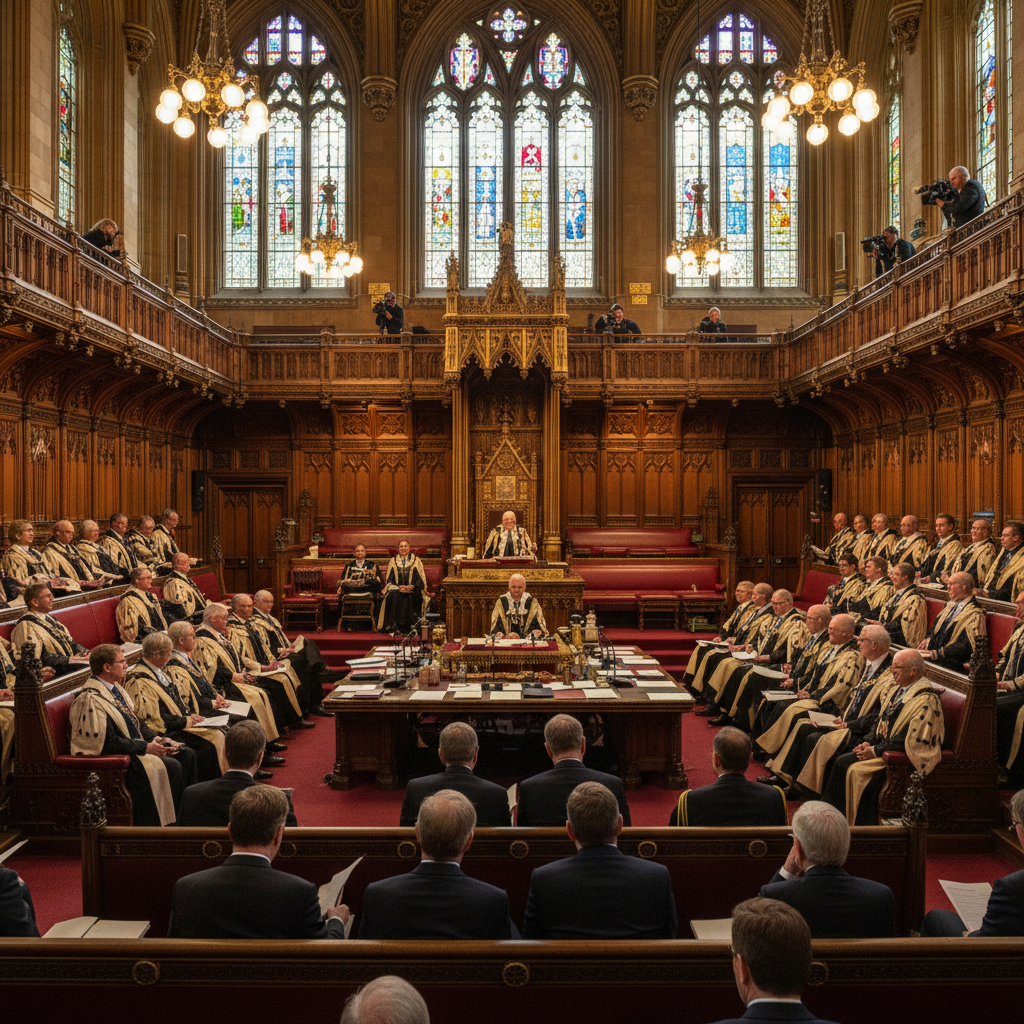
The Starmer administration faced its most daunting challenge yet on 2 June 2026, as the House of Lords delivered a stinging rebuke to its flagship Migration and Resettlement Act. By a decisive vote of 284 to 210, peers approved an amendment that restores judicial oversight to the deportation process, a measure hailed by critics as essential for upholding the rule of law.
This unprecedented defeat represents a pivotal moment in the ongoing constitutional struggle between the elected government and the unelected upper chamber. Critics, including the Archbishop of Canterbury, have raised concerns that the original provisions of the Migration Bill could lead to significant erosions of human rights protections in the UK.
Judicial Oversight Restored
The successful amendment is particularly significant given that it removes key summary deportation powers introduced in the government’s 2026 act. These powers had been described by some legal experts as potentially undermining established human rights principles.
“"The Lords’ decision is not merely a setback for the government; it represents a shift in the cross-party consensus on human rights."”
Archbishop Justin Welby emerged at the forefront of the opposition, stating that the bill risked "eroding the rule of law". His intervention carried particular weight, drawing attention to the moral implications of the legislation while galvanising cross-party support for the amendment. The Archbishop's stance highlights a growing unease among the public and political circles regarding the government's handling of migration issues, exacerbated by recent public outcry against the proposed legislation.
Party Dissent and Government Response
Adding to the complexity of the situation, seven Labour peers broke ranks with the government to either abstain or vote against their own party’s measure, signalling discontent within the ranks of the party. This division reflects a broader concern about the implications of the Migration Bill on civil liberties and human rights.
Responding to the peer's decision, Home Secretary Yvette Cooper condemned the vote as "undemocratic obstruction" of what she termed a vital manifesto commitment. She emphasised the government’s intentions to create a robust legal framework for handling migration, asserting that the defeated measures were necessary to manage the ongoing crisis effectively. However, Cooper's defensive posture may not fully address the complexities of the opposition’s arguments regarding legality and morality.
A Tense Parliamentary Landscape
The Migration and Resettlement Act, which seeks to overhaul how the UK manages migration, has been a cornerstone of the Starmer administration’s agenda since it took office. The defeat in the House of Lords sets the stage for a protracted period of parliamentary ping-pong, whereby the bill will need to be reintroduced to the Commons for further discussion and potential amendments.
This situation reflects the broader context of rising tensions in British politics, particularly surrounding issues of human rights and governance. As debates around immigration continue to polarise public opinion, the Labour government must navigate a increasingly fractious political landscape without alienating its own supporters.
Expert Opinions and Future Implications
Political analysts suggest that this defeat could have far-reaching consequences beyond the immediate legislative context. Dr. Hannah Wright, a political scientist at the University of London, commented, “The Lords' decision is not merely a setback for the government; it represents a shift in the cross-party consensus on human rights. It’s increasingly evident that lawmakers must find a balance between migration control and upholding fundamental freedoms.”
This sentiment is echoed by civil rights groups that have long advocated for judicial oversight in immigration matters. As the bill heads back to the Commons, they are likely to ramp up efforts to influence the discourse, reminding legislators of their obligations under both UK and international law.
The Path Ahead
As the situation remains fluid, the Starmer government must now reassess its strategy. The amendment passed by the House of Lords has illuminated the divisions within Labour and raised pressing questions about the party's long-term vision regarding immigration policy.
With the backdrop of potential electoral repercussions, both the government and the opposition may need to engage in further negotiations to restore confidence in the migration framework. The political stakes are high, and failure to address these fundamental issues could undermine the Labour party’s credibility on human rights.
In the coming weeks, as the government seeks to rally its position, all eyes will be on parliamentary debates as they unfold. What is clear, however, is that the path of the Migration Bill is fraught with challenges ahead, and the Lords' rejection serves as a stark reminder that the balance of power within British politics is ever-evolving.
"The Lords’ decision is not merely a setback for the government; it represents a shift in the cross-party consensus on human rights."