
National Post UK
Threadneedle Street Stays Its Hand as Inflationary Clouds Gather

The Monetary Policy Committee has opted to hold the Bank Rate at 3.75 per cent, citing a delicate balance between coolin

The National Post

HomeFinance
Finance

Threadneedle Street Stays Its Hand as Inflationary Clouds Gather

The Monetary Policy Committee has opted to hold the Bank Rate at 3.75 per cent, citing a delicate balance between cooling domestic demand and the threat of imported price shocks. However, policymakers have signalled that the window for further tightening remains firmly open as energy volatility persists.

MS

Marcus Stone

Finance Correspondent

Published 21 September 2026·26 days ago 3 min read
Text
Share

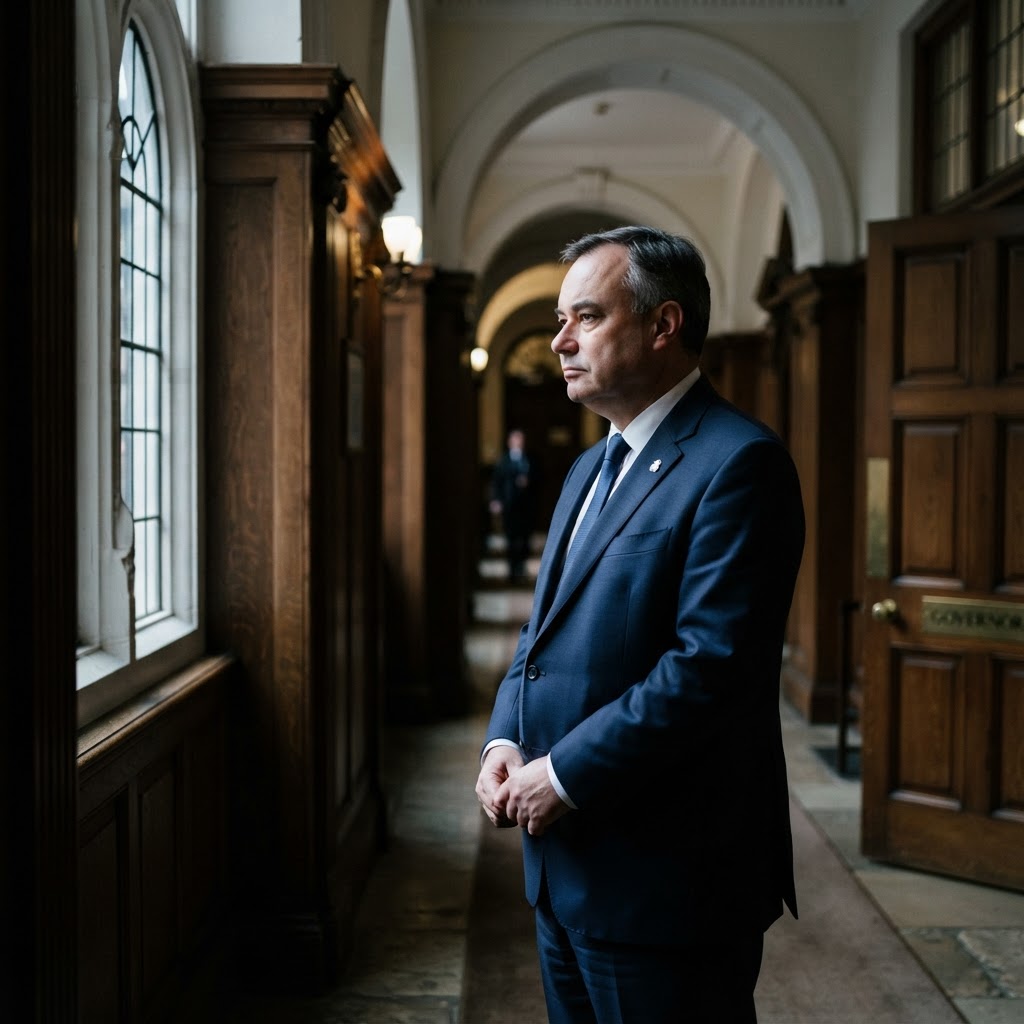
The Pause that Reflects Economic Anxiety The Bank of England’s Monetary Policy Committee (MPC) announced on Thursday that the Bank Rate will remain unchanged at 3.75 per cent. In a decision that surprised few observers but underscored a deep-seated anxiety within the halls of Threadneedle Street, Governor Andrew Bailey and his colleagues have chosen a path of cautious observation. The decision reflects the inherent difficulty of navigating an economy that is simultaneously grappling with sluggish growth and the stubborn persistence of underlying inflationary pressures.

The Geopolitical Shadow Over Monetary Policy While domestic economic data had suggested that the peak of the current tightening cycle might have been reached, the committee’s minutes reveal a growing preoccupation with external shocks. The ongoing conflict in the Middle East has cast a long shadow over the economic outlook, particularly regarding the stability of energy markets. The MPC warned that any sustained spike in crude oil and natural gas prices, coupled with the potential for renewed supply chain disruptions, could create a secondary wave of inflation that would force the Bank to adopt a more hawkish posture in the coming months.

Inflationary Headwinds The primary concern remains the forecast that inflation is set to climb above the 4 per cent threshold by the final quarter of 2026. This trajectory represents a departure from the Bank’s medium-term mandate and indicates that the forces pushing up the cost of living are becoming more deeply embedded than previous models had anticipated. Analysts suggest that the combination of sterling volatility and rising import costs is creating a ‘cost-push’ scenario that monetary policy alone struggles to mitigate effectively.

Expert Perspectives Market reaction to the announcement was muted, reflecting a consensus that the Bank is in a waiting game. Financial analysts point out that the Committee is increasingly reliant on incoming high-frequency data to justify its next move. Economists at leading City institutions have noted that while the consumer sector is already feeling the pinch of previous rate hikes, the MPC remains wary of 'de-anchoring' inflation expectations. The overarching concern is that a premature signal of rate cuts could serve to undermine the hard-won progress made in stabilising domestic prices.

Looking Ahead The path forward for the UK economy remains fraught with uncertainty. As the Bank continues its delicate balancing act, businesses and households are being cautioned that the era of ultra-low interest rates has been replaced by a period of sustained volatility. Whether this pause signifies a genuine stabilisation or merely a temporary reprieve before further tightening remains the defining question for the British financial landscape as we approach the end of the year.

TopicsBank of EnglandMonetary PolicyInterest RatesInflationUK EconomyFinance
Share

About the Author

MS

Marcus Stone

Finance Correspondent

Marcus Stone reports for National Post UK with a focus on rigorous analysis and authoritative journalism — a trusted voice across British public life.

Reader Discussion · 6

Subscribers can join the conversation.

SUBSCRIBE TO COMMENT →
P
Peter Holloway21 Sept

I suspect they are holding out for more granular data before committing to another hike. It is a game of wait and see, but I worry they are falling behind the curve yet again.

J
James MacLeod21 Sept

Just another day of keeping their hands off the tiller while the rest of us feel the pinch. Inflation is still far too high for comfort, and a freeze doesn't put food back on the shelves for the average family.

E
Eleanor Rigby21 Sept

It is interesting to see how the bond markets are reacting to this news. Threadneedle Street seems to be prioritising stability over bold moves, which is probably for the best given the global headwinds.

D
David Thorne21 Sept

The MPC is in a classic trap. If they hike now, they risk recession, but if they wait too long, inflation will be impossible to control. I am not sure they have a handle on this at all.

S
Sarah Jenkins21 Sept

Sensible or not, my mortgage renewal is coming up in three months and this uncertainty is killing my household budget. It feels like they are just waiting for the situation to get worse before acting.

A
Arthur Penhaligon21 Sept

Holding the rate at 3.75 per cent is the sensible approach. We need to avoid any knee-jerk reactions that might stifle the fragile recovery we are currently seeing.

More from Finance

Most Read in Finance

Morning Briefing

The day's top stories, before 7am

Join 40,000 readers who start their morning with National Post UK.