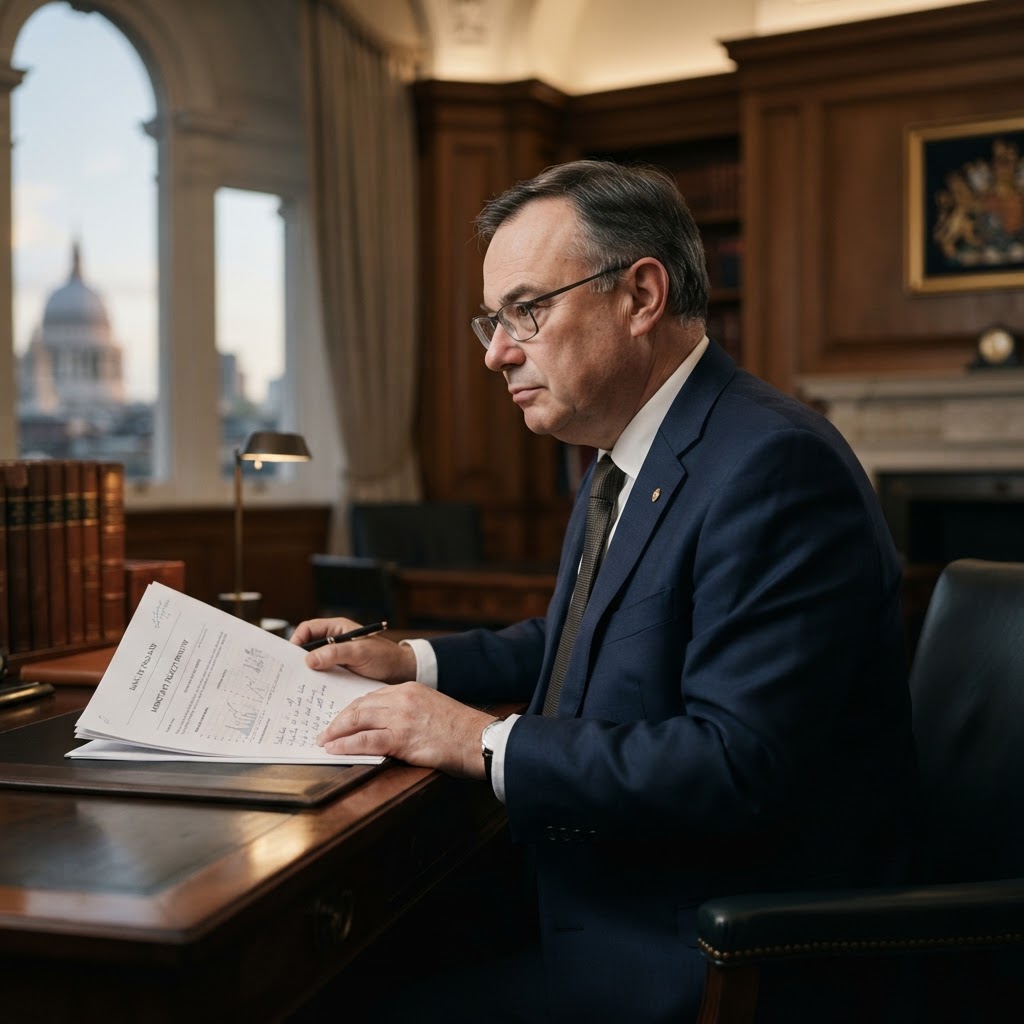

The end of the era of cheap money The Monetary Policy Committee (MPC) at the Bank of England has finally signalled an end to the long-standing era of ultra-low borrowing costs. In a decisive move, eight of the nine members voted to raise the base interest rate by 25 basis points, lifting it to 4% from 3.75%. This development marks the first time in over three years that the central bank has moved to tighten monetary policy, a shift that reverberates far beyond the City of London, impacting mortgage holders, businesses, and institutional investors across the United Kingdom.
A reaction to global volatility The primary driver behind this recalibration is the persistent and sharp rise in global energy prices, which has been severely exacerbated by the intensifying conflict between the United States and Iran. As trade routes face disruption and crude oil markets react with predictable volatility, the domestic economy is feeling the pinch of import-led inflation. The Bank’s analysis suggests that the inflationary pressures are not merely transitory but are becoming embedded within the broader price-setting behaviours of British firms.
Governor Andrew Bailey, addressing the press from Threadneedle Street, urged a degree of composure, stating that this decision should not be interpreted as the commencement of an automated or inevitable sequence of aggressive hikes. Nevertheless, his rhetoric carried a clear warning for the Treasury and the public alike: if the geopolitical landscape continues to deteriorate, further interventions will be not only possible but likely necessary to anchor inflation expectations.
An uphill battle on inflation The economic outlook presented alongside the rate decision makes for sober reading. The Bank of England currently projects that inflation will continue to climb, reaching a zenith of 4.9% in mid-2027. More concerning, however, is the Bank’s forecast regarding the return to its 2% inflation target, which is now not expected until 2028. This long-horizon struggle illustrates the profound difficulty central bankers face in navigating a supply-side shock that is largely external and beyond their immediate control.
For the average British household, this hike represents the first genuine tightening of the belt since 2023. Variable-rate mortgage holders will see an immediate impact on their monthly repayments, while high-street lenders are expected to adjust savings products and loan rates in the coming days. Economists at leading City firms have expressed concerns that while the rate increase is a necessary tool to cool demand, it risks stifling an economy that has yet to fully recover from the structural shifts of the last several years.
The dissent within the committee The single dissenting vote on the MPC serves as a reminder of the delicate balancing act facing policymakers. While the majority was convinced that the risk of unanchored inflation outweighed the risk of slowing economic growth, the minority voice remains concerned that aggressive monetary tightening could inadvertently precipitate a deeper recession. The divide reflects a broader debate occurring throughout Whitehall about how best to shield the productive sectors of the economy while preventing the currency from weakening under the weight of global inflationary pressure.
As the winter months approach, all eyes will remain fixed on the diplomatic developments in the Middle East. Should the situation ease, the Bank may find itself with the flexibility to pause further adjustments. However, as it stands, the UK has entered a new monetary regime defined by caution, vigilance, and an acceptance that the period of benign inflation is firmly behind us.
“The Bank of England’s latest intervention marks a departure from the inertia of the last three years, signalling that the central bank is prepared to prioritise price stability even as the global geopolitical outlook remains fraught with uncertainty.”