The Pound Sterling fell to $1.3202 on Friday, marking its lowest level since February, as the United Kingdom grapples with political uncertainty following the resignation of Prime Minister Keir Starmer on June 22. The abrupt resignation has prompted a leadership vacuum, raising significant concerns among investors regarding the nation's fiscal stability, particularly in the face of a projected £120 billion debt interest bill.
As markets reacted to the news, benchmark 10-year UK gilt yields edged up to 4.85%, reflecting anxiety regarding the caretaker government's ability to maintain fiscal discipline. With the government led by an interim administration, confidence in the UK's economic trajectory appears increasingly fragile.
Market Reactions: Analysts on Alert
Market participants are now closely monitoring the appointment of a successor to Chancellor Rachel Reeves. Analysts have voiced concerns that any perceived lack of fiscal credibility from the new Chancellor could trigger a spike in borrowing costs, compounding the existing challenges for the economy. 'The markets need assurance that whoever steps in has the fiscal competence to handle current pressures,' noted Jonathan Peters, Chief Economic Analyst at Vanguard Investment Solutions.
“Investors are likely to remain jittery until there is clarity on the leadership front.”
The central bank's recent decision to hold interest rates at 3.75% has provided a momentary reprieve for borrowers. However, the recently concluded peace deal between the United States and Iran, which has alleviated tensions in the Middle East, is expected to bear significant economic implications. The deal has led to lower energy prices, thereby improving the inflation forecast for the UK, with projections now hovering around 3.25% for the fourth quarter. As Peters added, 'While the peace dividend certainly alleviates some immediate pressure on inflation, it does little to resolve long-term concerns about leadership and governance.'
FTSE Resilience Amid Global Stabilisation
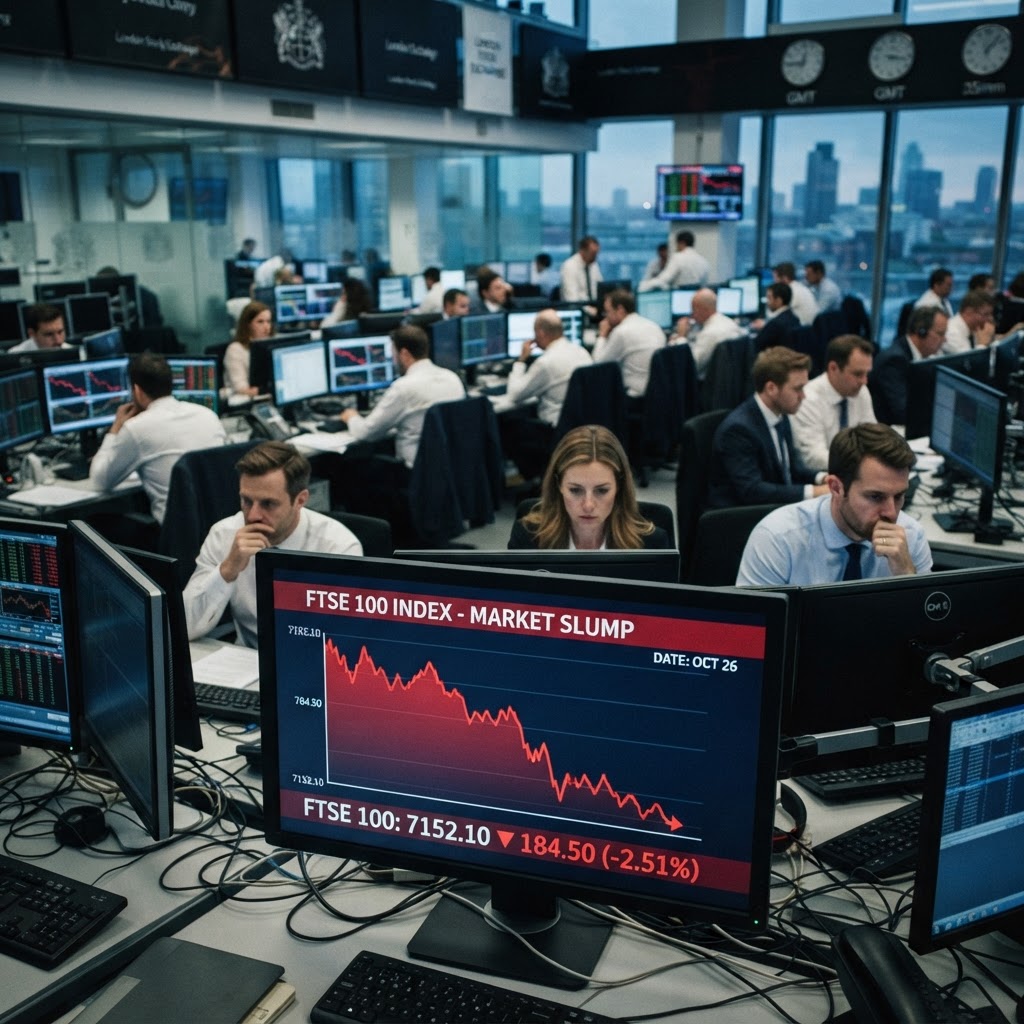
Despite the turbulent waters affecting the currency, the FTSE 100 index has displayed remarkable resilience, remaining stable around the 10,500 mark. This stability is largely attributed to the performance of multinational energy and mining stocks, which have displayed robust growth amid the broader context of global stabilising measures.
The dynamic within these industries reflects a strategic shift towards managing costs effectively in response to recent geopolitical changes. A noteworthy example is BP, whose shares have outperformed expectations due to rising demand for energy amid geopolitical shifts.
The Bigger Picture: Challenges Ahead
This turbulence comes on the heels of recent economic recovery indicators in the UK, which suggested modest growth in early 2026. Yet, with political uncertainty taking centre stage, the spectre of stagnation looms large. The Prime Minister's resignation opens a critical dialogue about the future direction of policy and governance.
In addition, the recent downward trajectory of the pound has been exacerbated by concerns over the overall economic landscape. Britain faces considerable challenges, not least of which is the ongoing fallout from Brexit negotiations, which have left the domestic economy exposed to additional external shocks. With inflationary pressures still prevalent, any shifts in fiscal policy will be closely scrutinised.
Investors' Concerns and Economic Outlook
Investors are increasingly concerned about the long-term implications of this leadership vacuum. The equilibrium achieved in financial markets in 2025 appears to be teetering as fears about a lack of cohesive policy mount. 'Investors are likely to remain jittery until there is clarity on the leadership front,' said Emily Roberts, Senior Market Strategist at Citigroup.
Roberts further elaborated, stating, 'In periods of political instability, currencies often become a barometer for sentiment. If sterling continues its decline, expect to see a significant reaction from the Bank of England, particularly if inflation deviates from its target range.'
Conclusion: Navigating Uncertain Times
As Britain ventures further into this leadership crisis, all eyes will be on the Chancellor’s appointment and the corresponding policy direction it will bring. Given the combination of global economic influences and domestic political strife, both businesses and consumers may need to brace for a challenging quarter ahead.
With each passing day, the significance of addressing the underlying fiscal concerns grows. Investors and economists alike are hoping for a resolution that can restore confidence in the UK economy and, by extension, stabilise the Pound. In the meantime, as market fluctuations continue, the call for strong leadership and fiscal responsibility becomes ever more urgent.
In this climate of uncertainty, any leader stepping in must not only reassure markets but also embark on a path that mitigates the risk of increasing borrowing costs while upholding the nation’s economic integrity.