National Post UK
Monetary Policy Committee Signals Long-Term Tightening as Rates Climb to 4%

The Bank of England has ended its three-year period of monetary stasis with a quarter-point increase. Policymakers cite

The National Post

HomeFinance
Finance

Monetary Policy Committee Signals Long-Term Tightening as Rates Climb to 4%

The Bank of England has ended its three-year period of monetary stasis with a quarter-point increase. Policymakers cite persistent inflationary pressures that threaten to overshoot the 2% mandate well into the coming year.

MS

Marcus Stone

Finance Correspondent

Published 6 November 2026·about 8 hours ago 3 min read
Text
Share

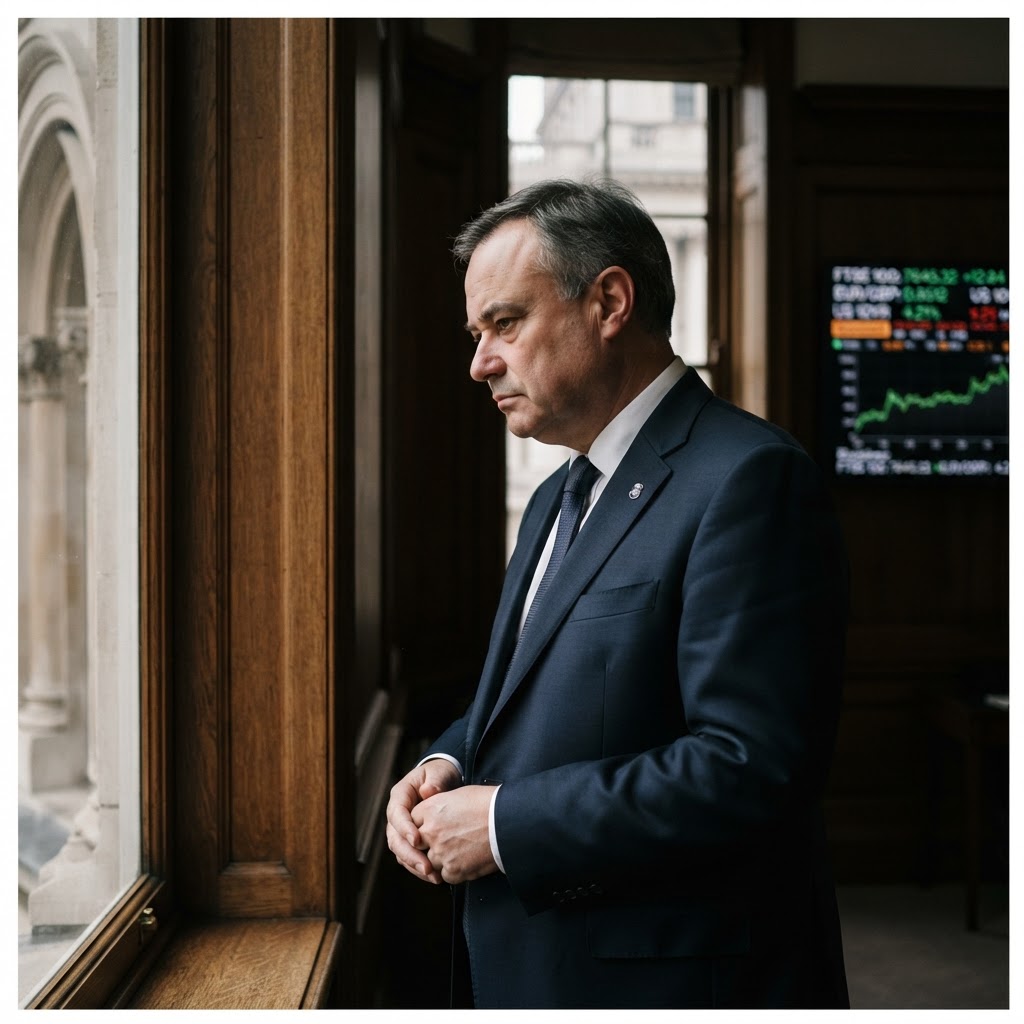
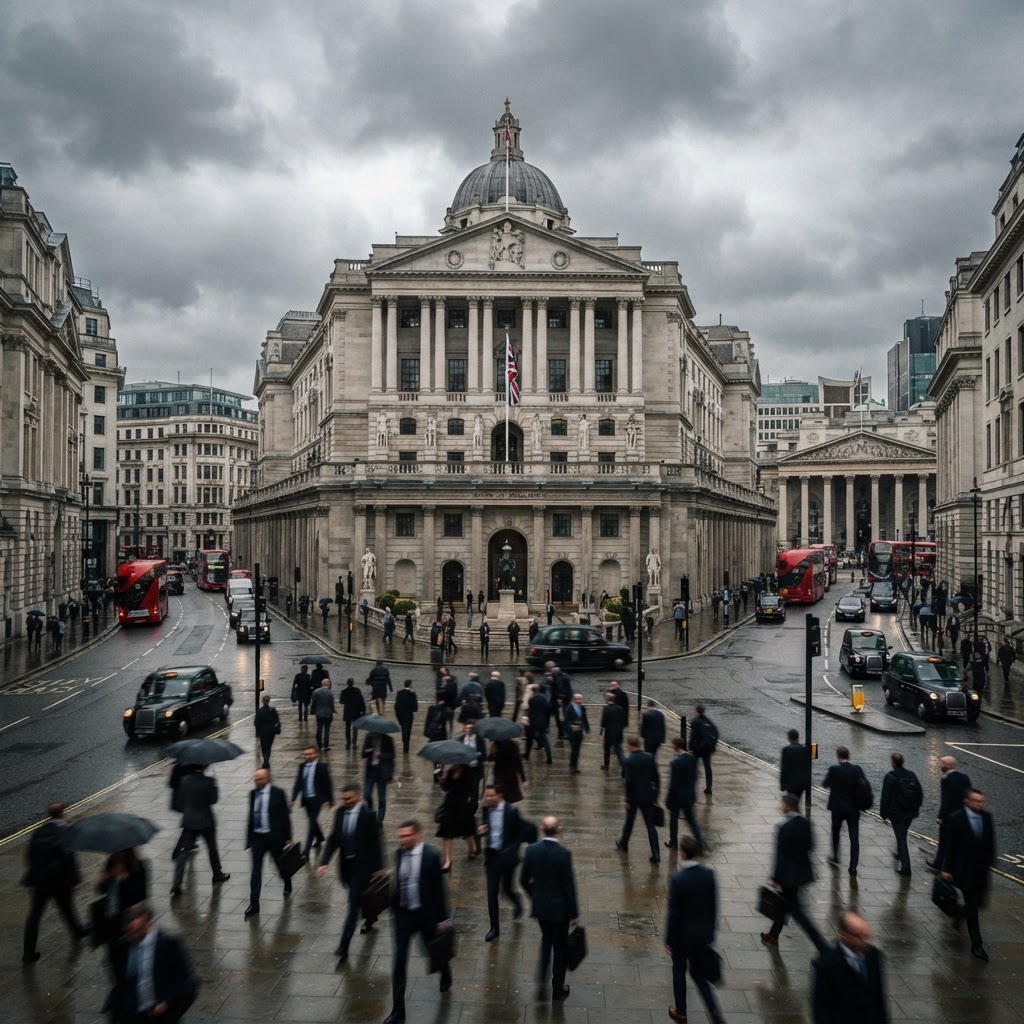
A Watershed Moment for Threadneedle Street In a decision that marks a definitive shift in the nation’s monetary trajectory, the Bank of England’s Monetary Policy Committee (MPC) opted to raise the Bank Rate by 25 basis points on Thursday, bringing the base rate to 4%. The move, which follows an extended period of stability that had lasted since August 2023, reflects a growing apprehension within the Bank regarding the structural resilience of domestic inflation. The decision was notably unanimous, with all nine members of the committee coalescing around the necessity of tightening credit conditions to temper an overheating economy.

The Inflationary Mirage The impetus for this hawkish turn lies in the persistent climb of consumer prices. Recent data indicated that UK CPI inflation stood at 3.5% in September 2026, a figure that continues to outpace wage growth and erode consumer purchasing power. More concerning to the MPC, however, are the forward-looking models provided by the Bank’s economists, which suggest that the headline rate could climb as high as 5% by the second quarter of 2027. This projected trajectory is largely attributed to the volatility of global energy markets and a resurgence in supply chain disruptions precipitated by ongoing geopolitical instability across key trading routes.

Market Reaction and Economic Implications Financial markets reacted with characteristic sobriety. The FTSE 100 closed down 0.43% on the day, a performance hampered not only by the Bank's hawkish posture but also by a broader, international selloff in US technology stocks that rippled across the Atlantic. For the average British household, the implications of a 4% base rate are significant. Mortgage providers are expected to reprice fixed-term deals in the coming weeks, a move that will undoubtedly test the resilience of the residential property market, which has until now remained remarkably buoyant despite the global economic malaise.

The Road to Stability In the accompanying minutes of the meeting, the Committee hinted that this increase may represent the start of a new, more aggressive cycle of monetary policy. While the MPC has historically preferred a gradualist approach, the prospect of inflation remaining entrenched above the 2% target for an extended period has necessitated a firmer hand. Governor Andrew Bailey, speaking after the announcement, acknowledged the difficulty of the balancing act. The Bank must act decisively to curb inflationary expectations without precipitating an unnecessary contraction in industrial output or a spike in unemployment. It is a precarious path, one that assumes the economy can absorb higher borrowing costs without losing the momentum gained over the past three years.

An Expert Perspective Market analysts remain divided on the long-term efficacy of this move. While some argue that the rise is a necessary prophylactic against the debasement of currency, others suggest that the Bank is responding to global supply-side shocks with tools designed to manage demand. As one leading economist noted, the efficacy of the interest rate hike will be heavily contingent upon the evolution of the global energy landscape. Should the cost of crude oil and natural gas continue its upward trajectory, the Bank may find itself in the unenviable position of having to raise rates further into a cooling economy, a scenario that historically risks a technical recession.

TopicsBank of EnglandInterest RatesUK EconomyInflationFinanceMonetary Policy
Share

About the Author

MS

Marcus Stone

Finance Correspondent

Marcus Stone reports for National Post UK with a focus on rigorous analysis and authoritative journalism — a trusted voice across British public life.

Reader Discussion · 6

Subscribers can join the conversation.

SUBSCRIBE TO COMMENT →
F
Fiona Campbell6 Nov

I am struggling to see how this will help with the supply-side issues that are actually driving most of the inflation. Raising rates seems like a blunt instrument for a very complex economic problem.

G
Graham Miller6 Nov

The base rate alone isn't the whole story. Commercial lenders are widening their margins regardless of what Threadneedle Street does, so the real-world impact is always worse than the headlines suggest.

E
Elena Rodriguez6 Nov

It is about time savers saw a decent return on their capital. For years we have been punished by near-zero rates, so this shift is a long overdue normalization.

D
David Thorne6 Nov

While I understand the logic behind the increase, I worry that we are risking a deep recession. The lag effect of these hikes is significant, and I fear the Committee is over-correcting.

S
Sarah Jenkins6 Nov

Another interest rate hike is the last thing my family needs right now with our fixed-rate deal ending in June. It feels like the Bank of England is just squeezing the life out of middle-income households to solve a problem that wasn't of our making.

A
Arthur Sterling6 Nov

Finally, the MPC is showing some backbone. Controlling inflation has to be the absolute priority, even if it makes borrowing more expensive for a while.
More from Finance

Most Read in Finance

Morning Briefing

The day's top stories, before 7am

Join 40,000 readers who start their morning with National Post UK.