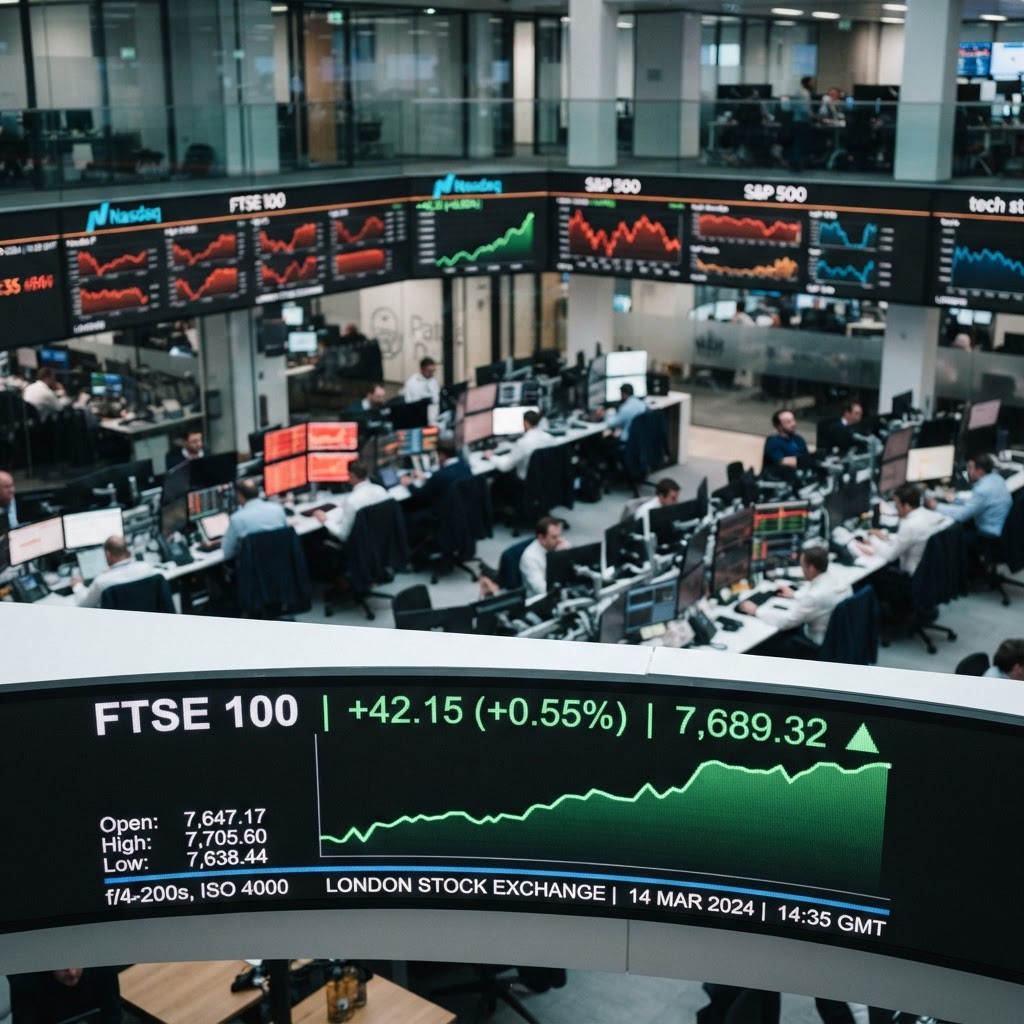

A Return to Calm in the City The FTSE 100 mounted a disciplined recovery on Friday, climbing 0.7 per cent to settle at 10,832. This performance marks a welcome departure from the malaise that defined the preceding two sessions, where uncertainty regarding global interest rate trajectories had left investors in a state of flux. The recovery, which brings the index to its highest level in a week, appears to be underpinned by a more constructive interpretation of domestic macroeconomic data and a palpable easing of tensions within the government bond market.
For traders in London, the primary source of encouragement arrived via the final Purchasing Managers' Index (PMI) data for August. The figures confirmed that the UK’s expansive services sector—which accounts for the lion’s share of national output—continues to defy the gloomier forecasts floated by some pessimistic analysts earlier this summer. The resilience of the services sector is being read by the City as a signal that the domestic economy remains far from the precipice, providing a buffer against the cooling effects of previous monetary tightening.
Commodities and Telecoms Lead the Charge Market leadership on Friday was diverse, suggesting a healthy appetite for risk that had been conspicuously absent earlier in the week. The mining sector, a traditional bellwether for global growth, enjoyed a significant uplift as commodity prices found a firm floor. Endeavour Mining and Fresnillo were among the day's standout performers, rising 3.6 per cent and 2.9 per cent respectively. The renewed interest in precious metals, particularly gold, suggests that some institutional investors are returning to traditional hedges even as equity sentiment improves.
Beyond the resource sector, the telecommunications and financial infrastructure spaces saw notable momentum. The London Stock Exchange Group recorded a healthy 3.9 per cent increase, reflecting continued confidence in the UK's financial plumbing despite the broader geopolitical headwinds. Vodafone, too, provided a catalyst for investor optimism, climbing 2.4 per cent following the launch of a refreshed TV and entertainment suite for its VodafoneThree unit. This strategic expansion into high-margin content services appears to have been received favourably by the market, as the company seeks to diversify its revenue streams in an increasingly competitive domestic landscape.
The Defensive Lag Despite the prevailing optimism, the session was not without its laggards. Defensive stocks, which are typically favoured when investors are jittery, saw a rotation of capital as money flowed back into cyclical sectors. Reckitt Benckiser and ConvaTec felt the brunt of this shift, sliding 2.8 per cent and 2.7 per cent respectively. Admiral Group also faced selling pressure, closing down 2.5 per cent. For these firms, the retreat reflects a broader rebalancing of portfolios; as confidence in the cyclical recovery takes hold, the premium paid for safety stocks often undergoes a swift, if somewhat painful, repricing.
The Broader Horizon Looking ahead, the stabilisation of the gilt market remains the most critical factor for domestic equity health. Earlier volatility in government debt, driven by concerns over public spending and the fiscal deficit, had cast a long shadow over the FTSE. With the bond market now displaying a degree of serenity, the valuation gap between equities and fixed-income assets is once again coming into focus. While the Bank of England is expected to remain cautious in its approach to policy, Friday’s data suggests that the UK economy may yet possess the requisite stamina to navigate the current high-interest-rate environment without succumbing to a severe contraction.
Investors will now turn their gaze to the autumn budget, where fiscal policy will likely become the primary driver of market sentiment. Until then, the focus remains on corporate resilience and the ability of British firms to maintain margins in the face of persistent, albeit moderating, inflationary pressures. The City finishes the week on a note of cautious optimism, a sentiment that may provide the foundation for a more sustained rally as we enter the final quarter of the year.
“The resilience of the services sector is being read by the City as a signal that the domestic economy remains far from the precipice, providing a buffer against the cooling effects of previous monetary tightening.”