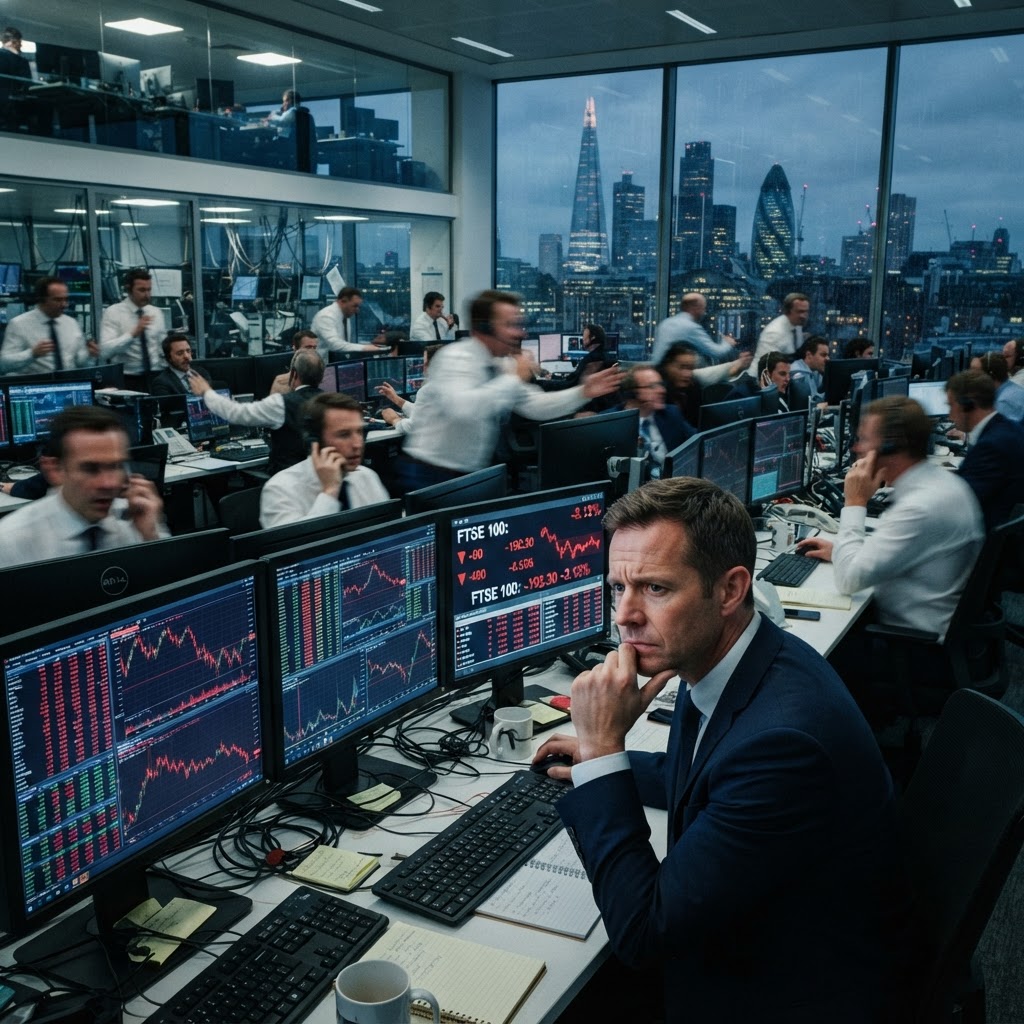
The FTSE 100 index has consolidated its position near record heights, concluding trading on Thursday at 10,652.87, a mere whisker away from its all-time peak. In a remarkable showcase of market resilience, this surge can be largely attributed to the unexpected slowdown in the United States job market, which revealed that only 57,000 positions were added in June—a figure that fell significantly short of analysts’ projections.
The news from across the Atlantic has reverberated through global markets, instilling a sense of cautious optimism that further interest rate hikes by the Federal Reserve may be paused. In this context, the FTSE 100 benefitted from a 1.7% rise, extending a streak that has now seen the index achieve its sixth consecutive quarterly gain, a remarkable feat for UK equities.
Bank of England on High Alert
However, it is not all smooth sailing for UK investors. Despite the celebratory atmosphere in the stock market, underlying economic pressures persist. The Bank of England's Governor Andrew Bailey has reiterated the significance of vigilance concerning inflation, even as the latest figures showed consumer prices easing to 2.8% in May.
“The Bank of England's vigilance is paramount as rising energy costs threaten to undermine recent progress in curbing inflation.”
Bailey conveyed that the Monetary Policy Committee remains on high alert, stating, "While it is encouraging to see inflation come down, we cannot afford to be complacent. The recent spike in energy prices is a stark reminder of the challenges we face in terms of cost of living adjustments for many households." His comments come in light of a 13% increase in the Ofgem energy price cap that took effect this July, which is expected to exert renewed upward pressure on consumer prices in the coming months.
Currency Movements and Market Reactions
A noteworthy development accompanying the performance of the FTSE 100 has been the strengthening of the pound. Sterling rose to $1.3367, marking its strongest position in several weeks, as the dollar softened in response to the prospect of a Federal Reserve pause in rate hikes. This movement provides some relief to UK businesses but also underscores the fragility of the current economic landscape.
The positive momentum in the FTSE has largely been driven by sectors traditionally deemed as defensive, namely defence and energy. BAE Systems and Babcock International emerged as clear leaders in this domain, each contributing vocally to the index’s advance. The heightened geopolitical tensions globally and the UK's own defence commitments have enhanced investor confidence in these companies, whose stock performance has been robust in the wake of escalating military expenditures.
The Broader Economic Context
To fully grasp the implications of this market dynamism, it is essential to contextualise these developments within a broader economic framework. The UK has been grappling with the repercussions of the post-pandemic recovery, characterised by persistent inflation and an uncertain outlook. Despite the Bank of England's efforts to rein in prices through monetary measures, external pressures, including the rising cost of energy and raw materials, continue to threaten progress.
As supermarkets and retailers brace for the impact of rising energy costs, the likelihood of increased consumer prices looms large. This may serve as a dampener on the currently buoyant sentiment in the FTSE 100, as consumers tighten their belts in the wake of inflated costs. Market analysts are closely monitoring how these economic variables will play out in the second half of 2026, particularly as consumer sentiment and spending behaviour often lag behind market movements.
Looking Forward
Analysts suggest that while the immediate outlook for the FTSE 100 appears promising, caution is warranted. Investors are encouraged to keep a close eye on forthcoming economic indicators, especially those pertaining to employment, inflation and overall economic growth. Richard Buxton, a prominent market analyst, notes, “The current gains in the FTSE 100 are encouraging, but they come amidst a backdrop of economic uncertainty. A fragile equilibrium exists, and the resilience of this rally will be put to the test against the realities of domestic inflation and consumer spending.”
As the FTSE 100 continues to capture the attention of both domestic and international investors, the interplay of economic indicators will be pivotal in steering the future course of the index. Stakeholders are reminded that maintaining this momentum will require careful navigation of the turbulent economic waters that lie ahead.
With the UK just entering the latter half of 2026, an acknowledgement of both the challenges and opportunities will be key for sustainable growth in the months and years to come.