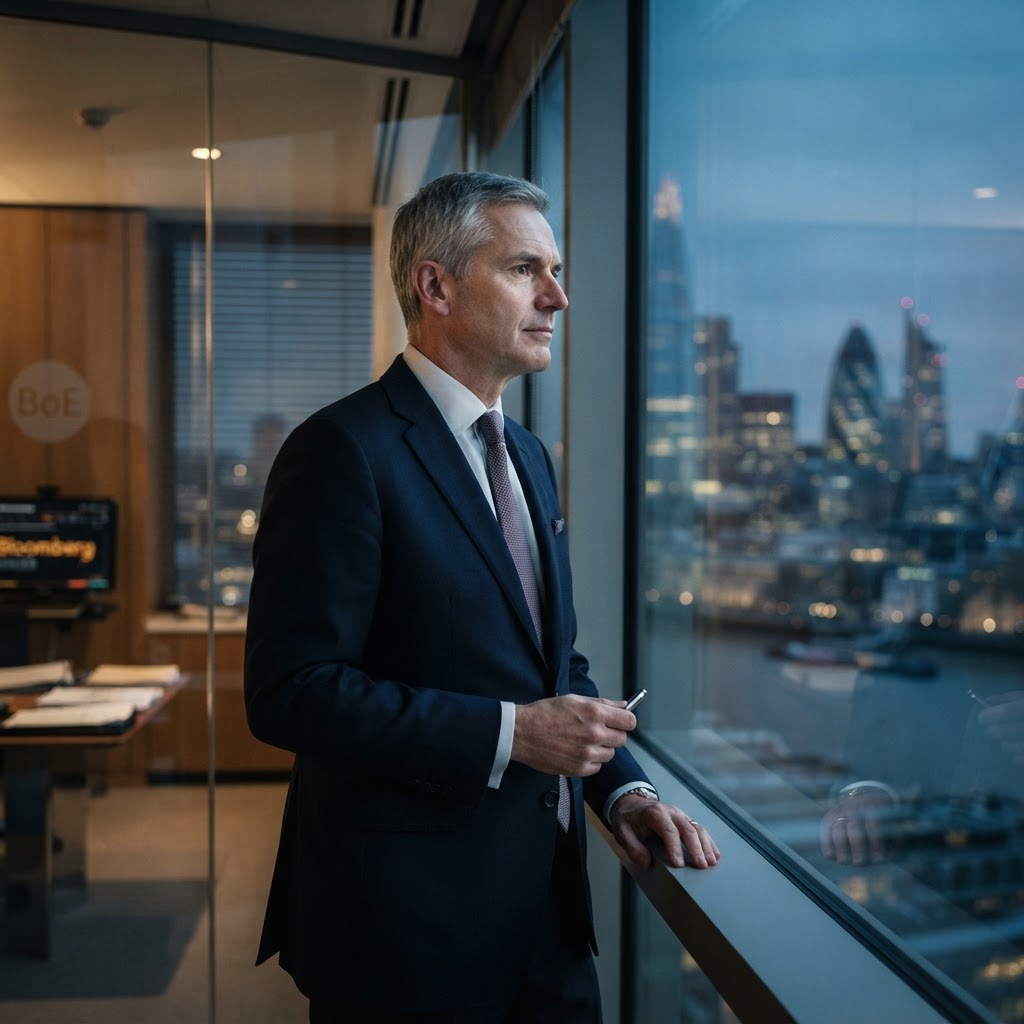
The FTSE 100 index experienced a notable decline on Thursday, closing down 1.0% at 10,399.70 points, in response to the Bank of England’s decision to maintain the base interest rate at 3.75%. This development comes as global energy prices remain unsettlingly high, which has exacerbated inflationary pressures within the UK economy.
The Monetary Policy Committee (MPC) voted 7-2 in favour of retaining the current rate, illustrating a cautious approach to monetary policy amid persistent volatility in global energy markets. The Bank's decision aligns with their ongoing concern about the inflationary expectations that continue to loom over the economy, particularly in the services sector, which has been showing signs of robust pricing pressure.
Market Reaction and Sector Performance
Market analysts have noted that the decision from the MPC, alongside a similar stance by the US Federal Reserve—which opted to hold its rates steady at 3.50-3.75%— has contributed to a widespread pessimism on the trading floor. Investors, wary of continued inflation, have tempered their expectations for an easing of monetary policy, leading to a sell-off in several key sectors.
“The challenge ahead is maintaining growth while tackling inflation—a delicate balance that the Bank of England must navigate in the coming months.”
Homebuilder stocks felt the brunt of the downturn, with Persimmon’s shares plunging 6.2%. The housing market, which typically reacts sensitively to interest rate changes, is increasingly seen as exposed to rising costs and declining consumer confidence. Similarly, mining stocks faced significant pressure, with Fresnillo and Endeavour Mining both dropping nearly 6%. Investors appear concerned that higher interest rates could hamper global demand for commodities, as borrowing costs rise.
Broader Economic Context
This moment of market turmoil must be understood against a backdrop of ongoing economic challenges in the UK. The latest Consumer Price Index indicated inflation remaining stubbornly above the Bank's 2% target, driven by escalating costs in energy and essential goods. The forecast remains bleak, with analysts predicting that inflation could persist in the near term as economic activities continue to grapple with global supply chain disruptions.
David Wilcox, chief economist at London Economics, commented, "The Bank of England’s decision reflects its commitment to combating inflation, but the risk is that holding rates could stifle economic growth. We may see further tightening if inflation does not ease, which could exacerbate the slowdown in sectors already feeling the pressure from higher borrowing costs."
Corporate Highlights
Amidst the challenging market conditions, some companies have managed to buck the trend. FirstGroup, the travel operator, saw its share price soar following a robust set of annual profit figures that exceeded analyst expectations. The company also announced a significant £100 million share buyback, a move that is likely to bolster investor confidence during these turbulent times. This divergence underscores the varied landscape of corporate performance, with certain sectors thriving while others languish under the weight of economic uncertainty.
The Global Picture
Investor sentiment has also been influenced by developments on the other side of the Atlantic. The Federal Reserve’s cautious stance—emphasising the need for vigilance in the face of persistent inflation—has sent waves through global markets. US policymakers hinted at the possibility of future interest rate hikes if inflation remains unchecked, a development that adds another layer of uncertainty for international investors monitoring the UK’s economic situation.
As more data emerges regarding inflation trends and economic activity levels, both investors and policymakers will be watching closely. The implications of sustained high inflation levels and elevated interest rates could have serious implications not just for the UK economy, but for global financial markets as well.
Looking Ahead
The upcoming weeks will be pivotal for the Bank of England and its approach to monetary policy. As inflationary pressures persist and economic signals remain mixed, the potential for future adjustments to interest rates looms large. Investors are left with the question of how resilient the UK economy can be in the face of these challenges, particularly as global markets respond to domestic policy decisions.
In summary, the FTSE 100's retreat reflects a broader recalibration of investor expectations in light of the Bank of England's latest insights into inflationary pressures and interest rates. As noted by Wilcox, "The challenge ahead is maintaining growth while tackling inflation—a delicate balance that the Bank of England must navigate in the coming months."