National Post UK
Economic Pressure Mounts as Energy Volatility and Debt Costs Squeeze British Industry

As crude oil climbs to $104 per barrel, businesses across the UK are grappling with an increasingly hostile financial cl

The National Post

HomeFinance
Finance

Economic Pressure Mounts as Energy Volatility and Debt Costs Squeeze British Industry

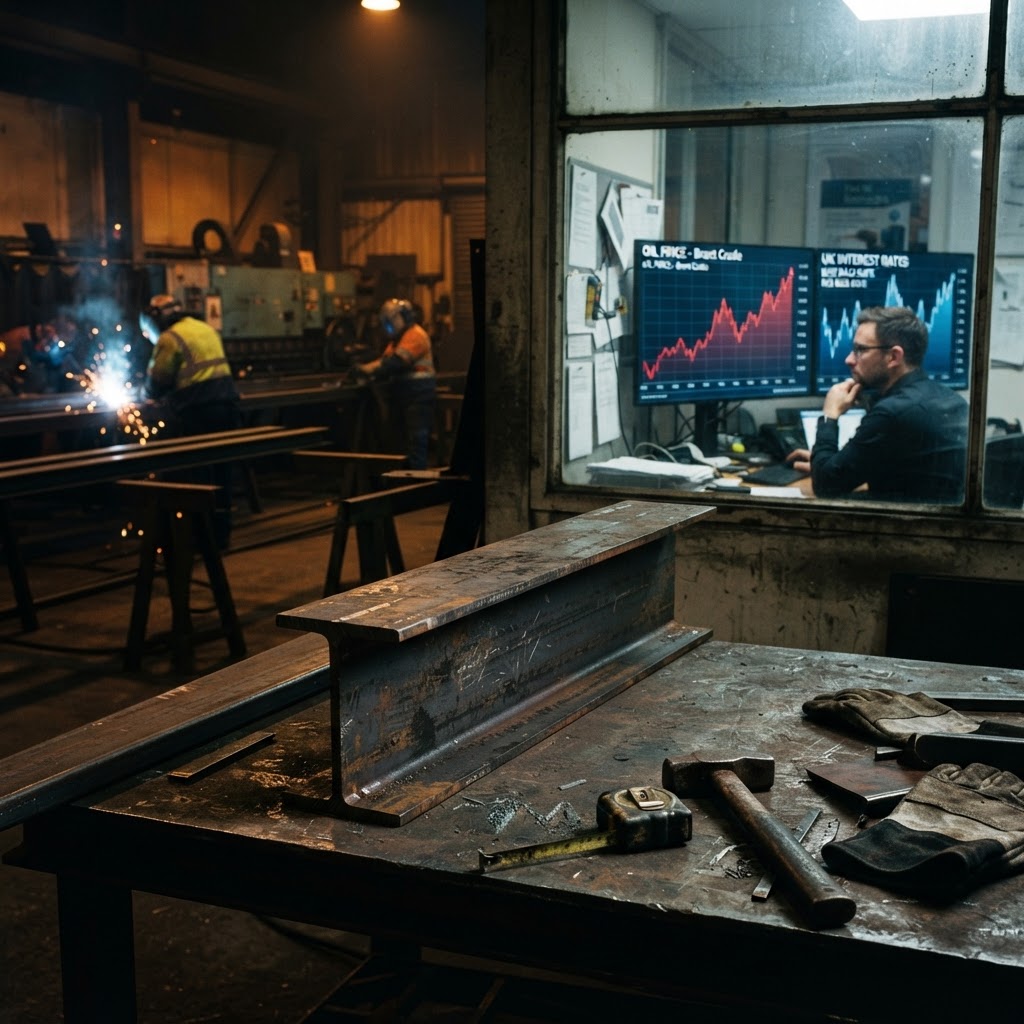
As crude oil climbs to $104 per barrel, businesses across the UK are grappling with an increasingly hostile financial climate. While pockets of resilience emerge in construction and employment, the looming shadow of insolvency remains the primary concern for City analysts.

MS

Marcus Stone

Finance Correspondent

Published 9 October 2026·4 days ago 3 min read
Text
Share

The Price of Energy Uncertainty For British enterprise, the autumn of 2026 has brought a familiar but unwelcome chill. On 8 October, the global oil market saw crude prices settle at $104 per barrel, a threshold that historically serves as a catalyst for inflationary pressure across the manufacturing and logistics sectors. This surge in energy costs arrives at a moment when the UK business landscape is already navigating the compounding effects of a tightening monetary environment.

The Weight of Borrowing Costs The Bank of England’s cautious approach to interest rates has ensured that borrowing costs remain on a firm upward trajectory, effectively raising the barrier to entry for capital investment. For small and medium-sized enterprises (SMEs) that rely heavily on credit facilities to manage cash flow, the current environment is particularly unforgiving. High borrowing costs are no longer a theoretical concern for boardroom strategy; they are a daily operational burden that threatens to stifle expansion plans across the Midlands and the North.

Green Shoots in Challenging Soil Despite the prevailing gloom, recent data releases offer a more nuanced narrative. The construction sector, long considered a barometer for broader economic health, has shown signs of stabilisation. After several quarters of contraction, developers appear to have adjusted to the new baseline of material costs and labour constraints. This, combined with an uptick in domestic hiring figures, suggests that British businesses retain a degree of structural resilience. Firms appear to be prioritising human capital even as they scrutinise their balance sheets, hinting that the labour market may be better insulated than initial forecasts suggested.

The Insolvency Spectre However, analysts caution against premature optimism. The central concern remains the elevated risk of corporate insolvency. The 'zombie company' phenomenon—where firms survive on legacy low-interest debt—is being rapidly eroded by the reality of higher repayments. Insolvency practitioners report a surge in inquiries from sectors that were hitherto considered stable, as the confluence of energy costs and interest rate pressure forces a reckoning. The coming winter months will likely prove to be a testing period, as the ability to service debt becomes the ultimate arbiter of corporate survival.

Navigating the Path Forward As the nation looks towards the end of the year, the challenge for the Chancellor and the Governor of the Bank of England is to balance the containment of inflation with the need to avoid an unnecessary fiscal contraction. For the average British business owner, the priority remains survival. The economic reality of October 2026 demands a lean approach to operations, with a focus on liquidity over rapid growth. While the UK economy has proven its ability to weather volatility in the past, the current combination of energy-led inflation and rising borrowing costs represents a distinctive challenge for the current generation of leaders.

TopicsUK EconomyBusiness FinanceOil PricesInterest RatesInsolvencyInvestmentMarcus Stone
Share

About the Author

MS

Marcus Stone

Finance Correspondent

Marcus Stone reports for National Post UK with a focus on rigorous analysis and authoritative journalism — a trusted voice across British public life.

Reader Discussion · 6

Subscribers can join the conversation.

SUBSCRIBE TO COMMENT →
E
Eleanor Rigby9 Oct

It is easy to blame the markets, but the lack of foresight in our national energy policy over the last decade is now hitting home. We are paying the price for years of neglect while other nations seem far better prepared.

R
Robert H. Finch9 Oct

As someone who has worked in logistics for thirty years, this is the most precarious situation I have witnessed. The cost of fuel is eating up our entire profit margin before a single delivery is even made.

L
Linda M. Clarke9 Oct

I am not sure that more government intervention is the answer here. Surely we should be looking at diversifying our energy supply lines more aggressively rather than expecting subsidies to fix a structural issue.

D
David Thorne9 Oct

People need to remember that this isn't just about energy prices, but also the servicing of debts taken on during the last few years of turbulence. Businesses are essentially fighting a war on two fronts and the balance sheet is taking a beating.

S
Sarah Jenkins9 Oct

It feels like we are trapped in a perpetual cycle of crises. While I understand global markets are volatile, it is incredibly frustrating to see no long-term strategy being laid out to shield domestic industry from these shocks.

A
Arthur Penhaligon9 Oct

My small manufacturing firm is already struggling to keep the lights on with these energy spikes. If the government doesn't step in with some form of targeted relief, I fear we will be forced to cut half our staff by Christmas.


More from Finance

Most Read in Finance

Morning Briefing

The day's top stories, before 7am

Join 40,000 readers who start their morning with National Post UK.