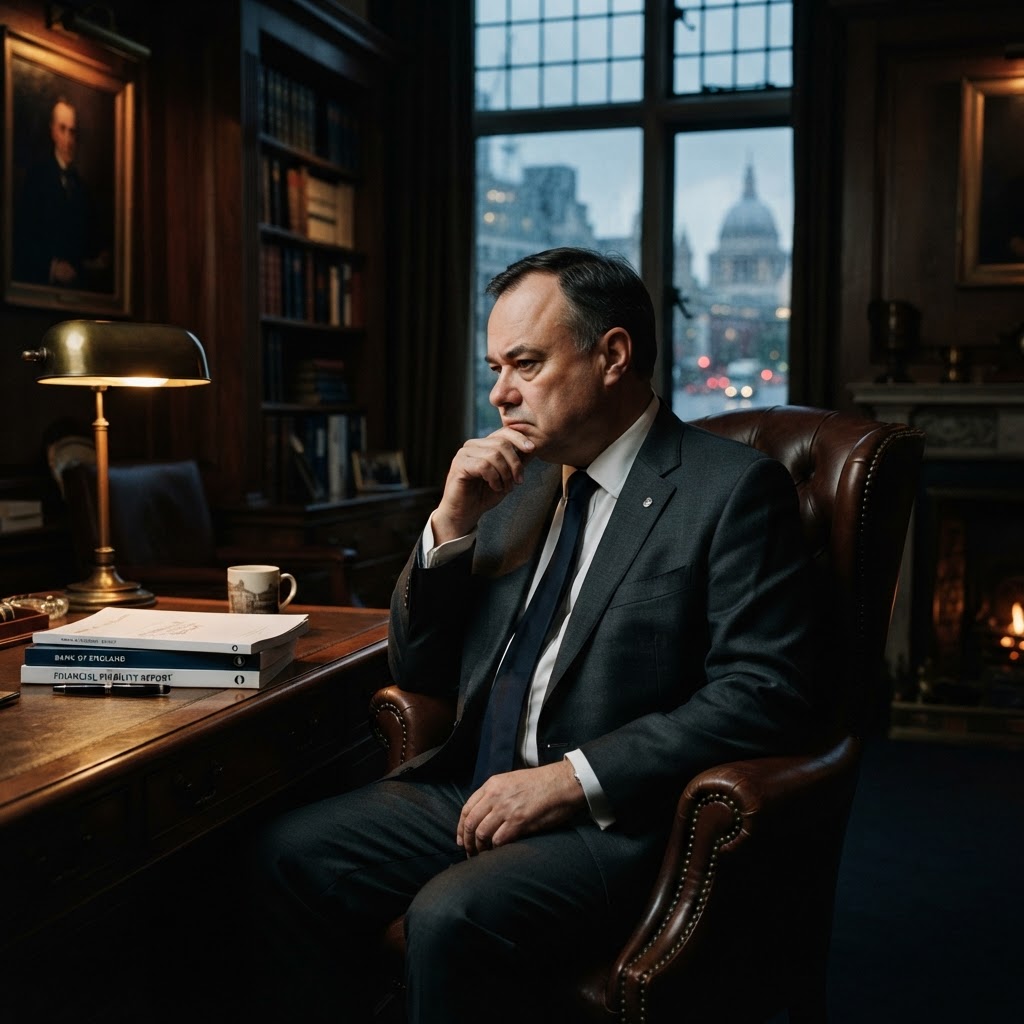
A Strategy of Measured Restraint The Monetary Policy Committee (MPC) of the Bank of England delivered a widely anticipated verdict this morning, voting 7-2 to maintain the Bank Rate at 3.75 per cent. The decision, representing the fifth consecutive meeting at which policymakers have resisted the urge to shift the dial, underscores a delicate balancing act. While the domestic narrative of cooling inflation suggests that the apex of the interest rate cycle has passed, the external environment remains fraught with uncertainty, particularly concerning the stability of global energy markets.
For Governor Andrew Bailey, the challenge lies in distinguishing between the cyclical decline of consumer price index inflation and the potential for supply-side shocks triggered by the escalating crisis in the Middle East. During his press conference at Threadneedle Street, the Governor was characteristically measured. He acknowledged that the transmission of tighter monetary policy is beginning to dampen economic activity as intended, yet he remained steadfast in his refusal to signal an imminent pivot toward loosening.
The Shadow of Energy Volatility The primary concern currently animating the debates of the nine-member committee is the transmission of geopolitical risk into household budgets. Should conflict in the Middle East disrupt critical maritime trade routes or result in renewed volatility in crude oil and natural gas pricing, the progress made in suppressing domestic inflation could be rapidly undone. The MPC is acutely aware that even a transient spike in energy costs could anchor long-term inflation expectations above the target threshold of 2 per cent.
Economic analysts suggest that the two dissenting voices on the committee—who reportedly advocated for a quarter-point reduction—are prioritising the signs of lackluster growth. Recent GDP figures have painted a picture of a British economy struggling to find meaningful momentum, burdened by stagnant productivity and a tepid business investment climate. However, the majority view, which continues to prevail, reflects a structural caution rooted in the lessons of the last inflationary cycle: that it is far more costly to cut too early and face a subsequent, sharper resurgence of prices than to maintain a restrictive stance for a duration longer than may be strictly necessary.
Market Resilience and the Currency Landscape In the financial markets, the response to the announcement has been nuanced. The FTSE 100 has demonstrated persistent volatility, recently navigating the 10,868 level as investors struggle to reconcile domestic economic data with the broader, more menacing global geopolitical outlook. Positive GDP growth, while modest, has provided a degree of support for domestic equity valuations, yet this has been frequently offset by the flight to safety that characterises periods of international tension.
Perhaps more notable has been the resilience of Sterling. Despite a broader, strength-led rally in the US Dollar, which has been buoyed by its own status as a global safe haven, the British Pound has maintained its footing. This resilience suggests that global currency markets may be pricing in a 'higher-for-longer' environment in London, even as other major central banks begin to flirt with the prospect of monetary easing.
“The Bank of England must ensure that any future increases in energy costs caused by global instability are treated as transitory rather than a fundamental shift in the inflationary trajectory.”
The Long View As the UK enters the latter half of the year, the Bank of England finds itself trapped in a period of extended policy limbo. The domestic economy is showing sufficient evidence of cooling to satisfy those who fear a recession, yet the spectre of external inflationary pressure prevents a definitive return to stimulus. For the average British household, the status quo suggests a continuation of the current cost-of-borrowing environment, with little expectation of immediate relief for mortgage holders or corporate borrowers seeking to expand their operations.
Governor Bailey remains clear on one point: the Bank of England will not be rushed into a policy change based on short-term market sentiment. Whether the current stance is viewed in hindsight as a triumph of prudent economic management or a failure to recognise the onset of a domestic slowdown will depend almost entirely on the path of oil prices over the coming quarter.