
National Post UK
Buenos Aires Ruling Breaks Stalemate in High-Stakes Nazi Looted Art Claim

In a decision that resonates far beyond South American borders, an Argentine court has ordered the restitution of a stol

The National Post

HomeCulture
Culture

Buenos Aires Ruling Breaks Stalemate in High-Stakes Nazi Looted Art Claim

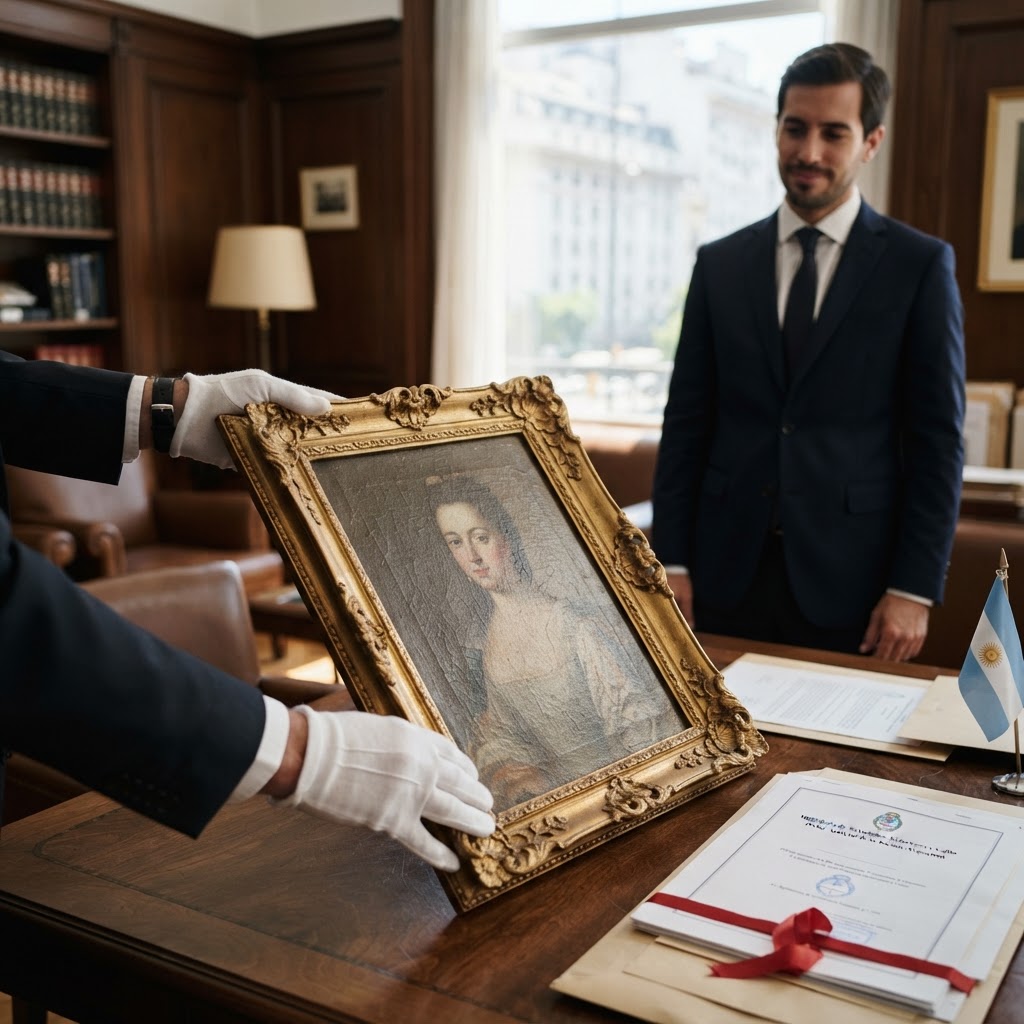
In a decision that resonates far beyond South American borders, an Argentine court has ordered the restitution of a stolen Italian portrait to the descendants of a Jewish dealer. The verdict marks a pivotal moment in the arduous pursuit of justice for victims of Third Reich plunder.

VC

Victoria Cross

Culture Editor

Published 30 September 2026·1 day ago 2 min read
Text
Share

A Long-Awaited Restoration of Justice For the descendants of those whose cultural heritage was systematically dismantled during the Second World War, the wheels of international law often grind with agonising slowness. This week, however, a landmark ruling from a Buenos Aires courtroom has provided a rare, tangible victory for those seeking the restitution of art stolen under the Nazi regime. The court has formally cleared the path for the return of a long-lost Italian portrait, currently held in the Argentine capital, to the rightful heir of a prominent Jewish art dealer whose collection was seized amidst the horrors of the 1940s.

The Weight of Provenance The case has been defined by a decade-long labyrinth of archival research, forensic provenance analysis, and complex cross-border litigation. At the heart of the matter lies a masterpiece that became a ghost of the art world after it vanished during the Nazi occupation. For years, the painting had languished in private collections, its murky history shielded by a lack of international coordination. The Argentine judiciary’s decision to recognise the claimant's rights is being hailed as a triumph of legal diligence over the obfuscation that has historically allowed looted works to remain in illicit possession.

The Global Context This development is set against a broader international landscape that remains sharply focused on the Washington Principles on Nazi-Confiscated Art. While these non-binding guidelines have facilitated thousands of settlements since 1998, they are frequently tested by varying national attitudes toward statute of limitations and the rights of 'good faith' purchasers. Experts in the United Kingdom, where the Spoliation Advisory Panel continues to play a significant role in mediating such disputes, suggest that the Argentine ruling could provide a vital precedent for jurisdictions that have previously been resistant to historical restitution claims.

A Legacy Reclaimed The significance of the portrait extends beyond its aesthetic and financial value. For the heir involved, the painting represents a fractured connection to a family legacy severed by the atrocities of the Holocaust. As the global art market faces increasing pressure to conduct rigorous due diligence, the Buenos Aires court has sent a clear message that the passage of time does not extinguish the moral or legal obligation to address state-sponsored theft. As the legal teams prepare the necessary documentation for the repatriation of the portrait, the international cultural community looks on with a sense of renewed purpose in the ongoing struggle to reconcile the wrongs of the past.

TopicsArtRestitutionHistoryArgentinaLawNaziCulture
Share

About the Author

VC

Victoria Cross

Culture Editor

Victoria Cross reports for National Post UK with a focus on rigorous analysis and authoritative journalism — a trusted voice across British public life.

Reader Discussion · 5

Subscribers can join the conversation.

SUBSCRIBE TO COMMENT →
M
Michael Sterling30 Sept

This ruling highlights the massive gap between ethical duty and legal obligation. Hopefully, this encourages a more transparent approach to provenance research across the board.

E
Eleanor Rigby30 Sept

I am curious to see how the Argentine authorities plan to enforce this ruling if the parties involved are based elsewhere. International law is notoriously toothless when it comes to cross-border art disputes.

D
David Thorne30 Sept

My grandfather spent years trying to track down a family painting lost in the chaos of the war. It is heartening to see that even after all this time, the truth can still emerge in a courtroom.

S
Sarah Jenkins30 Sept

While I support the principle, one has to wonder where we draw the line with historical provenance. It sets a complex legal precedent that might cause endless litigation for museums already struggling with funding.

A
Arthur Penhaligon30 Sept

It is about time these institutions were held to account. Heritage belongs with the rightful families, not hidden away in private collections or mismanaged archives.


More from Culture

Most Read in Culture

Morning Briefing

The day's top stories, before 7am

Join 40,000 readers who start their morning with National Post UK.