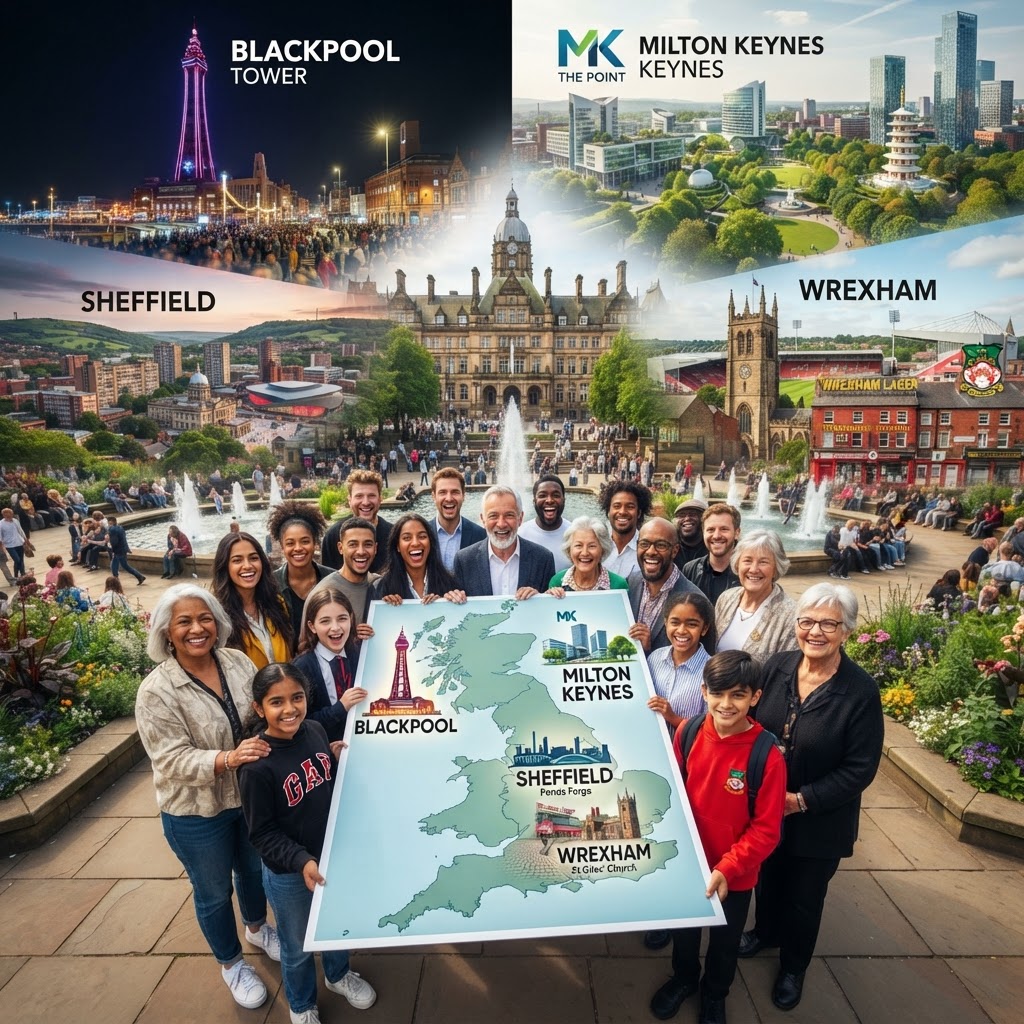
The four shortlisted candidates will now prepare their final bids for the prestigious accolade. The initiative seeks to leverage the arts as a primary engine for urban regeneration and civic renewal.
A Crucible for Cultural Revival
The race to secure the title of UK City of Culture 2029 has entered its final, high-stakes phase, as the government confirms a diverse shortlist of four candidates: Blackpool, Milton Keynes, Sheffield, and Wrexham. This selection represents not merely a competition for artistic prominence, but a calculated pivot in the national strategy to stimulate economic growth and social cohesion in the regions. By positioning cultural investment at the heart of municipal policy, the scheme seeks to replicate the success seen in previous cycles, where the title acted as a catalyst for sustained regional regeneration.
The Economic Argument for the Arts
In an era of fiscal restraint, the UK City of Culture programme stands as a testament to the argument that investment in arts is an investment in infrastructure. The title is far more than a ceremonial badge; it is a vehicle for significant capital influx and tourism. As witnessed in Bradford, the previous winner, the designation facilitates a transformative scale of public engagement. With over 6,500 events delivered throughout their tenure—the vast majority offered free to the public—the city demonstrated how high-density programming can fundamentally alter a local economy. For the four finalists, the incentive is clear: the prospect of attracting domestic and international visitors while securing long-term heritage funding.
Diverse Paths to Prosperity
The geographic spread of the shortlist highlights the breadth of the current cultural ambition. Blackpool, long a bastion of traditional British seaside tourism, sees the bid as a bridge towards year-round economic viability. Conversely, Milton Keynes, often defined by its modernist architecture and rapid growth, intends to use the platform to redefine its cultural identity on a national stage. Sheffield, with its rich industrial heritage, aims to leverage its existing creative sector to bridge the gap between academic innovation and public utility. Meanwhile, Wrexham’s recent international spotlight, bolstered by high-profile investments in its sporting infrastructure, presents a unique case for cultural diplomacy and community-led development.
Reframing National Pride
Beyond the spreadsheets of tourist spend and job creation, the Department for Culture, Media and Sport continues to frame this competition as a vital component in boosting regional pride. By decentralising the cultural conversation away from London and the South East, the government is attempting to mend the frayed edges of the Levelling Up agenda. Sociologists and urban planners alike have noted that providing communities with the agency to define their own cultural narratives can foster a sense of belonging that state-led top-down projects often fail to achieve. The competition is not just about staging spectacles; it is about building the capacity for cities to sustain their own creative ecosystems long after the title has been passed on to the next incumbent.
Looking Toward the Final Decision
As the finalists refine their bids, the evaluation panel will scrutinise not only the ambition of their proposed programmes but also the long-term feasibility of their claims. The successful candidate must demonstrate that their 2029 year is a foundation for a decade of growth, rather than a fleeting moment of glory. In the coming months, the scrutiny of these four local authorities will intensify as they navigate the rigorous requirements of the final assessment process. For Blackpool, Milton Keynes, Sheffield, and Wrexham, the task is now to prove that they possess the logistical, creative, and political maturity to transform their respective cities into the cultural heartbeat of the nation.