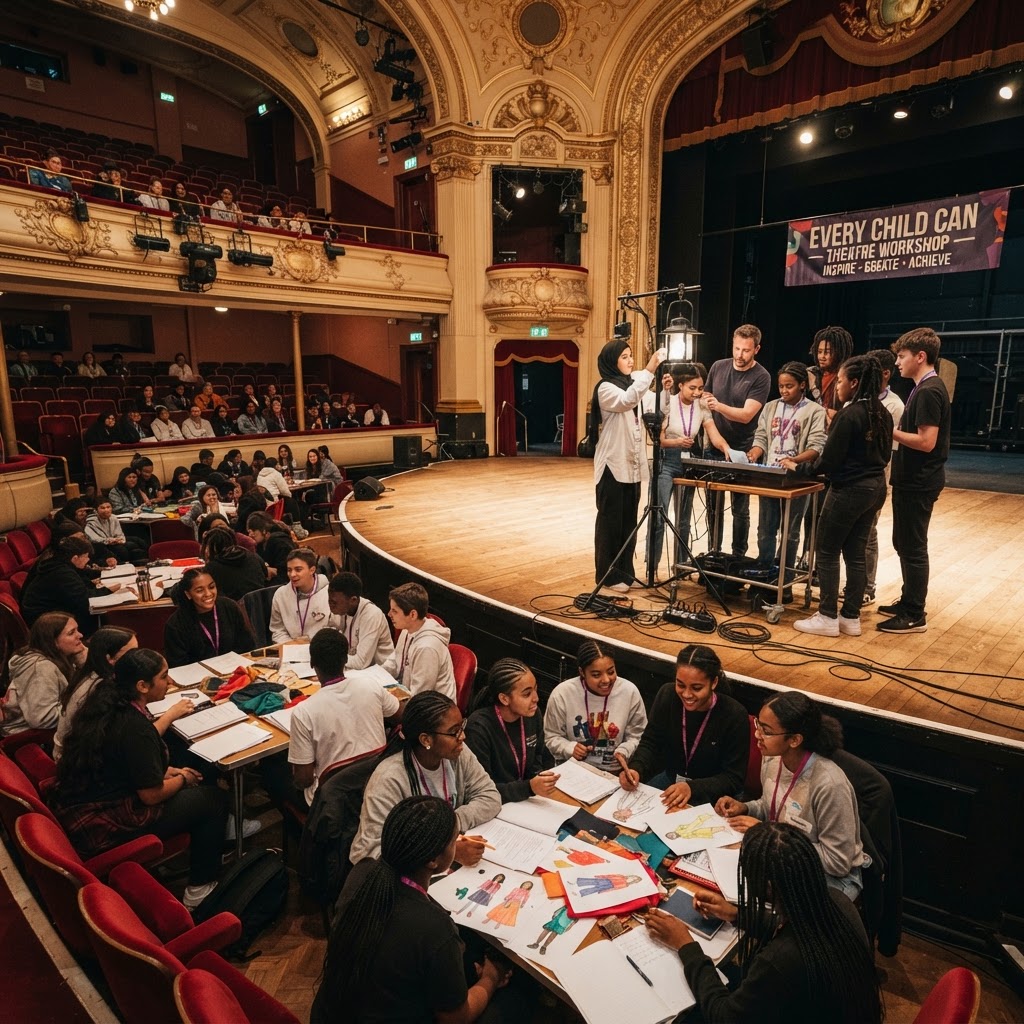
The Vitality of Extra-Curricular Investment For too long, the sphere of extra-curricular engagement in the United Kingdom has been governed by a postcode lottery. Whether a child has access to quality drama tuition, competitive sports coaching, or outdoor adventure depends less on their aptitude and more on the financial stability of their household. On this crisp November morning, the government has moved to address this divide, announcing a significant expansion of the Every Child Can fund, which now boasts a total war chest of £238.5 million.
The additional £106 million, sourced from the Dormant Assets Scheme—monies sitting in long-forgotten bank accounts—represents a strategic effort to bridge the widening gap in youth services. This influx of capital is not merely a financial transaction; it is a declaration that the holistic development of the next generation must be prioritised during the critical hours that follow the final school bell.
A Commitment to the Arts and Beyond The allocation of these funds is designed to be as eclectic as the needs of the youth it serves. From the bustling urban centres of the North to the rural fringes of the West Country, the programme will back initiatives spanning the creative arts, physical education, environmental stewardship, and essential life-skill training. The objective is to foster resilience and creativity, attributes that have often been sidelined in favour of a narrow focus on academic metrics.
Central to this announcement is a significant partnership with the National Theatre. Up to £15 million has been ring-fenced for a dedicated programme, ensuring that the stage is not a distant, elitist concept for students, but an accessible, transformative space. By integrating professional theatrical training with community-level engagement, the initiative seeks to demystify the arts and demonstrate the professional viability of creative pathways.
Designing for the Future The National Lottery Community Fund has been tasked with the logistical orchestration of these grants. As they begin the design phase, the pressure is on to ensure that the distribution is transparent, equitable, and capable of reaching the most marginalised communities. With a launch date earmarked for spring 2027, there is a clear runway for the fund to work with local councils, charities, and grassroots organisations to refine its delivery.
Critics have previously argued that state funding for youth enrichment is often fragmented, leading to 'short-termism' that leaves projects folding as soon as the initial grants expire. However, the use of dormant assets suggests a more sustainable, long-term financial architecture. By converting stagnant capital into active investment, the government is attempting to build a legacy of continuity rather than mere sporadic intervention.
“The use of dormant assets transforms stagnant capital into a vital engine for social mobility, ensuring that a child’s zip code does not dictate their access to the arts.”
The Societal Imperative Education experts have long maintained that the benefits of such an initiative extend far beyond the arts and sports themselves. Engagement in group activities is empirically linked to improved mental health outcomes, higher school attendance, and a reduction in anti-social behaviour. At a time when the digital sphere increasingly dominates the attention of our youth, the provision of physical, communal, and creative spaces is a vital counter-weight.
As we look toward 2027, the success of this programme will ultimately be measured by its ability to engage the children who need it most—those living in areas where opportunities are historically scarce. The government has set the stage; the challenge now lies in the execution, ensuring that this substantial financial commitment translates into a meaningful, lasting change in the daily lives of Britain’s young people.