
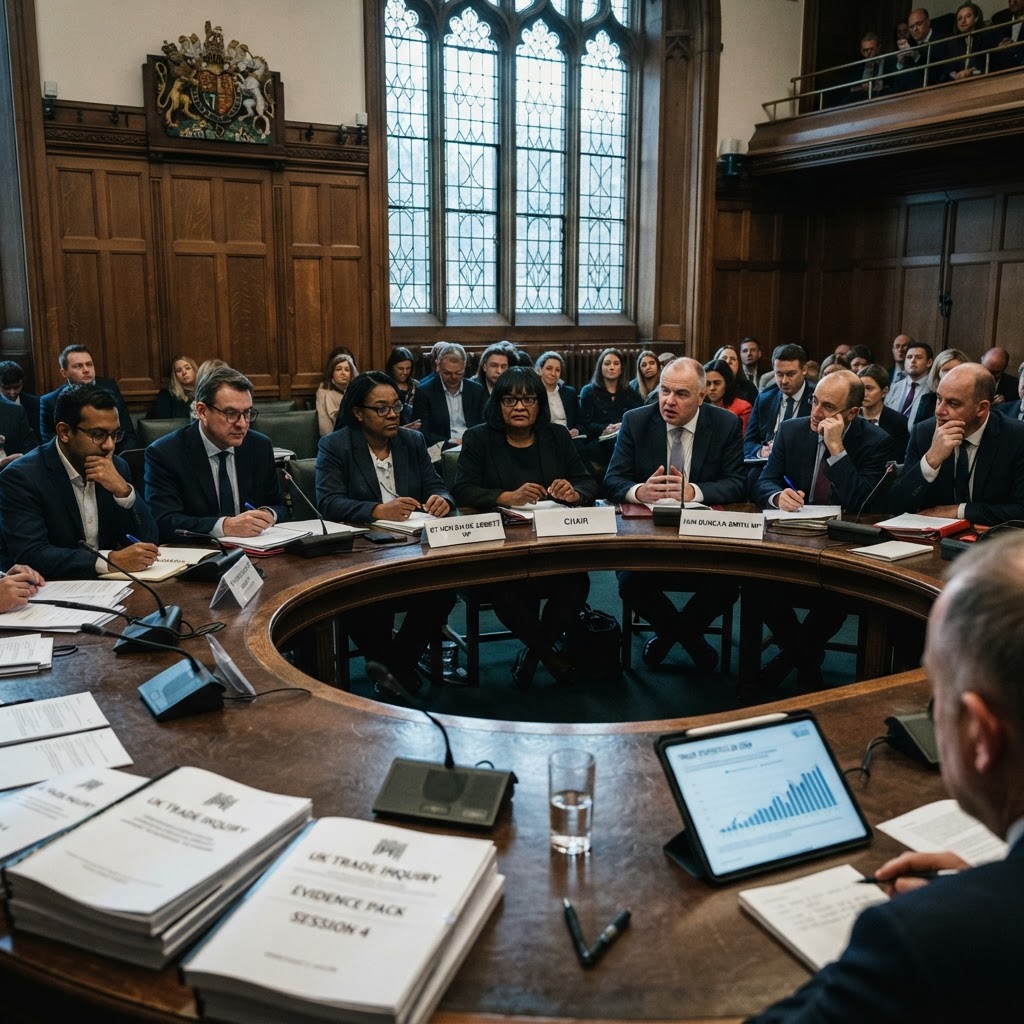
The Atlantic Imperative For the British economy, the United States remains the singular, gravitational constant in a volatile world. As of 2024, the transatlantic corridor accounted for 17 per cent of the United Kingdom's total trade, with a significant 22 per cent of all British exports destined for American shores. Yet, beneath these robust headline figures lies a growing sense of disquiet within Westminster and the City of London. This week, the House of Commons Business and Trade Committee confirmed it has launched a formal inquiry into the state of the UK-US trade relationship, signalling a departure from the optimism that characterised post-Brexit diplomatic posturing.
The move comes at a moment of profound uncertainty. With global supply chains under pressure from systemic turbulence and the spectre of protectionism rising in Washington, the Committee’s inquiry seeks to determine whether existing bilateral frameworks are merely cosmetic or truly catalytic. For many British exporters, the 'prosperity deals' touted during previous years of diplomatic engagement have failed to manifest into tangible market access or meaningful regulatory alignment.
The Shadow of Fragmentation At the heart of the inquiry is the persistent risk posed by tariff escalation and the broader fragmentation of the global trading architecture. While the UK government has long pursued a strategy of bilateral engagement, the Committee is set to examine whether this approach is sufficient to protect British firms from the crossfire of American industrial policy. The shift towards 'reshoring' in the US, combined with aggressive local-content requirements, presents a significant hurdle for British manufacturers who operate in deeply integrated transatlantic supply chains.
Dr Eleanor Sterling, a fellow at the Institute for Global Trade, suggests the time for diplomatic platitudes has passed. 'We are seeing a marked shift in Washington towards economic nationalism that transcends party lines,' she noted. 'The Committee is right to ask whether the UK's current playbook—based on high-level memorandums and informal dialogue—is capable of navigating an environment where trade is increasingly weaponised for national security purposes.'
Scrutinising the Prosperity Deals Perhaps the most contentious aspect of the investigation will be the audit of the so-called 'prosperity deals' negotiated between the UK and individual American states. Supporters argued that these agreements would create bottom-up momentum for a wider trade deal, bypassing the political gridlock often encountered at the federal level in Washington. However, critics have long argued that these arrangements lack the bite of legally binding treaties.
The inquiry will scrutinise the effectiveness of these sub-national agreements in facilitating investment flows and removing non-tariff barriers, such as divergent standards in the life sciences and financial services sectors. Should the Committee conclude that these deals have underperformed, it will force a difficult conversation about the government’s overall trade strategy. If the world’s most important trading relationship cannot be bolstered by current mechanisms, the economic implications for the UK’s long-term growth forecasts would be significant.
“The Committee is right to ask whether the UK's current playbook—based on high-level memorandums and informal dialogue—is capable of navigating an environment where trade is increasingly weaponised for national security purposes.”
A Shifting Landscape The global trading system is no longer the predictable, rules-based environment that characterised the early twenty-first century. As the UK seeks to solidify its position outside the European Union, the transatlantic relationship is being tested by forces far beyond the control of trade envoys. The Committee’s probe will therefore investigate not just the existing trade barriers, but also the broader geopolitical risks. As the US recalibrates its stance towards global trade, the UK must decide whether it acts as a peripheral observer or a proactive partner capable of securing a unique vantage point in the new American trade order.
Ultimately, the inquiry serves as a reality check for a government that has staked much of its economic reputation on the 'special relationship'. Whether this parliamentary scrutiny will lead to a hardened negotiating stance or a pivot towards alternative regional alliances remains an open question. For now, British businesses will be watching the testimony from Whitehall with keen interest, hoping for a strategy that offers clarity in an increasingly opaque global market.