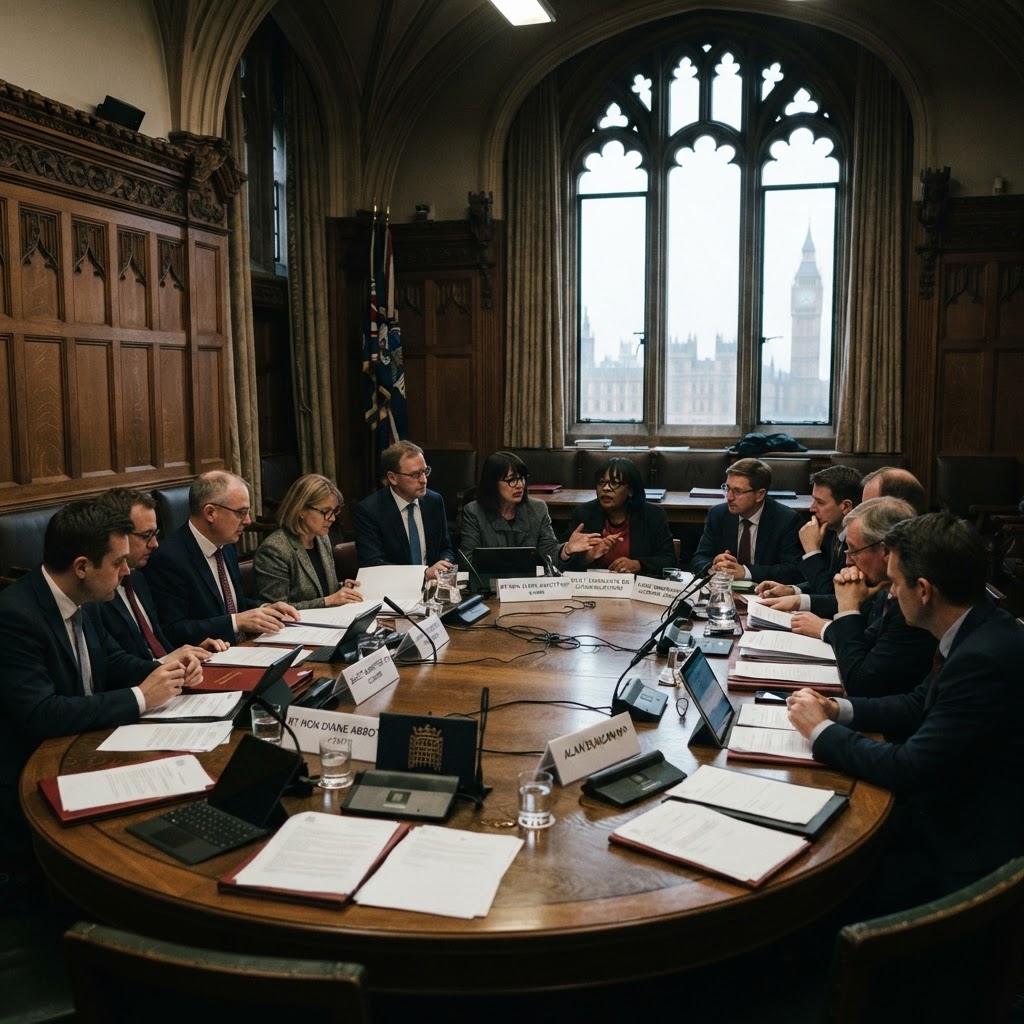
As Westminster seeks to define its post-Brexit trading identity, the Business and Trade Committee launches a wide-ranging inquiry to scrutinise the efficacy of the government's much-vaunted European 'reset'. Experts warn that without a cohesive long-term strategy, the nation risks economic stagnation in an increasingly protectionist global climate.
A Watershed Moment for British Commerce
The machinery of Westminster has turned its focus toward the Channel this week, as the Business and Trade Committee confirmed the commencement of a comprehensive inquiry into the state of the United Kingdom’s economic relationship with the European Union. Initiated on 10 April 2026, the investigation arrives at a moment of profound introspection for British industry, which continues to navigate the complex realities of a post-Brexit landscape. The Committee’s mission is clear: to reconcile the government’s stated ambitions for a 'reset' of diplomatic and commercial ties with the hard data of 2024, which confirms that the EU remains the UK's pre-eminent partner, accounting for 41 per cent of exports and exactly half of all imports.
The Weight of Trade Integration
Despite the diversification efforts undertaken by successive administrations, the gravitational pull of the European Single Market remains an unavoidable fact of geography and economic integration. For businesses operating in the manufacturing, automotive, and agri-food sectors, the regulatory divergence that has characterised the past several years has introduced significant friction. The Committee is set to examine how these constraints intersect with the myriad free trade agreements signed in recent years. While ministers often highlight these global deals as the vanguard of a 'Global Britain' strategy, there is growing scepticism among trade economists regarding the actual net contribution of these agreements relative to the loss of unfettered access to the UK's largest regional market.
Fragmented Markets and Protectionist Pressures
The inquiry is timely, given the shifting tides of global commerce. We are witnessing a period of rising protectionism and the erosion of the consensus that underpinned decades of liberalised trade. As Washington and Beijing recalibrate their economic strategies, the UK finds itself in a precarious position. The Committee’s inquiry is explicitly designed to solicit evidence on how British firms can insulate themselves from this volatility. The core of the issue, however, lies in the absence of a clearly articulated framework. Industry leaders have voiced concerns that the current approach is reactive rather than proactive, leaving supply chains vulnerable and discouraging the long-term capital investment necessary to stimulate national growth.
Seeking Clarity in the Boardroom
For the average British firm, the lack of a defined policy roadmap regarding the EU is far more damaging than any single tariff line. Certainty is the currency of investment, and the present climate is one of persistent ambiguity. As the inquiry progresses, the Committee is expected to hear testimony from trade bodies, exporters, and logistics experts who are struggling to reconcile the promise of regulatory autonomy with the day-to-day burden of red tape. The fundamental question for the panel is whether the government’s 'reset' is merely a rhetorical device or a substantive policy shift capable of mitigating the structural disadvantages of the current trading arrangements.
The Road Ahead
As the hearings commence, the political pressure on the government to present a more coherent strategy will surely mount. The Business and Trade Committee’s findings will likely serve as a litmus test for the administration's economic competence. If the evidence confirms that current trade-offs are harming domestic productivity, the pressure to seek a more formalised, perhaps even institutionalised, rapprochement with Brussels will become increasingly difficult for the government to ignore. In the coming months, the testimony provided will be scrutinised not only by policymakers in London but also by observers in Paris, Berlin, and Dublin, all of whom are waiting to see if the United Kingdom can find a sustainable middle path in an increasingly bifurcated global economy.