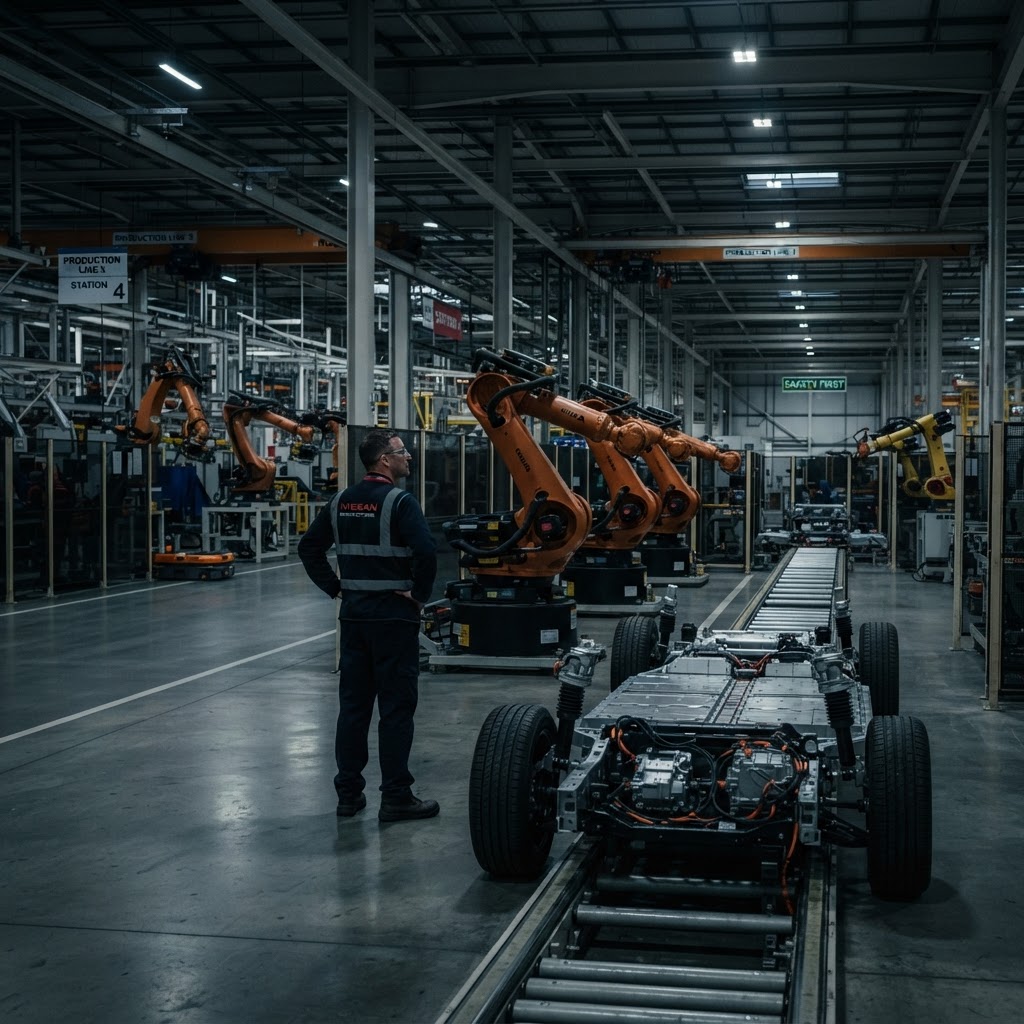
Manufacturing Stagnation: UK Car Sector Reels Under Weight of ZEV Mandate
Production output has contracted by over seven per cent as industry leaders issue a stark warning to Whitehall. With investment frozen, the future of Britain’s automotive heartlands hangs in the balance.
TW
Thomas Ward
Business Editor
Published 30 July 2026·3 months ago 4 min read
Text
TopicsUK AutomotiveSMMTElectric VehiclesZEV MandateJonathan ReynoldsManufacturingBusiness News
About the Author
TW
Thomas Ward
Business Editor
Thomas Ward reports for National Post UK with a focus on rigorous analysis and authoritative journalism — a trusted voice across British public life.
Reader Discussion · 18
Subscribers can join the conversation.
SUBSCRIBE TO COMMENT →D
David O'Leary30 Jul
I work in the supply chain and the uncertainty is already trickling down to the shop floor. We need clear, consistent policy direction from the government, not constant shifting of the goalposts.
E
Elena Richards30 Jul
We need to focus on long-term sustainability rather than short-term output figures. Other European nations are managing the transition, so perhaps the issue is with our local strategy rather than the mandate itself.
S
Simon Gregson30 Jul
This is a classic case of political ambition clashing with economic reality. We cannot expect companies to bear the full cost of this transition without significant government intervention to keep production costs competitive.
L
Linda M. Foster30 Jul
My husband has worked in the Midlands car plants for thirty years and the atmosphere there is incredibly bleak right now. Families are genuinely worried about whether these production lines will still be running by the end of the decade.
M
Marcus Thorne30 Jul
This is exactly what experts predicted years ago. If we make it impossible for companies to operate profitably here, they will simply shift their production to markets with more favourable regulatory environments.
D
David Thorne30 Jul
Transitioning to electric is inevitable if we want to remain relevant in the global market. The industry has had plenty of warning, and the focus should be on how to speed up investment rather than rolling back targets.
S
Sarah Jenkins30 Jul
While I appreciate the need for environmental progress, we are pricing the average British family out of the new car market. The cost of living is already high enough without these regulatory burdens on manufacturers.
A
Arthur Penhaligon30 Jul
It was inevitable that pushing such an aggressive timeline for ZEV mandates would hurt our manufacturing base. We are simply not ready to transition at this pace without more substantial infrastructure support.
S
Sarah Jenkins30 Jul
It is sad to see the decline of such a historic industry. If we do not provide better support and clear long-term policy for these factories, we risk losing these skilled jobs to international competitors for good.
A
Arthur Penhaligon30 Jul
The ZEV mandate is far too aggressive given the current infrastructure. We are asking manufacturers to pivot overnight while the charging network remains woefully inadequate for the average driver.
E
Eleanor Rigby30 Jul
It is interesting to note how other European nations are managing this transition with far more subsidies for their domestic brands. We seem to be handicapping our own manufacturers while opening the doors to cheaper imports.
D
David Thorne30 Jul
As someone who has worked on the assembly line for twenty years, I can tell you that the uncertainty is killing morale. We need clear government support and investment in retraining, not just top-down mandates.
S
Sarah Jenkins30 Jul
We have to move away from combustion engines eventually if we want to hit our net zero targets. It is a painful transition, but necessary for the long-term survival of the British car industry in a global market.
A
Arthur Penhaligon30 Jul
The ZEV mandate is far too aggressive for the current infrastructure we have in place. Small manufacturers are being squeezed out of the market before they have a fighting chance to pivot.
E
Eleanor Rigby30 Jul
I am all for cleaner air, but the cost of these vehicles is pricing out the average British family. Without a significant shift in affordability, this mandate will only lead to a stagnant sector and fewer new cars on the road.
D
David Thorne30 Jul
While the ZEV mandate is ambitious, we must also consider the supply chain shift occurring globally. Perhaps the issue isn't the mandate itself, but our failure to invest in domestic battery production years ago.
S
Sarah Jenkins30 Jul
My husband has worked at the plant for twenty years and the atmosphere there is incredibly bleak right now. We need long-term stability and support for workers, not just blunt policy instruments that threaten livelihoods.
A
Arthur Penhaligon30 Jul
It was entirely predictable that aggressive mandates would outpace the infrastructure and consumer appetite. We are forcing a transition that the market is simply not ready to sustain.