National Post UK
Burnham’s Brexit Reset Faces Stagnation Amid Brussels Tariff Pressure

The Prime Minister’s diplomatic push to secure a new trade settlement has hit a significant roadblock. Brussels is deman

The National Post

HomeBusiness
Business

Burnham’s Brexit Reset Faces Stagnation Amid Brussels Tariff Pressure

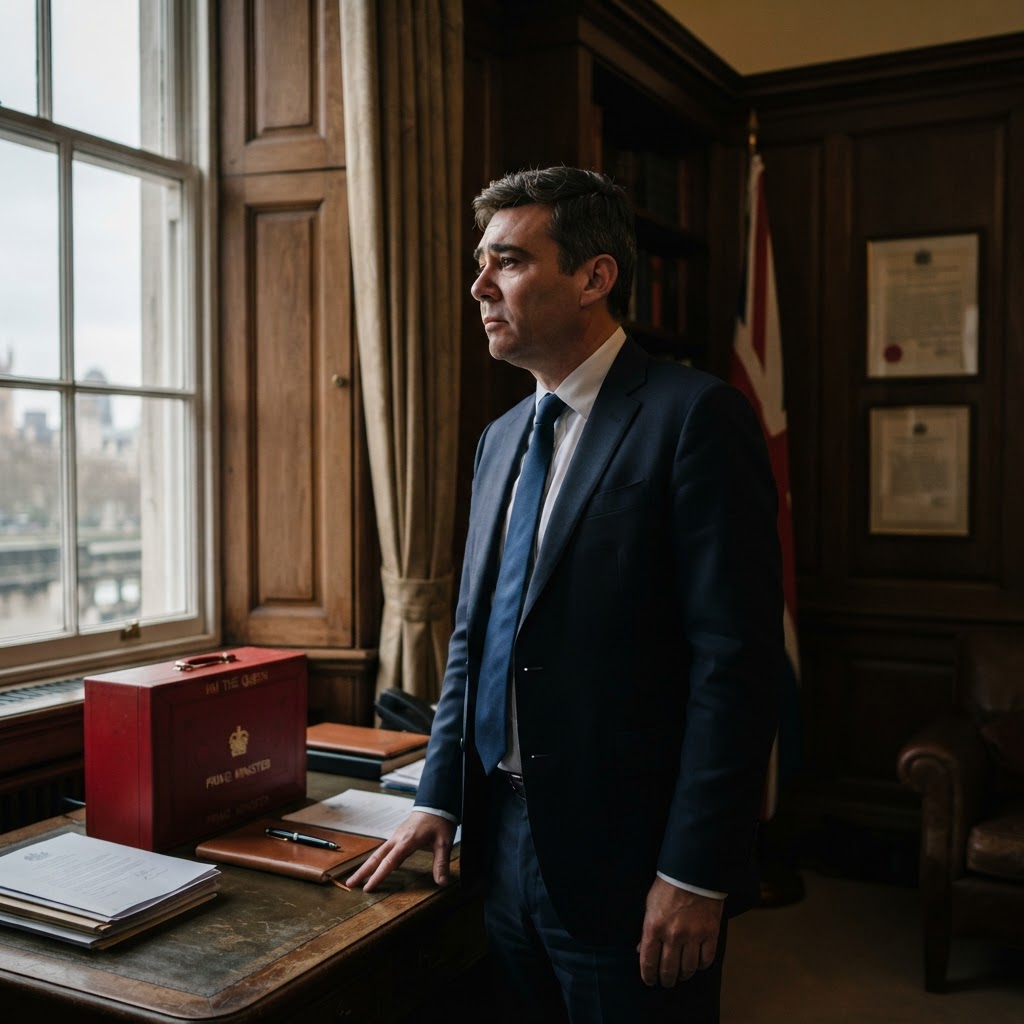
The Prime Minister’s diplomatic push to secure a new trade settlement has hit a significant roadblock. Brussels is demanding alignment on Chinese car tariffs, threatening to complicate an already fragile economic landscape.

RS

Rachel Simmons

Business Editor

Published 11 October 2026·2 days ago 3 min read
Text
Share

The Illusion of Momentum As the leaves turn in Westminster, the initial optimism surrounding Prime Minister Andy Burnham’s 'reset' strategy for UK-EU relations is beginning to wither. Despite high-profile visits to Brussels and the carefully choreographed rhetoric of unity, the administration has conceded that a comprehensive new trade deal remains a distant prospect. As of October 2026, the diplomatic machinery has stalled, leaving British exporters in a state of continued uncertainty.

The Brussels Tariff Ultimatum The primary sticking point is an increasingly technical yet politically volatile demand from the European Commission: that the United Kingdom align its tariff regime on Chinese-manufactured electric vehicles with that of the European Union. Brussels has warned that without such alignment, British-assembled vehicles containing certain Chinese components risk being classified as non-compliant for 'made in Europe' preferential trade status. This essentially traps the UK in a lose-lose scenario where it must either forfeit its independent trade policy or sacrifice its burgeoning automotive sector to punitive EU tariffs.

A Balancing Act of Sovereignty Downing Street’s response has been one of controlled frustration. Government officials have spent recent weeks lobbying for equal treatment of British goods, arguing that the UK maintains rigorous quality and environmental standards that should preclude the need for blanket alignment. However, the Prime Minister remains steadfast on a core red line: the United Kingdom will not re-enter a customs union, nor will it subordinate its legislative independence to the European Court of Justice. The strategy is to foster a 'third-way' relationship—a bespoke partnership that champions free trade while respecting the constitutional boundaries established a decade ago.

The Devolution Dividend Away from the European drama, the Burnham administration is pivoting its domestic narrative toward a radical programme of regional devolution. By siphoning power and fiscal autonomy from the Whitehall machine to the newly empowered metro-mayors, the government hopes to create an attractive environment for corporate investment. Ministers believe that by localising economic policy, they can insulate the national economy from the volatility of trade negotiations. This strategy is explicitly designed to court City of London financiers and global manufacturing giants, signalling that while the UK is no longer integrated with Europe, it is very much open for regionalised business.

Expert Skepticism Trade analysts remain wary of the government’s dual-track approach. 'The Prime Minister is trying to decouple domestic economic growth from the realities of the continental border,' says Dr Helena Vance, a senior fellow at the Institute for Global Trade. 'While devolution is a laudable aim for long-term productivity, it does not solve the immediate structural issue of being a mid-sized economy operating outside the world’s largest single market without a streamlined trade architecture.' The coming months will likely see further friction as the reality of these competing priorities collides with the EU’s firm insistence on a level playing field.

TopicsPoliticsBrexitTradeAndy BurnhamEuropean UnionUK Economy
Share

About the Author

RS

Rachel Simmons

Business Editor

Rachel Simmons reports for National Post UK with a focus on rigorous analysis and authoritative journalism — a trusted voice across British public life.

Reader Discussion · 6

Subscribers can join the conversation.

SUBSCRIBE TO COMMENT →
G
Geoffrey Hedges11 Oct

Diplomacy is a slow game, and I think we need to give this administration more than a few months to make headway. Rome wasn't built in a day, and neither is a post-Brexit trade framework.

M
Marcus Vane11 Oct

Brussels knows we have no leverage, so why would they grant us any concessions? This reset is just rearranging deckchairs on the Titanic.

E
Eleanor Rigby11 Oct

The electorate voted for a change in tone, which Burnham has provided, but tone doesn't pay the bills. Without concrete movement on regulatory alignment, these trade hurdles will keep stifling growth.

D
David Thorne11 Oct

Stagnation is exactly the right word. My manufacturing firm is still facing the same customs delays we had under the previous government. Nothing has changed on the ground.

S
Sarah Jenkins11 Oct

I am actually hopeful that Burnham is at least trying to repair the damage. Business certainty is what we need most right now, regardless of the political posturing.

A
Arthur Penhaligon11 Oct

It was always going to be a pipe dream to think Brussels would simply roll over just because we have a new face in Downing Street. The structural issues remain exactly where they were three years ago.


More from Business

Most Read in Business

Morning Briefing

The day's top stories, before 7am

Join 40,000 readers who start their morning with National Post UK.