
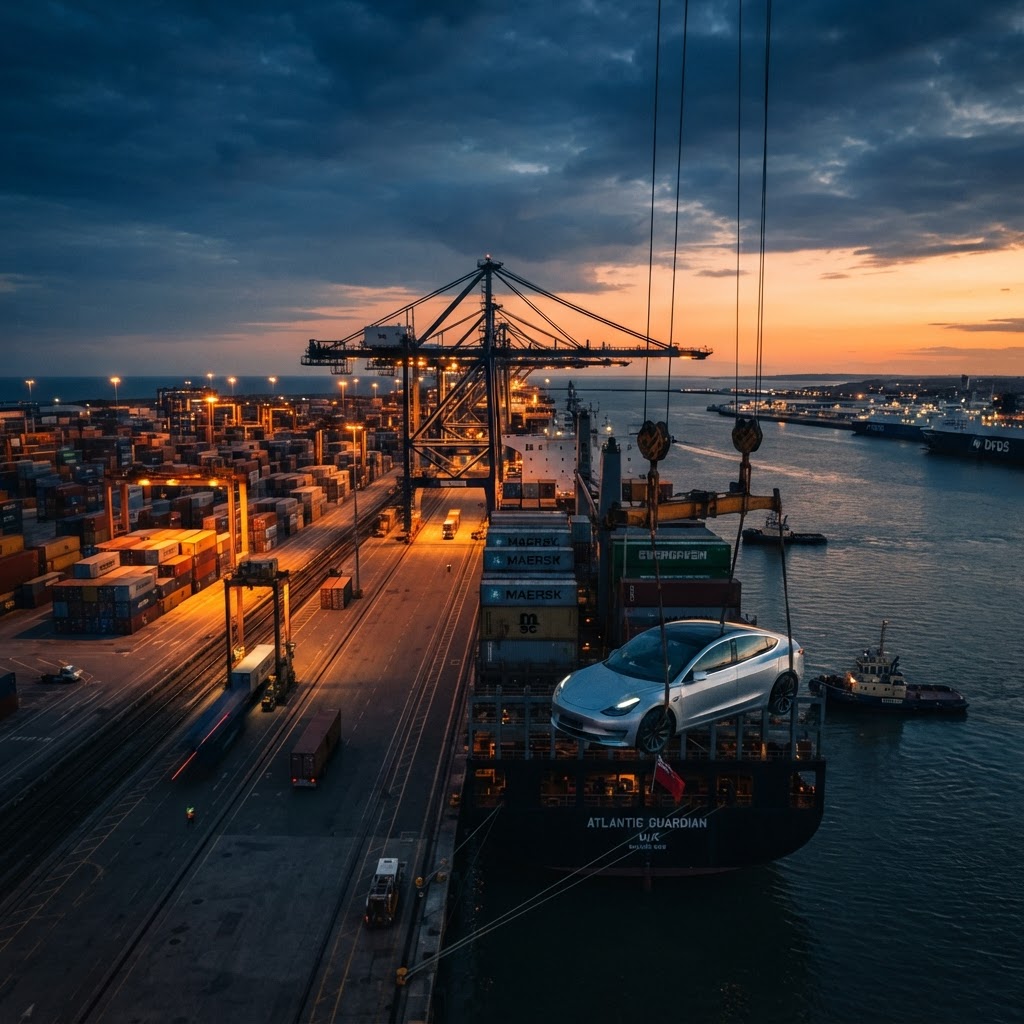
The Delicate Balance of Post-Brexit Trade As the electric vehicle sector navigates a pivotal shift towards global electrification, the United Kingdom finds itself caught in an increasingly precarious geopolitical squeeze. Brussels has recently intensified its diplomatic pressure on the British government, urging Whitehall to hike tariffs on Chinese-manufactured vehicles. European officials are concerned that the UK, by maintaining a more permissive tariff regime than the EU, may inadvertently function as a secondary gateway for Chinese firms to circumvent the rigorous trade protections established by the European Commission.
For years, the European Union has moved to safeguard its domestic automotive industry from what it characterises as subsidised competition from Beijing. By contrast, the UK government has been engaged in a delicate dance, seeking to incentivise the transition to electric transport while simultaneously lobbying for frictionless trade conditions for its own manufacturing base. This current divergence represents the most significant strain on the Trade and Cooperation Agreement since its inception.
The Backdoor Risk The core of the European grievance lies in the 'rules of origin' protocols. If a vehicle is manufactured in China and imported to the UK at lower cost, there is a tangible anxiety in Paris and Berlin that these goods could find their way into the Single Market, undermining the integrity of European trade standards. European negotiators have made it clear that if the UK persists in its independent approach, it may inadvertently invite the imposition of more stringent barriers on British-made goods destined for the Continent.
However, the UK government remains resolute in its commitment to sovereignty. Whitehall sources have repeatedly emphasised that Britain will not consider re-entering a formal customs union, viewing such an alignment as a betrayal of the democratic mandate secured in 2016. For ministers, the ability to strike independent trade deals remains a cornerstone of the post-Brexit economic prospectus.
Economic Implications for British Industry Industry experts suggest that the British automotive sector is currently facing a 'pincer movement'. On one side, domestic manufacturers are desperate for affordable supply chains to lower the cost of electric vehicle production for local consumers. On the other, they are highly dependent on access to the European market, which remains the destination for a majority of UK-built car exports. Any retaliatory tariff introduced by Brussels would be catastrophic for the UK’s transition to net-zero transportation.
Dr. Eleanor Vance, a senior trade analyst at the Institute for Global Economics, notes that the current standoff is symptomatic of a broader dilemma. 'The UK is essentially trying to reconcile the benefits of an independent trade policy with the pragmatic reality of deep integration with its closest neighbour,' she explained. 'By refusing to align on Chinese tariffs, the UK is prioritising its autonomy, but it is doing so at the risk of creating a regulatory chasm that European manufacturers will use as a justification to lobby for tighter border controls on British goods.'
“The UK is essentially trying to reconcile the benefits of an independent trade policy with the pragmatic reality of deep integration with its closest neighbour.”