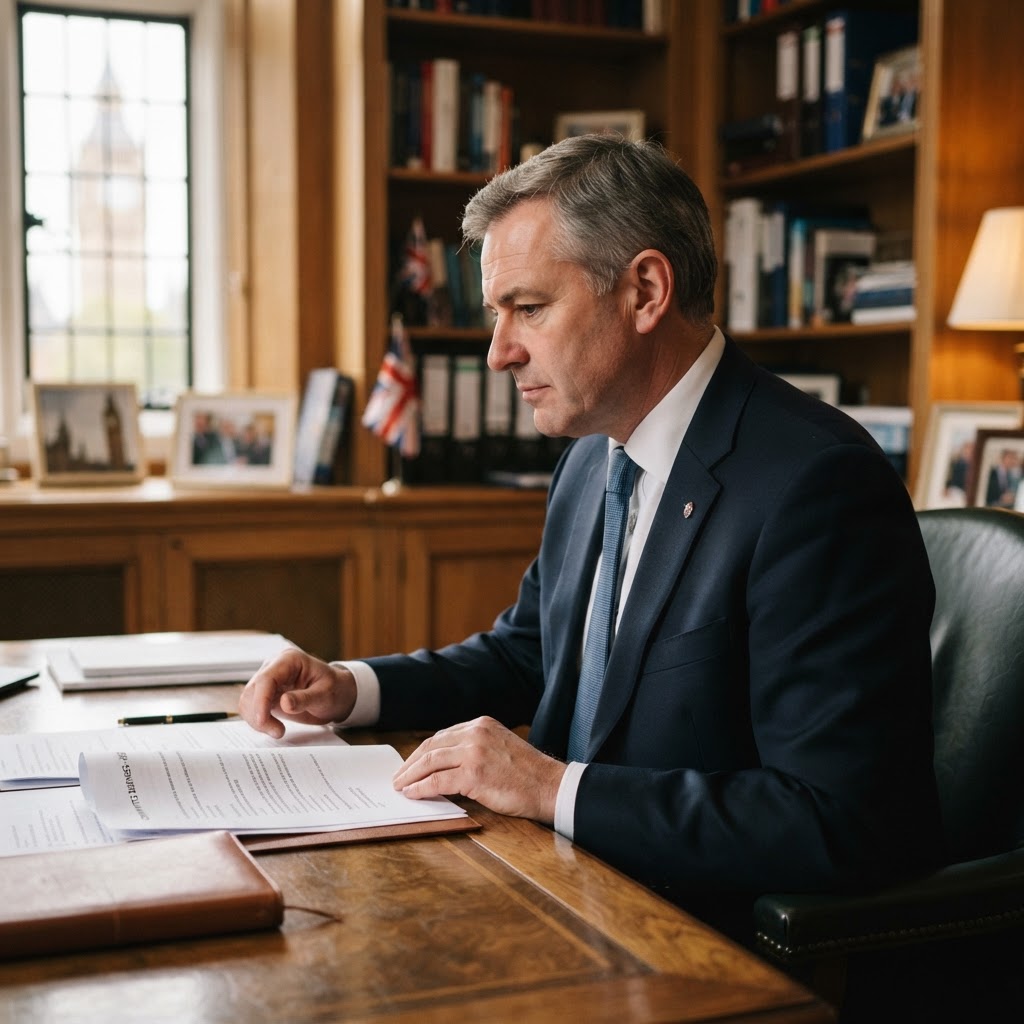
A Strategic Pivot Toward the Gulf As the international economic landscape faces profound transformation, the United Kingdom is approaching the final stages of a landmark free trade agreement with the six-nation Gulf Cooperation Council (GCC). This pact, representing the culmination of two years of high-level diplomacy, arrives at a moment of acute geopolitical sensitivity. The agreement promises to bridge the British economy more tightly to the markets of Saudi Arabia, the United Arab Emirates, Qatar, Bahrain, Oman, and Kuwait, providing a necessary injection of vitality into several key export sectors.
Bolstering British Industry For UK manufacturers and service providers, the deal is framed as a significant victory. Industry insiders suggest that the removal of tariffs and the harmonisation of regulatory standards will offer immediate relief and opportunity for the British automotive sector, particularly the luxury segment that remains a staple of our export strength. Beyond manufacturing, the City of London stands to benefit from enhanced access to Gulf financial markets, potentially easing the path for cross-border investment and sustainable infrastructure financing.
Food and drink exporters are also expected to see meaningful gains. With a burgeoning consumer class across the Gulf, the demand for high-end British agricultural produce and processed goods has risen steadily. 'This is about more than just numbers,' notes one Whitehall insider familiar with the proceedings. 'It is about re-establishing the United Kingdom as a primary partner for the Gulf states as they seek to diversify their economies away from oil dependence.'
Navigating Geopolitical Friction The timing of this rapprochement is not without its complexities. The broader Middle East remains a theatre of intense volatility, with ongoing conflicts involving Iran casting a long shadow over regional stability. Furthermore, supply chain disruptions—exacerbated by maritime security concerns in the Red Sea—have forced British firms to recalibrate their logistics strategies. Despite these hurdles, the British government maintains that a formalised trade framework is the most effective way to secure long-term stability and project influence in the region.
Critics, however, remain vigilant regarding the regulatory trade-offs. The shadow of the ongoing US-Israeli-Iranian tensions adds a layer of uncertainty to the implementation phase of any treaty. Business leaders are watching closely to see how the government balances the pursuit of lucrative new contracts with the imperative of maintaining secure, reliable supply routes in an increasingly fractured global environment.
The Road Ahead While the final ink has yet to dry, the consensus among trade analysts is that this deal represents a pivot toward a new post-Brexit trade architecture. By prioritising the GCC, the UK is betting on the long-term potential of emerging markets rather than relying solely on legacy trade arrangements. As 2026 progresses, the efficacy of this strategy will be tested not just by the volume of trade generated, but by the UK's ability to navigate the persistent instability of the region while maintaining its core strategic alliances.
The agreement is expected to be formally presented to Parliament in the coming weeks, where it will face rigorous scrutiny. Supporters argue that the potential for long-term growth far outweighs the immediate political risks, positioning the UK as a flexible and pragmatic partner in a vital corner of the world economy.
“This is about more than just numbers; it is about re-establishing the United Kingdom as a primary partner for the Gulf states as they seek to diversify their economies.”