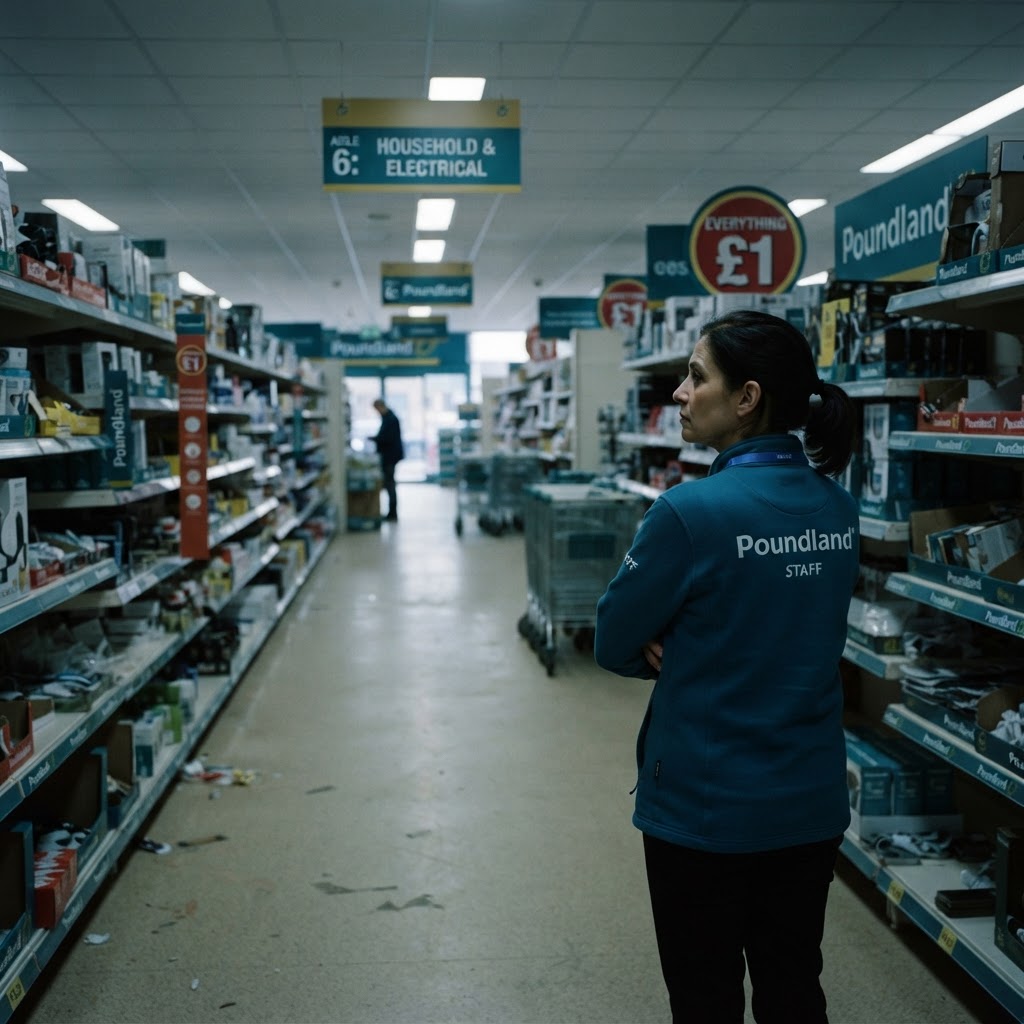
The discount giant has formally entered insolvency after a frantic search for a buyer failed to yield results. With 11,000 roles hanging in the balance, the retail sector braces for one of its most significant contractions in years.
A Retail Institution in Peril
The British retail landscape faced a seismic shift on 24 November 2026, as Poundland—a cornerstone of the nation’s high streets for over three decades—confirmed it has entered administration. The announcement marks the culmination of a protracted period of financial instability, ultimately triggered by the failure of ownership to secure a viable acquisition deal for the business. This collapse, while not entirely unexpected given recent market headwinds, casts a long shadow over the economic stability of countless town centres.
The Weight of 11,000 Futures
The immediate human cost of this insolvency is profound. Approximately 11,000 employees now face a period of acute uncertainty. As insolvency practitioners from advisory firms step in to oversee the process, the focus shifts to whether the business can be sold as a going concern or if the winding down of operations is inevitable. Labour unions have called for immediate government intervention, arguing that the loss of such a significant employer would create a ripple effect of unemployment that the regional economies are ill-equipped to absorb.
Market Pressures and Structural Decline
Industry analysts point to a confluence of factors that have brought the retailer to this precipice. While the cost-of-living crisis initially suggested a surge in demand for value-driven retailers, Poundland found itself squeezed by rising import costs, higher energy bills for its vast store estate, and an increasingly aggressive competitive landscape from both established supermarkets and agile, online-first discount rivals. The business model, once defined by the singular price point of one pound, has struggled to maintain margins in an era of persistent inflation, despite efforts to diversify its product ranges.
Expert Perspective
Retail consultant Dr. Alistair Finch noted that the collapse underscores the structural difficulties facing bricks-and-mortar discounters. While consumers have remained price-sensitive, the costs associated with maintaining a physical footprint have outpaced the growth in revenue. The administrative process will now determine which assets remain valuable and which stores are deemed unsustainable in the current climate. It is a sombre reminder that high-volume, low-margin retail is a precarious game, particularly when consumer spending patterns undergo such rapid digitalisation.
What Lies Ahead
As the administrators take the helm, the next few weeks will be critical for staff and creditors alike. While some stores may find suitors in the form of competitors looking to expand their portfolio, many are likely to face permanent closure. The broader economic implications for the UK high street are significant, with local authorities worried that vacant Poundland units will become magnets for anti-social behaviour and further blight already struggling commercial districts. For now, the nation waits to see if any part of the chain can be salvaged from the ruins of a business that once seemed synonymous with the high street experience.