National Post UK
NHS Pioneers Global Frontier as AI Integration Transforms Breast Cancer Diagnostics

A monumental clinical trial involving 700,000 participants seeks to redefine early detection through the application of

The National Post

HomeHealth & Wellbeing
Health & Wellbeing

NHS Pioneers Global Frontier as AI Integration Transforms Breast Cancer Diagnostics

A monumental clinical trial involving 700,000 participants seeks to redefine early detection through the application of advanced machine learning. This initiative aims to bolster diagnostic accuracy across thirty national screening centres.

SC

Samantha Cole

Health Correspondent

Published 26 November 2026·about 5 hours ago 3 min read
Text
Share

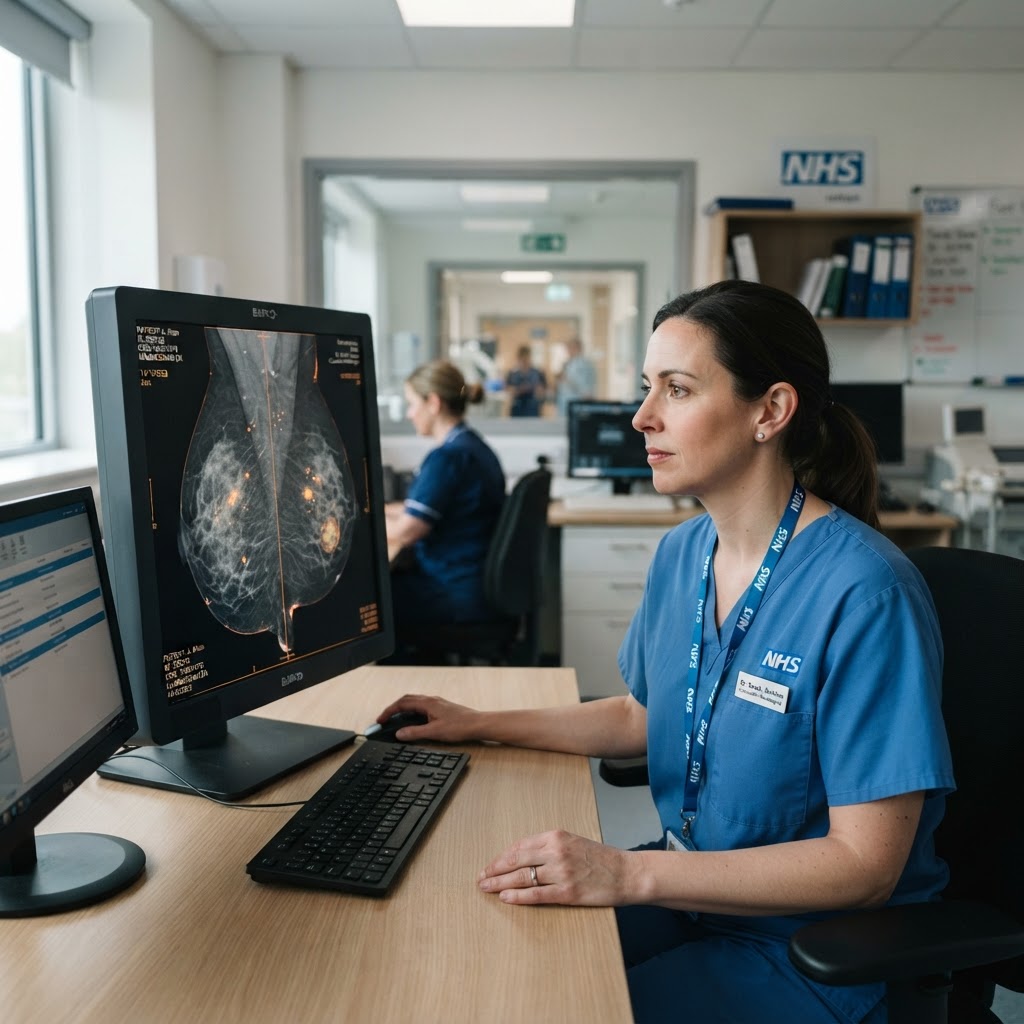
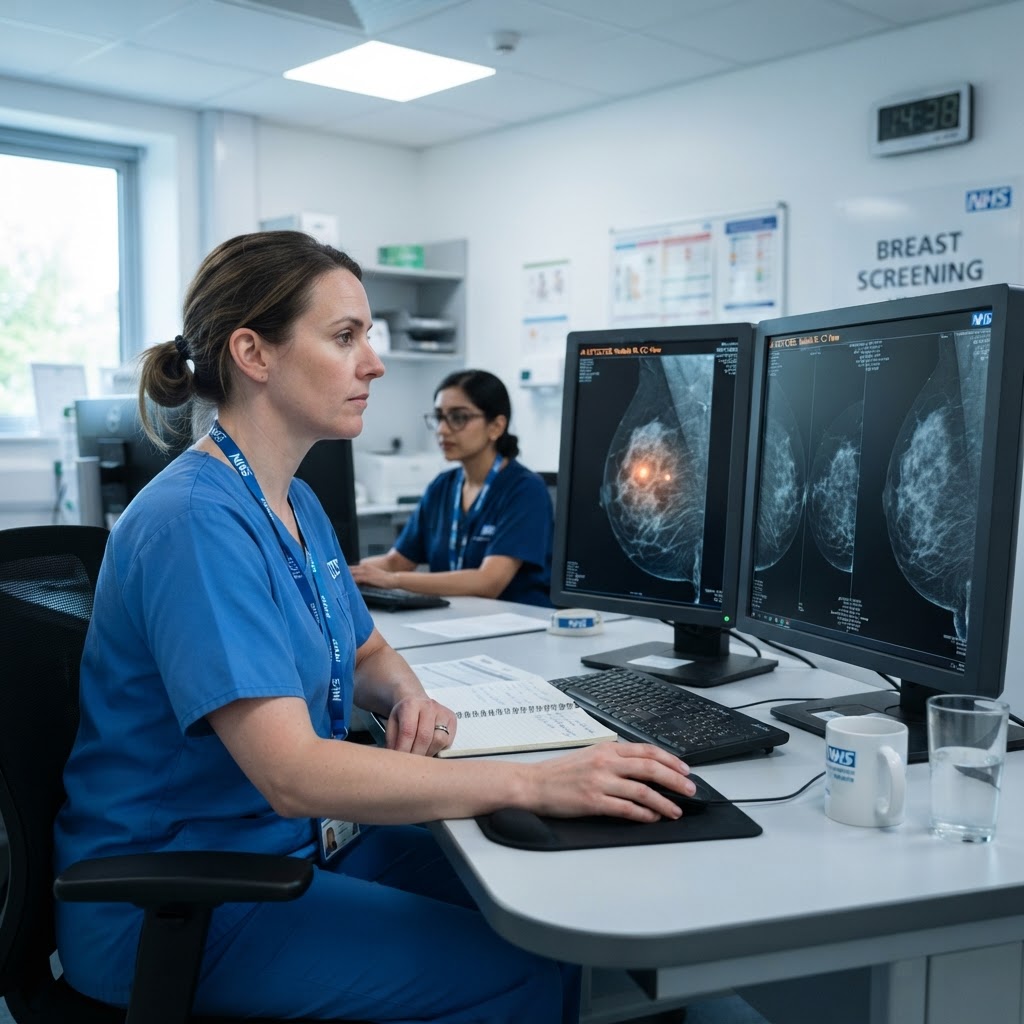
The Vanguard of Digital Oncology In a significant milestone for the National Health Service, the launch of the Edith trial—Early Detection using Information Technology in Health—marks the commencement of the world's most expansive clinical evaluation of artificial intelligence in breast cancer screening. As the healthcare landscape grapples with increasing demand and workforce pressures, this project, spearheaded by the University of Warwick, the University of Cambridge, and Cambridge University Hospital NHS Trust, promises to usher in a new era of diagnostic precision. By deploying sophisticated machine learning algorithms to assist radiologists in the assessment of routine mammograms, the NHS is positioning itself at the absolute forefront of digital oncology.

Scaling the Diagnostic Capacity The logistics of the study are as ambitious as its clinical aspirations. Over the next thirty-six months, nearly 700,000 women will participate across thirty dedicated screening centres throughout the United Kingdom. Funded by the National Institute for Health and Care Research, the trial intends to rigorously test whether AI can streamline the triage process, effectively reducing the time between imaging and clinical intervention. For the individual patient, this shift could fundamentally alter the trajectory of cancer care, facilitating the identification of malignancies at their most treatable stage.

Rigorous Governance and Oversight Recognising the sensitivity inherent in handling patient data, the trial has undergone extensive scrutiny. The research team has secured formal approval from both the Confidentiality Advisory Group and an independent Research Ethics Committee. These safeguards ensure that patient privacy remains paramount, even as the scale of data processing reaches unprecedented levels for a trial of this nature. This ethical framework is essential, particularly as the medical community continues to debate the balance between technological utility and the sanctity of personal information in the age of algorithmic healthcare.

Expert Perspectives on Clinical Efficacy Clinicians and academic leads remain cautiously optimistic about the integration of AI into established screening pathways. While the technology is not intended to replace the diagnostic expertise of a consultant radiologist, it serves as a powerful instrument to reduce the variance in interpretation. Previous smaller-scale pilots have demonstrated that AI can act as a high-fidelity 'second reader,' flagging suspicious lesions that might otherwise necessitate deeper clinical investigation. By offloading the initial screening burden to robust computational models, the NHS hopes to alleviate the backlog currently facing diagnostic departments, allowing human specialists to focus their expertise on the most complex, high-risk cases that require nuanced clinical judgment.

Looking Toward a Transformed Screening Model As the Edith trial progresses, the implications for the future of the NHS are profound. Should the outcomes confirm the anticipated gains in sensitivity and diagnostic efficiency, the programme could provide the template for a permanent shift in how breast screening is delivered nationwide. The convergence of state-of-the-art computational power and a universal public health service creates a unique environment for innovation. In the context of the UK’s broader efforts to modernise infrastructure and tackle waiting lists, the success of this trial could well signal a departure from traditional diagnostic workflows, setting a global standard for the adoption of artificial intelligence in public health.

TopicsNHSAIBreast CancerMedical ResearchDigital HealthCancer Screening
Share

About the Author

SC

Samantha Cole

Health Correspondent

Samantha Cole reports for National Post UK with a focus on rigorous analysis and authoritative journalism — a trusted voice across British public life.

Reader Discussion · 12

Subscribers can join the conversation.

SUBSCRIBE TO COMMENT →
R
Robert Sterling26 Nov

As someone who works in digital health, I find this progress very promising. Standardizing diagnostic accuracy across different regions could help eliminate the current postcode lottery in care outcomes.

C
Clare O'Malley26 Nov

It is all well and good having sophisticated software, but how will it cope with the current backlog of scans? I would like to see more details on how this integration will actually reach the average patient in a busy district hospital.

J
James P. Bennett26 Nov

This is exactly the sort of innovation the NHS needs to stay relevant. Predictive analytics in oncology have been lagging behind, so seeing the UK lead on this trial is genuinely encouraging.

R
Robert Miller26 Nov

Efficiency is clearly needed, but we must ensure that patients aren't just reduced to data points. AI should be a tool to aid doctors, not a replacement for them.

M
Margaret Hughes26 Nov

The NHS is already struggling with aging infrastructure and staffing shortages. I just hope the funding for this AI rollout doesn't divert resources away from frontline nursing and essential patient care.

E
Elaine Bennett26 Nov

It is fascinating to see the NHS at the forefront of this technology. We hear so much bad news about the service, it is heartening to see some genuinely pioneering work happening.

D
David Thorne26 Nov

I remain cautious about how much we rely on algorithms for life-changing diagnoses. Technology should be a tool for clinicians, not a replacement for the years of experience a consultant brings to the table.

J
James Patterson26 Nov

I hope the government ensures that these systems are fully audited for bias. It is a massive project, but implementation is always where the NHS struggles most.

S
Sarah Jenkins26 Nov

Having gone through breast cancer treatment last year, I think this is a brilliant step forward. If AI can speed up the reporting times, it will certainly reduce a lot of the anxiety patients face while waiting for results.

M
Margaret Hedges26 Nov

My mother had a mammogram just last week, and the anxiety of waiting for results was immense. If this technology reduces that waiting time, then it is long overdue.

D
David Thorne26 Nov

While I appreciate the innovation, I do worry about the human element. An algorithm is only as good as the data it is trained on, and we cannot afford to lose the personal oversight of experienced clinicians.

S
Sarah Jenkins26 Nov

This is a brilliant step forward for the NHS. Anything that helps radiologists clear the backlog and detect cancers earlier is a win for patients like me.
More from Health & Wellbeing

Most Read in Health & Wellbeing

Morning Briefing

The day's top stories, before 7am

Join 40,000 readers who start their morning with National Post UK.