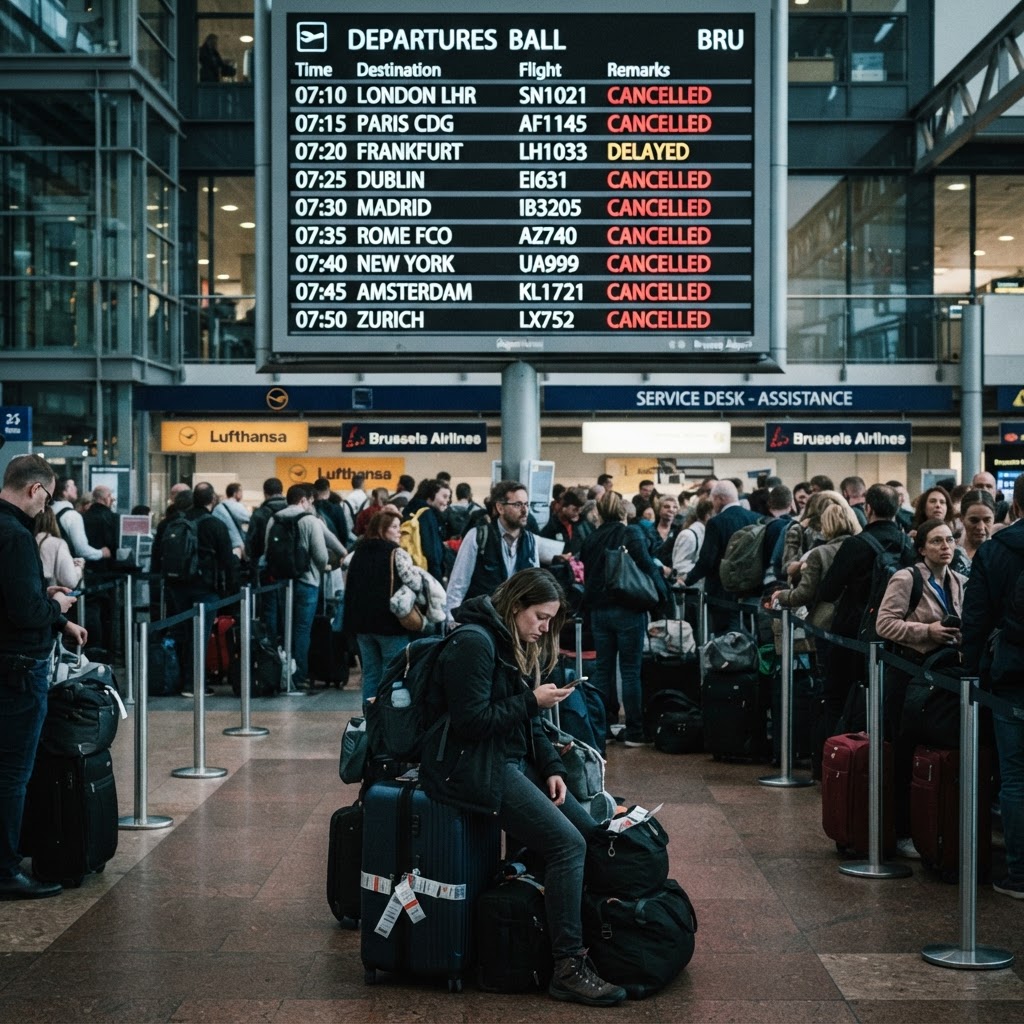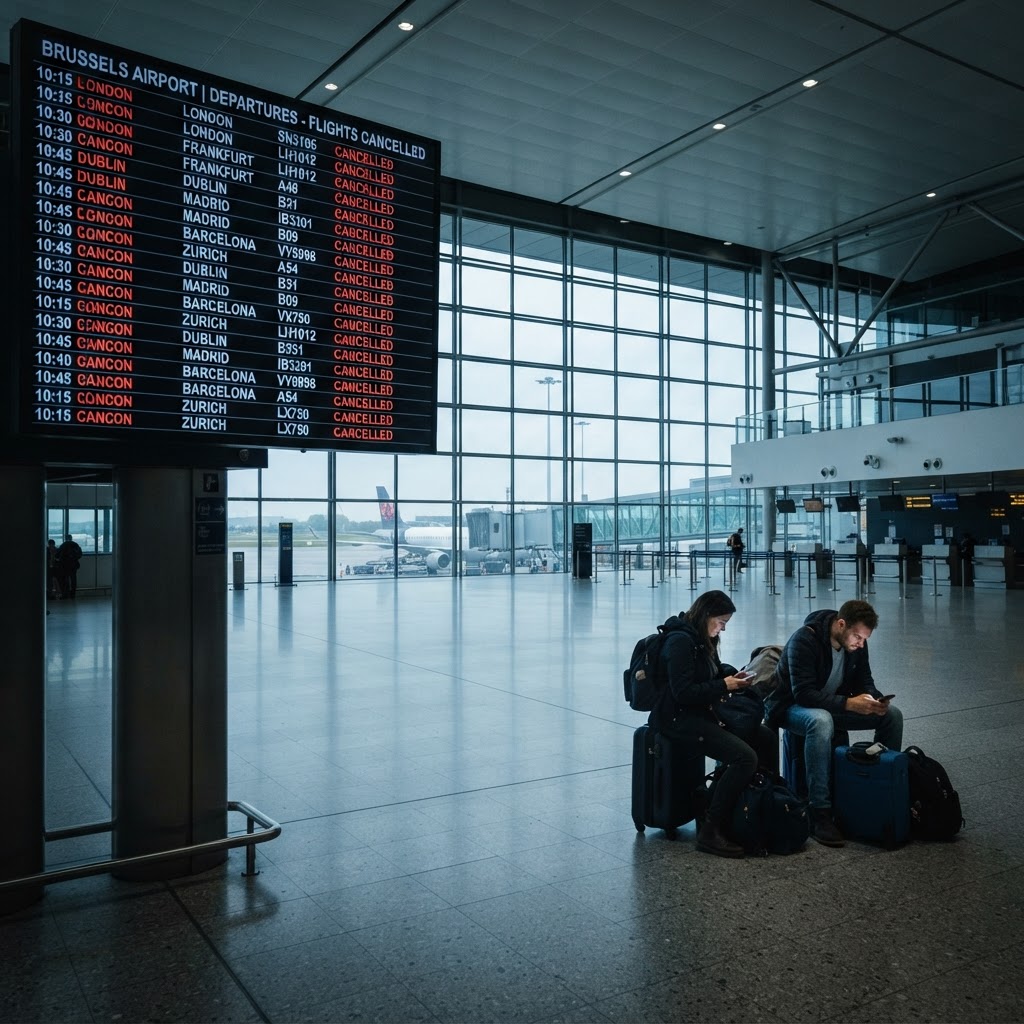
The Anatomy of the Shutdown British travellers with plans to traverse the Channel on Monday, 23 November 2026, face severe complications as Belgium prepares for a day of nationwide industrial action that threatens to bring the country to a complete standstill. The strike, organised by a coalition of trade unions protesting cost-of-living pressures and fiscal policy, is expected to cripple not only the aviation sector but also the domestic rail and public transport networks that facilitate connectivity across the Low Countries.
Brussels Airport (BRU), the country’s primary international gateway, has issued a stark warning to passengers. Management has confirmed that all passenger flights are expected to be cancelled between the hours of 7 a.m. and 9 p.m. local time. The move effectively voids the majority of the day’s schedule, leaving thousands of travellers stranded and requiring urgent rebooking. Similarly, Brussels South Charleroi Airport (CRL), a major hub for low-cost carriers often utilised by UK commuters, has announced a total cessation of all inbound and outbound services for the duration of the strike.
A Ripple Effect Across the Channel For those travelling from London, the implications are immediate. The Eurostar link remains the only viable alternative to flying, yet experts anticipate that the knock-on effects of the nationwide strike will lead to extreme congestion on terrestrial routes. Dr Alistair Finch, a senior logistics analyst, suggests that the sheer scale of the disruption will likely overwhelm local infrastructure. 'When a nation experiences a strike of this magnitude, the failure of air travel is merely the most visible symptom. We are looking at a system-wide blockage that will impact cross-border freight, local commuter trains, and city-centre bus services,' he noted.
The Foreign, Commonwealth and Development Office has not yet updated its official travel advice to Belgium to reflect a 'do not travel' status, but they are strongly advising British citizens currently in Belgium to monitor local media closely. The disruption comes at a sensitive time for European travel, with winter business schedules already reaching peak capacity.
The Standoff Behind the Strike The roots of this industrial action lie in a deepening chasm between the Belgian government’s budgetary objectives and the demands of the labour force. Union representatives argue that persistent inflation has eroded the real-term earnings of public sector workers and those in the transport industry. While the government has signalled a willingness to engage in dialogue, the hardening of positions suggests that this Monday will serve as a significant test of political resolve.
For the average passenger, the administrative burden of such a strike is profound. Airlines are historically cautious about providing immediate compensation for 'extraordinary circumstances' such as nationwide labour disputes, often leaving passengers to navigate the complexities of international consumer law without a clear path to reimbursement. Industry analysts suggest that the chaos will persist well into Tuesday, as fleets are repositioned and crews are brought back into their operational bases.
“The failure of air travel is merely the most visible symptom of a system-wide blockage that will impact everything from freight to local commuter transport.”
Practical Guidance for Disrupted Passengers As the clock ticks toward Monday, the consensus among travel authorities is simple: do not travel to the airport if your flight has not been reconfirmed. Both BRU and CRL have reiterated that their terminal buildings may be subject to restricted access or closures depending on security requirements during the protest. Passengers should check with their specific airline’s portal, as these digital channels will be the primary source of real-time updates regarding flight cancellations and potential waivers on change fees.
While the prospect of total inactivity at Brussels' airports is daunting, the situation highlights the fragility of integrated European travel networks. As the continent shifts towards more sustainable, rail-heavy transport, the vulnerability of these systems to domestic political instability remains a constant consideration for any traveller who relies on seamless, cross-border connectivity.