National Post UK
NHS Initiates Landmark AI Mammogram Trial to Transform Breast Cancer Diagnostics

A £10 million initiative seeks to determine whether machine learning can safely streamline screening processes. By poten

The National Post

HomeTechnology
Technology

NHS Initiates Landmark AI Mammogram Trial to Transform Breast Cancer Diagnostics

A £10 million initiative seeks to determine whether machine learning can safely streamline screening processes. By potentially reducing the reliance on dual-reporting, the study aims to alleviate chronic staff shortages within diagnostic imaging.

JM

Jack Morrison

Technology Editor

Published 24 November 2026·about 4 hours ago 3 min read
Text
Share

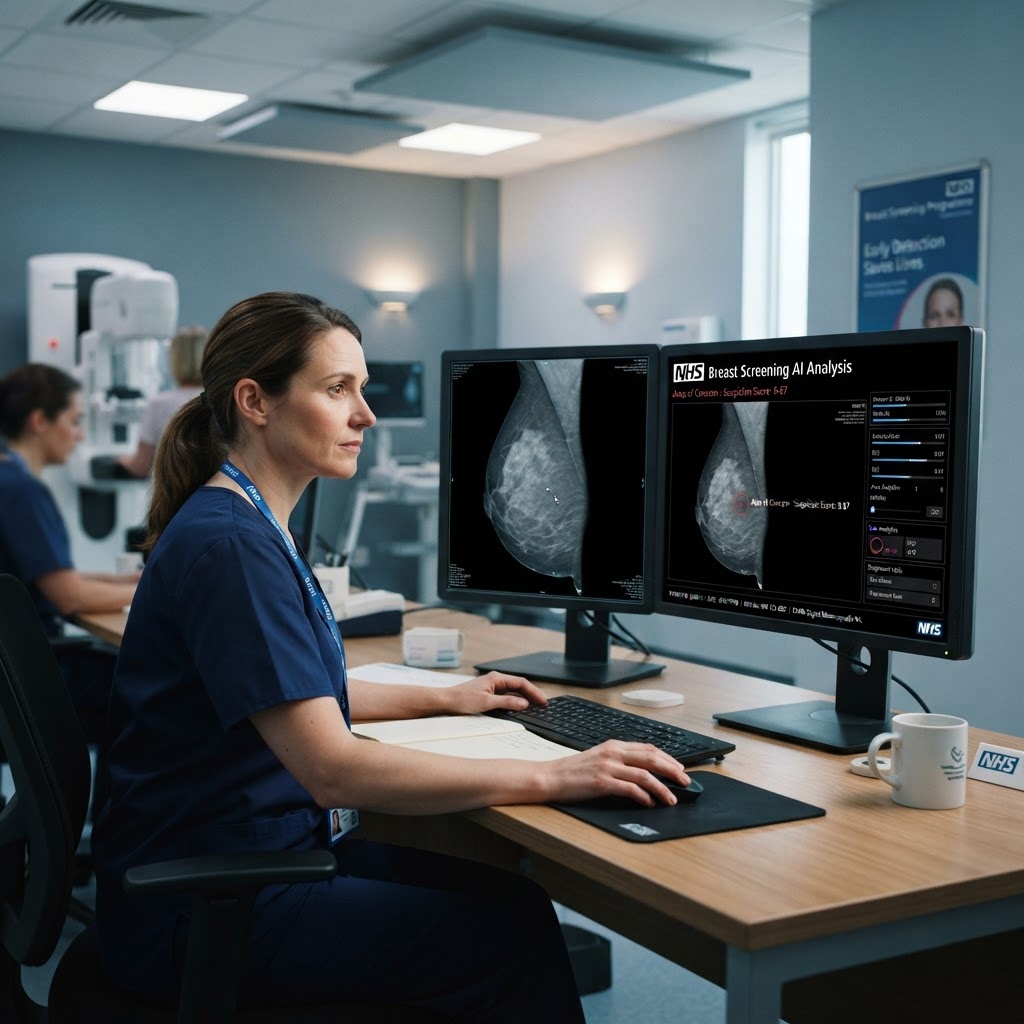
A New Frontier in Early Detection The National Health Service has embarked on a transformative chapter in oncological screening, with the formal launch of a major clinical trial aimed at integrating artificial intelligence into the standard breast cancer diagnostic pathway. As of 23 November 2026, invitations have begun circulating to a cohort of nearly 700,000 women across the United Kingdom, marking the commencement of an ambitious three-year research project that could fundamentally redefine how the NHS manages high-volume imaging.

The Logistics of the EDITH Trial Known as the EDITH trial, the programme is bolstered by a £10 million government grant and is being spearheaded by a consortium of academic heavyweights, including the Universities of Warwick and Cambridge. With 30 diagnostic sites participating, the scope of the study is significant, targeting women between the ages of 50 and 71. The core objective is to evaluate four distinct AI platforms to ascertain whether they can perform as effectively as the current ‘double-reading’ system, in which two radiologists must independently verify each mammogram to ensure accuracy.

Addressing the Radiologist Crisis For years, the NHS has grappled with a significant shortfall in the specialist radiologist workforce, a bottleneck that has historically contributed to diagnostic delays. Currently, the requirement for dual-reading imposes a substantial strain on human resources. Should the AI systems prove capable of safely assisting in or replacing one of these clinical reviews, the implications for efficiency would be profound. By offloading routine negative screenings to sophisticated algorithms, specialists could redirect their expertise toward the complex, indeterminate cases that demand nuanced human judgement.

Clinical Standards and Patient Safety The medical community remains cautiously optimistic, emphasising that any transition to AI-assisted screening must not compromise the integrity of patient outcomes. Experts from Cambridge University Hospitals have stressed that the trial is rigorously designed to ensure that the sensitivity and specificity of breast cancer detection remain at the gold standard. The trial is not merely testing speed, but safety; it is an interrogation of machine learning capabilities within the high-stakes environment of public health. For the thousands of women participating, the trial offers a glimpse into a future where technology acts not as a replacement for clinical care, but as an essential support structure for an overburdened service.

National Implications As the trial gains momentum, the government has signalled that this investment is a critical component of its broader strategy to modernise the NHS through technological innovation. If successful, the widespread adoption of validated AI tools could drastically reduce the time between initial screening and follow-up intervention, potentially saving thousands of lives through earlier detection. In a system facing increasing pressure from an ageing population, the EDITH trial represents more than just a research project; it is a test of whether the NHS can adapt to the digital age without losing the human touch that remains central to the doctor-patient relationship.

TopicsNHSBreast CancerAIHealth TechnologyRadiologyMedical Research
Share

About the Author

JM

Jack Morrison

Technology Editor

Jack Morrison reports for National Post UK with a focus on rigorous analysis and authoritative journalism — a trusted voice across British public life.

Reader Discussion · 8

Subscribers can join the conversation.

SUBSCRIBE TO COMMENT →
F
Fiona Campbell24 Nov

I am a retired GP and I have seen many similar tech initiatives promise the world and underdeliver due to funding cuts. It sounds excellent in theory, but I would like to see the long-term impact on staff workloads before celebrating.

D
David Thorne24 Nov

It is interesting to see the NHS finally embracing AI, but I wonder if the infrastructure is actually ready for this. We need to ensure that the data security is watertight before rolling this out across every trust in the country.

A
Arthur Penhaligon24 Nov

While I appreciate the need for innovation, I do worry about the lack of human oversight in these diagnostic processes. Technology is fine as a secondary check, but it should never replace the expertise of a consultant radiologist.

S
Sarah Jenkins24 Nov

My sister went through a delayed diagnosis last year, so I am very hopeful this technology can pick things up much sooner. Anything that reduces the waiting time for results is a massive win for patients.

R
Robert Miller24 Nov

I remain skeptical about relying on AI for something as critical as cancer diagnostics. Computers make mistakes too, and I would hate to see a machine miss a diagnosis because it wasn't programmed to spot an anomaly.

M
Margaret Hughes24 Nov

It will be interesting to see how this impacts the workload of our radiologists. Hopefully, this allows the professionals to focus their expertise on the more complex cases that really require a human eye.

D
David Thorne24 Nov

I am all for innovation, but we must ensure these systems are rigorously tested for algorithmic bias before being rolled out nationwide. Patient safety should always trump the speed of digital transformation.

S
Sarah Jenkins24 Nov

As someone who has been through the screening process, anything that speeds up the wait for results is a welcome change. The anxiety of waiting is the worst part, so I really hope this technology makes a tangible difference.

More from Technology

Most Read in Technology

Morning Briefing

The day's top stories, before 7am

Join 40,000 readers who start their morning with National Post UK.