National Post UK
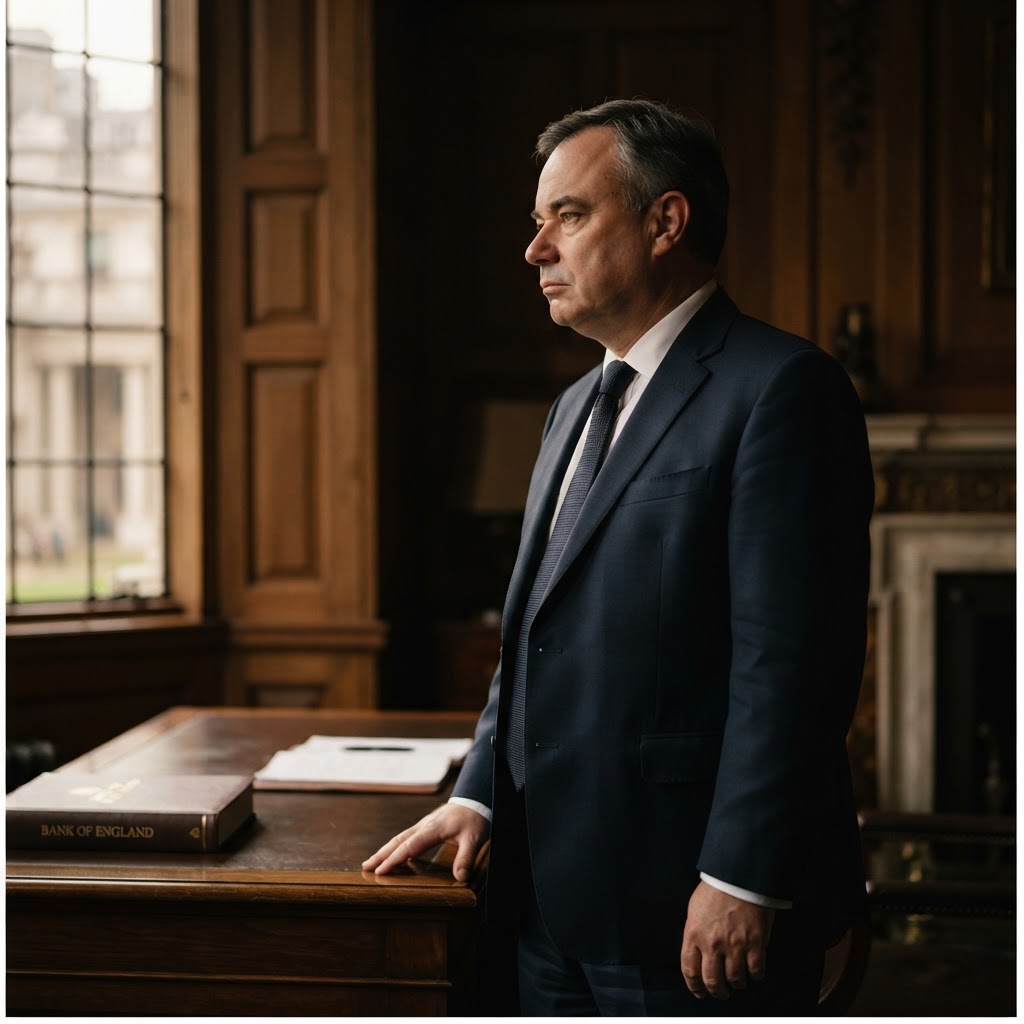
Huw Pill Warns of Prolonged Interest Rate Path as Inflation Pressures Mount

The Bank of England’s Chief Economist has signalled that the current tightening cycle is far from complete. With the bas

The National Post

HomeFinance
Finance

Huw Pill Warns of Prolonged Interest Rate Path as Inflation Pressures Mount

The Bank of England’s Chief Economist has signalled that the current tightening cycle is far from complete. With the base rate now sitting at 4%, policymakers are braced for further increases to curb persistent price instability across the British economy.

AP

Alice Pemberton

Finance Correspondent

Published 16 November 2026·about 19 hours ago 3 min read
Text
Share

The Path Toward Higher Borrowing Costs In a sobering assessment for households and businesses alike, the Bank of England’s Chief Economist, Huw Pill, has confirmed that the central bank’s mission to suppress inflation necessitates a more stringent monetary trajectory. Following the Monetary Policy Committee’s decision on 5 November 2026 to elevate the base interest rate to 4%, Mr Pill’s commentary has effectively quelled speculation regarding an early pause in the current tightening cycle. The decision to increase rates by 0.25 percentage points was passed by a decisive 8-1 margin, reflecting a near-unanimous consensus within Threadneedle Street that the corrosive nature of entrenched inflation requires a forceful, sustained response.

The Weight of Energy and Global Volatility The economic climate in late 2026 remains dominated by the stubborn legacy of global supply chain disruptions and volatile energy markets. While the headline rate of inflation has shown signs of softening from its previous peaks, the underlying pressures remain acute. Mr Pill articulated that the Bank has 'further to go' before the committee can be satisfied that inflationary expectations are anchored near the 2% target. This hawkish outlook is heavily predicated on the ongoing scale and duration of energy price shocks, which continue to act as a significant headwind to domestic recovery. The Bank is acutely aware that even as global commodity markets stabilise, the second-round effects—whereby price rises migrate into wage demands and service costs—threaten to extend the duration of the current malaise.

A Divided View on Monetary Policy While the 8-1 vote demonstrates a strong commitment to stability, the lone dissenter serves as a reminder of the difficult balancing act facing the Monetary Policy Committee. As the Bank navigates a narrowing path between aggressive tightening and the risk of stifling economic output, the scrutiny on its next decision, scheduled for 17 December 2026, will be intense. Economists note that the lag time between policy adjustments and their manifestation in the real economy means that the impact of the recent 0.25 percentage point rise has yet to fully filter through to mortgage holders and corporate balance sheets. However, the prevailing view in the City is that the Bank remains prioritised on its inflation mandate, even at the cost of transient growth.

Market Reaction and Long-Term Outlook Financial markets have responded to these signals by recalibrating their expectations for future peak rates. Investors are now pricing in a trajectory that sees the base rate remaining elevated well into 2027. This shift in sentiment underscores the difficulty of the task ahead. For many, the era of ‘cheap money’ that defined the post-financial crisis decade is now firmly in the rearview mirror. The Bank of England is not merely fighting against current fluctuations; it is managing a structural realignment of the UK economy that requires higher borrowing costs to recalibrate demand. As the December meeting approaches, all eyes remain on the evolving data flow, particularly in the labour market, which continues to provide the most significant signal regarding wage-push inflation.

TopicsBank of EnglandInterest RatesUK EconomyHuw PillMonetary PolicyInflationFinance
Share

About the Author

AP

Alice Pemberton

Finance Correspondent

Alice Pemberton reports for National Post UK with a focus on rigorous analysis and authoritative journalism — a trusted voice across British public life.

Reader Discussion · 12

Subscribers can join the conversation.

SUBSCRIBE TO COMMENT →
E
Eleanor Rigby16 Nov

Inflation is a tax on everyone, particularly the most vulnerable. While interest rates are blunt tools, they remain one of the few levers we have left to restore some semblance of stability.

J
James O'Connell16 Nov

My small business is barely keeping its head above water as it is. Another rate hike will likely force us to look at layoffs, which is the last thing I want to do.

M
Margaret Foster16 Nov

Finally someone in the Bank of England is being honest about the timeline. I just wish they had acted more decisively eighteen months ago rather than calling it transitory.

D
David Thorne16 Nov

I am not convinced that hiking rates further is the right medicine for supply-side inflation. We are just punishing working families while corporate profits remain high.

S
Sarah Jenkins16 Nov

Pill is doing what he has to do to get a grip on inflation. It is painful in the short term, but letting prices spiral out of control would be far worse for everyone in the long run.

A
Arthur Penhaligon16 Nov

It feels like we are being squeezed from every direction. I have just had to renew my mortgage and the difference in monthly payments is frankly terrifying.

C
Catherine Hedges16 Nov

My fixed-rate deal ends in six months and reading this has me genuinely worried. It is hard to plan for the future when the goalposts keep shifting like this.

M
Marcus Vane16 Nov

This is a necessary bitter pill to swallow. While it is certainly painful for those with debt, allowing inflation to embed itself in the economy would be far more damaging to our long-term stability.

E
Eleanor Rigby16 Nov

I am curious to see how much of this is down to corporate price-gouging rather than just monetary policy. Raising rates affects the average household far more than it seems to affect the massive firms posting record profits.

D
David Thorne16 Nov

The disconnect between these academic projections and the reality on the high street is staggering. Small businesses like mine are already struggling to survive with the current rates; this prolonged path feels like a death sentence for growth.

S
Sarah Jenkins16 Nov

Pill is doing what he has to do. If the Bank of England doesn't get a firm grip on inflation now, we will be dealing with a much worse cost-of-living crisis in the long run.

J
James Sterling16 Nov

It feels like we are being punished for inflation that was largely driven by supply shocks rather than consumer demand. My mortgage payments are already unsustainable, and another hike might just push many of us over the edge.
More from Finance

Most Read in Finance

Morning Briefing

The day's top stories, before 7am

Join 40,000 readers who start their morning with National Post UK.