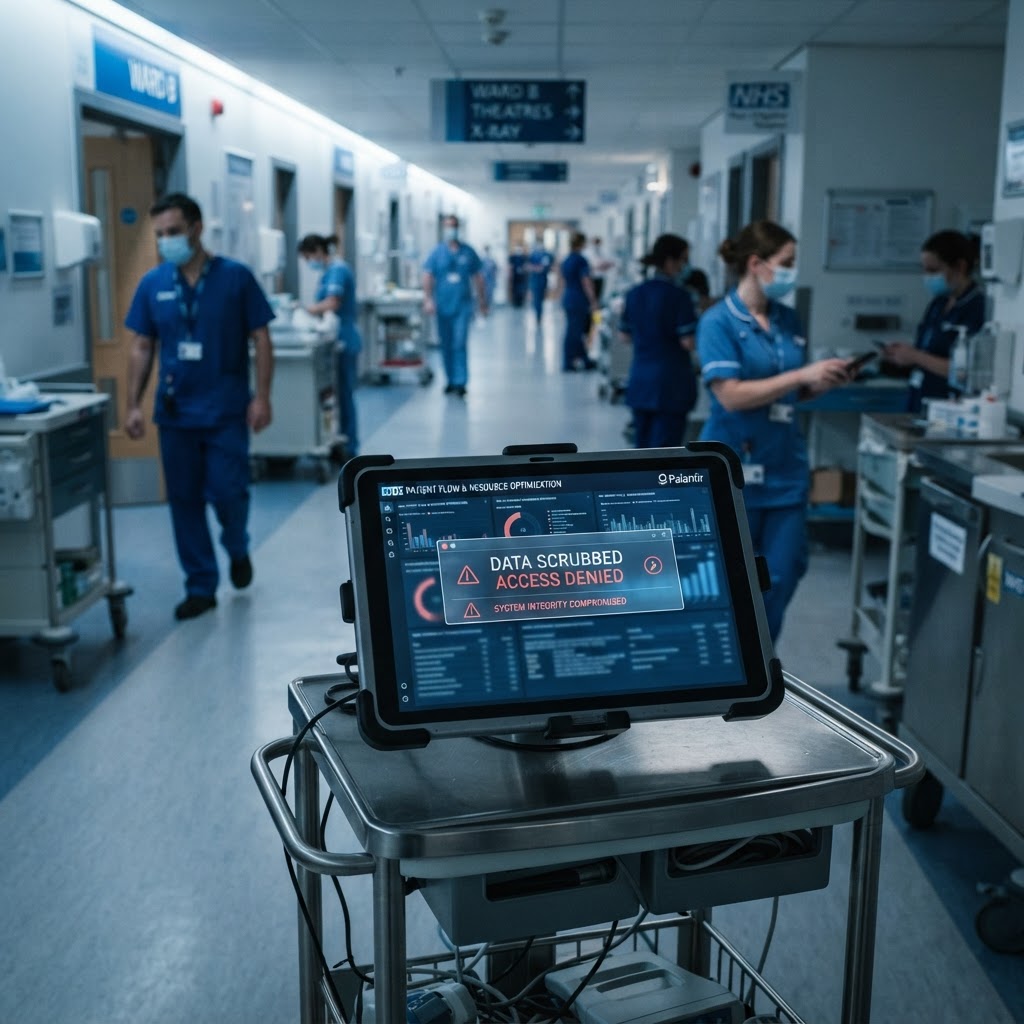
The Anatomy of a Digital Collapse The resilience of the National Health Service faced an unprecedented test this week as a widespread Microsoft system outage crippled digital infrastructure across England. On 13 November 2026, the fragility of the health service’s interconnected IT landscape became starkly apparent when administrative and clinical systems went dark, forcing trusts to resort to legacy paper-based contingencies. The disruption, which originated from a global software update error, cascaded through primary and secondary care settings, halting electronic patient record systems and scheduling software upon which modern medical practice has become entirely dependent.
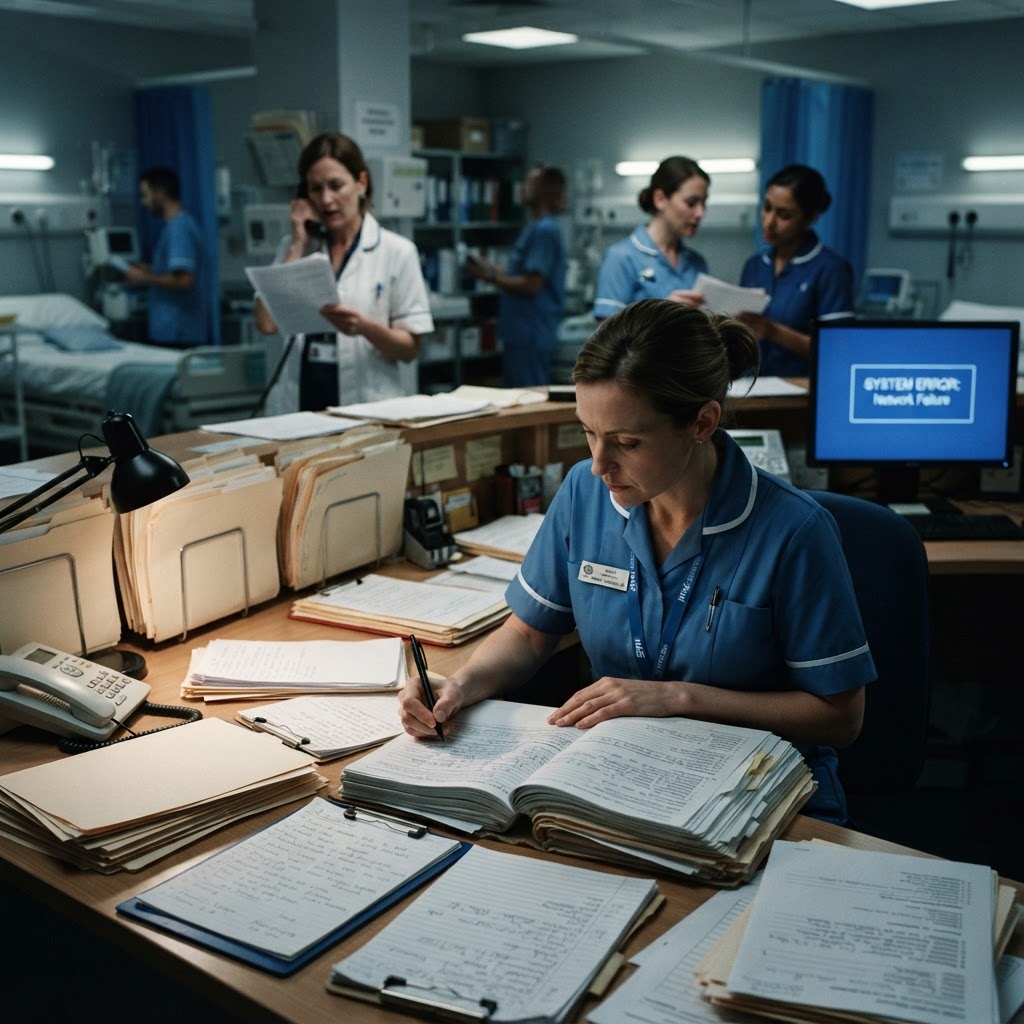
NHS England officials were quick to activate emergency protocols, confirming that local services had moved to manual, paper-based systems to ensure the continuity of life-critical services. While the immediate impulse might suggest chaos, hospital staff demonstrated the pragmatic adaptability that has become a hallmark of the health service under duress. Clinicians, nurses, and administrative personnel reverted to physical charts and manual logs to manage patient flow, a transition that, while taxing, prevented the collapse of critical service delivery during the peak of the technical paralysis.
Clinical Continuity Under Pressure The reliance on analogue systems serves as both a fail-safe and a stark reminder of the digital age's vulnerabilities. Dr. Alistair Finch, a senior consultant in acute medicine, observed that the return to paper was a shock to a workforce accustomed to instantaneous digital documentation. Yet, he noted that the basic tenets of patient safety remained robust throughout the ordeal. By mid-afternoon on 13 November, as reports began to emerge of a gradual stabilization in systems, the focus shifted to clearing the backlog of patient appointments and administrative tasks that had accumulated in the void of the outage.
Patients seeking urgent intervention were advised to continue utilising 999 services as normal, a directive that underscores the compartmentalisation of the IT crisis. The core of the emergency infrastructure—ambulance dispatch and accident and emergency triaging—remains insulated by parallel systems, though the secondary impact of the outage continues to create friction in pharmacy access and routine GP referrals. The government has pledged an internal inquiry into the incident, particularly regarding how cloud-based dependencies are managed across the public sector.
Infrastructure and the Cost of Efficiency This incident is likely to renew the debate surrounding the 'digital-first' strategy adopted by the NHS over the past decade. While the digitisation of health records has undeniably improved efficiency, accuracy, and coordination between disparate trusts, it has also created a singular point of failure. Cybersecurity experts have long warned that as the health service deepens its integration with third-party software providers, the risk of systemic paralysis increases proportionally. The fact that a single software update could bring the country’s largest employer to its knees is a sobering prospect for policymakers tasked with the long-term digitisation of the nation's health infrastructure.
As the service begins the arduous process of digitising the manual records captured during the downtime, the health secretary is under increasing pressure to outline a more robust disaster recovery framework. The primary concern is not merely the return of functionality but the guarantee that such a global disruption cannot again compromise the sanctity of patient data or the efficacy of care delivery. For now, the resilience of the staff has been the shield that protected the patient from the machine, but the government is clearly being put on notice that future upgrades must come with greater systemic safeguards.
“The fact that a single software update could bring the country’s largest employer to its knees is a sobering prospect for policymakers tasked with the long-term digitisation of the nation's health infrastructure.”