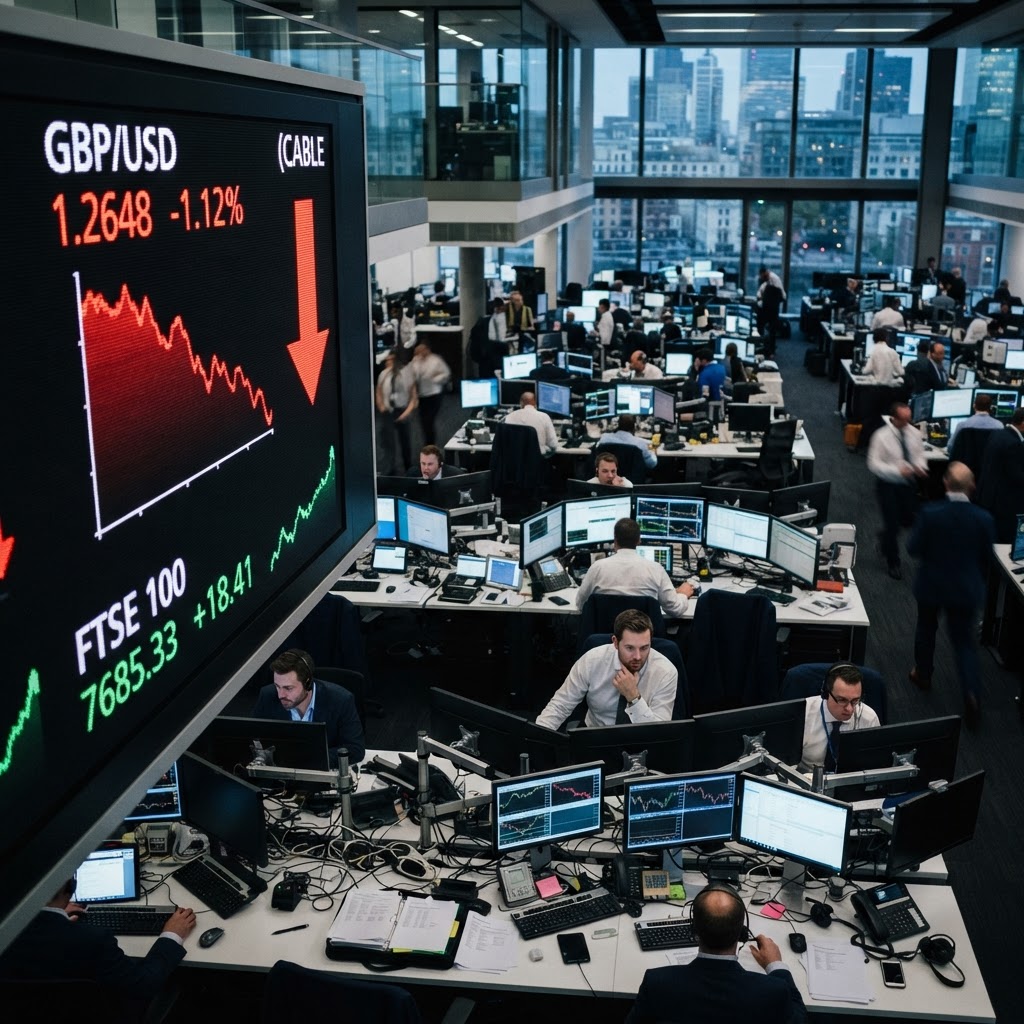
A Shift in Monetary Strategy The Monetary Policy Committee (MPC) at the Bank of England moved to tighten financial conditions on 5 November 2026, raising the Bank Rate by 25 basis points to 4%. This decision, the first movement in over three years, reflects an institution grappling with the dual pressures of persistent inflationary indicators and the cooling effects of a global energy shock. With a vote of 8-1, the committee signaled a consensus on the necessity of intervention, though the dissenting voice hints at the internal tension regarding the appropriate trajectory for future policy.
The Shadow of the Middle East The primary catalyst for this shift remains the volatile energy landscape. Geopolitical instability in the Middle East has disrupted supply chains and placed upward pressure on global oil and gas prices. For the British economy, which remains sensitive to imported energy costs, this has translated into a sharp increase in household and industrial utility bills. Inflation, which measured 3.5% in September 2026, is no longer considered a temporary anomaly. Current projections from the Bank of England suggest that consumer prices could reach 5% by the middle of next year, a figure that remains significantly above the 2% target mandated by the government.
The Critique of Timidity Not all observers are convinced that the Bank of England has done enough to stem the tide. The National Institute of Economic and Social Research (Niesr) has emerged as a vocal critic of the 0.25 percentage point increase, characterising the move as a 'timid' response. According to Niesr analysts, failing to take more decisive action could solidify inflationary expectations within the UK labour market and service sector. There is a palpable concern that by acting with excessive caution, the Bank risks allowing inflation to become a structural feature of the economy rather than a transitory cycle.
Economic Implications for the UK For the average household, the implications of a 4% rate are substantial. Mortgage lenders are expected to reprice fixed-rate products in the coming weeks, and the cost of credit for small and medium-sized enterprises will undoubtedly climb. While the Bank of England has attempted to soften the impact of its guidance, suggesting this hike does not necessarily signal the beginning of a prolonged and aggressive series of increases, the markets remain unconvinced. Investors are now pricing in a period of elevated interest rates, a reality that presents a stark contrast to the era of ultra-low borrowing costs that defined the preceding decade.
A Balancing Act The difficulty for Governor Andrew Bailey and his colleagues is balancing the risk of runaway inflation against the threat of a stagnating domestic economy. High interest rates are a blunt tool; they effectively reduce consumer demand but do little to address the supply-side issues currently driving energy costs. As the UK heads into the winter months, the economic outlook remains shrouded in uncertainty. If energy prices continue to surge, the MPC may find itself with little choice but to adopt a more hawkish stance, potentially leading to further increases in the Bank Rate early in 2027.
Ultimately, the challenge facing the UK is one of resilience. The resilience of the consumer, the flexibility of the labour market, and the ability of policymakers to navigate a fragmented global landscape will determine whether this 4% rate is sufficient to return inflation to the target level, or merely the first step in a difficult journey toward stabilisation.