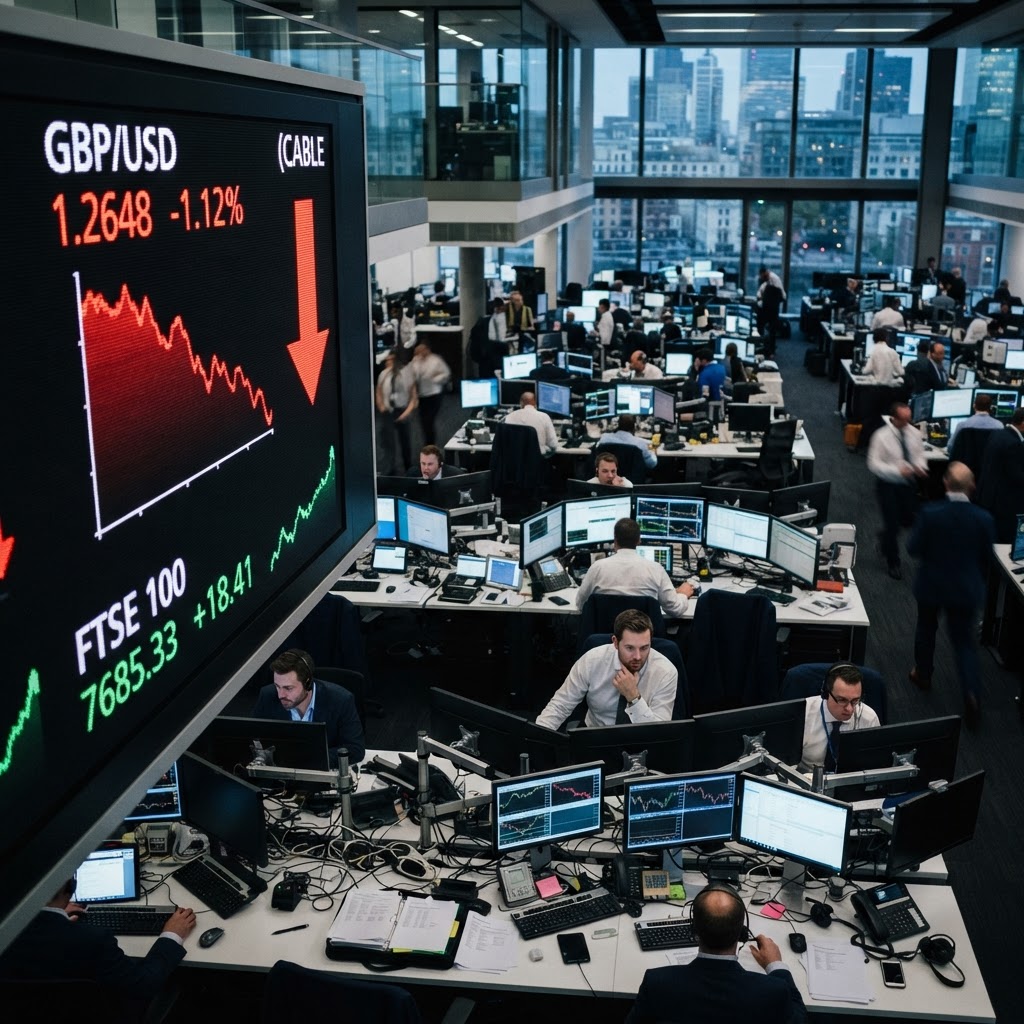
A Reversal of Fortune for Sterling The British Pound endured a bruising session in the global currency markets yesterday, retreating 0.8 per cent to settle at approximately 1.3332 US dollars. This decline marks a significant point of tension for the currency, which had spent much of the autumn searching for a firm footing against the dominant greenback. The downward pressure is largely symptomatic of a broader resurgence in the US Dollar, as international investors recalibrate their expectations regarding the Federal Reserve’s monetary policy trajectory.
The Fed Factor At the heart of the current volatility is a marked shift in market sentiment concerning the Federal Reserve’s December meeting. Economic indicators surfacing throughout the week have bolstered the case for further tightening, prompting a wave of speculation that the American central bank may opt for a rate hike before the calendar year concludes. This hawkish turn has effectively widened the yield gap between US Treasuries and UK Gilts, drawing capital away from sterling-denominated assets and into the safety of the dollar.
Scotiabank analysts, monitoring the technical thresholds of the currency pair, have issued a note of caution. According to their latest assessment, the failure of the Pound to hold above the psychological support level of 1.3400 represents a concerning breakdown in momentum. Should the currency remain suppressed beneath this threshold, market participants should prepare for a period of extended weakness as technical traders trigger further sell orders.
Domestic Policy in Flux The movement in sterling occurs against a backdrop of complex domestic economic management. Earlier this month, the Bank of England moved to raise the UK base rate to 4 per cent, an action intended to dampen inflationary pressures that have proven stickier than many policymakers originally anticipated. Governor Andrew Bailey and his colleagues on the Monetary Policy Committee are now walking a tightrope between curbing inflation and ensuring the nascent economic recovery is not suffocated by elevated borrowing costs.
While the Bank of England’s decision to tighten policy has provided a degree of support to sterling, the market is increasingly focused on the diminishing returns of such actions. If the US Federal Reserve continues to outpace the Bank of England in its quest to bring down inflation, the sterling-dollar exchange rate may struggle to regain its previous highs in the near term.
FTSE 100 Demonstrates Resilience Contrasting with the turbulence seen in the foreign exchange markets, the FTSE 100 index offered a semblance of stability for London-based investors. The blue-chip index defied broader market jitters to close 0.12 per cent higher. This resilience is notable, particularly given that the UK’s leading companies are heavily exposed to international trade. The index’s ability to hold ground in the face of currency fluctuations suggests that domestic corporate earnings remain robust, providing a necessary buffer against the macroeconomic headwinds currently buffetting the City.
Equity strategists attribute this stability to the composition of the FTSE 100, which remains heavily weighted towards energy and commodity stocks. As global uncertainty persists, investors appear to be favouring the tangible cash flows of these sectors over the speculative risks inherent in currency volatility. Nonetheless, the disconnect between the strength of the equity market and the fragility of the currency is a development that analysts at leading City institutions are watching with growing interest.
“The failure of the Pound to hold above the psychological support level of 1.3400 represents a concerning breakdown in momentum that could expose the currency to further downside.”