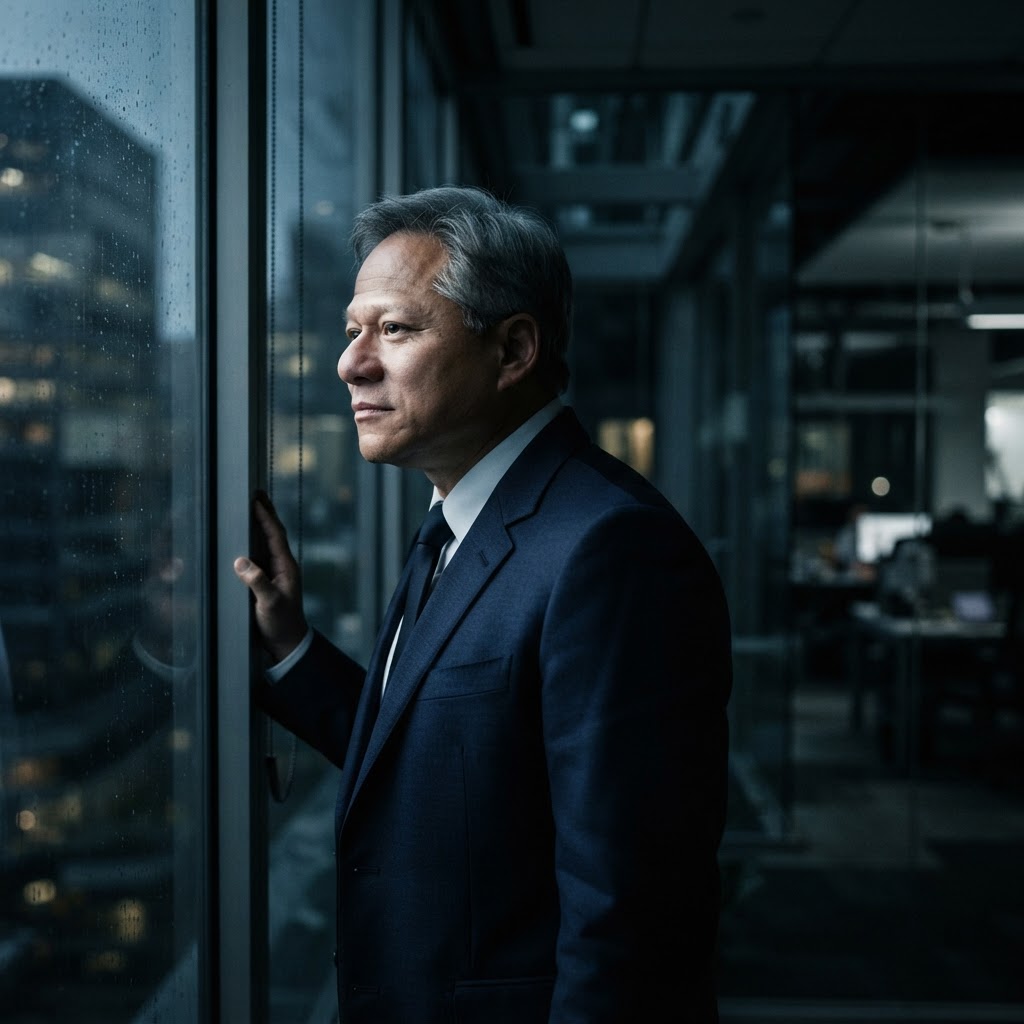
The Silicon Valley giant faces an unprecedented crisis as reports emerge of federal scrutiny into its chief executive. The development has sent shockwaves through technology exchanges, potentially erasing a quarter of a trillion dollars in market capitalisation.
The Shadow of Espionage
The geopolitical equilibrium upon which the modern semiconductor industry rests has been dealt a staggering blow. In a revelation that has sent shockwaves from the trading floors of the City of London to the boardrooms of Silicon Valley, Nvidia, the crown jewel of the artificial intelligence revolution, finds itself mired in a federal investigation of profound implications. Reports confirming that the Federal Bureau of Investigation is scrutinising CEO Jensen Huang over his alleged associations with an individual suspected of intelligence activities for the People's Republic of China have shattered the company's veneer of invincibility.
A Financial Tectonic Shift
For investors, the timing could not be more perilous. Nvidia, which has been the primary engine of the current market rally, has witnessed a precipitous decline in its valuation. Analysts are projecting a potential evaporation of $250 billion in market capitalisation, a figure that dwarfs the annual GDP of several small nations. This is not merely a corporate governance crisis; it is a systemic risk. As the firm struggles to contain the fallout, the broader Nasdaq has begun to show signs of structural fatigue, with tech-heavy portfolios across the United Kingdom and Europe facing significant rebalancing pressures.
The Geopolitical Tightrope
The alleged connection at the heart of this investigation underscores the precarious tightrope walked by Western technology firms operating in the shadow of the US-China trade war. For years, the chipmaker has navigated increasingly complex export controls and international regulatory scrutiny, yet this development introduces a human element that is far more difficult to mitigate than trade tariffs. The involvement of the FBI suggests that the allegations extend beyond mere commercial impropriety into the sphere of national security. Such an investigation is rarely initiated without substantial intelligence, and the implications for Nvidia's future access to global markets are, to put it mildly, severe.
Market Volatility and Institutional Anxiety
In the City, institutional sentiment has shifted from guarded optimism to pronounced apprehension. Fund managers are now questioning the adequacy of Nvidia’s internal compliance protocols. The company has long been considered a benchmark for AI-driven growth; however, this latest scandal has forced a reassessment of its risk profile. The tech sector, already grappling with slowing demand and inflationary headwinds, now faces the added burden of executive instability. While the company maintains that it is cooperating with authorities, the silence from the CEO’s office has only served to fuel market paranoia.
Looking Ahead
As the international community awaits further details, the debate regarding corporate sovereignty in an era of globalised supply chains has reignited. Policymakers in Westminster and Washington are likely to use this crisis as a justification for further decoupling, particularly in the high-stakes sector of advanced microprocessors. Whether this is an isolated incident or the beginning of a sustained investigation into the entire semiconductor industry remains the paramount question. For now, Nvidia stands at the precipice, its future tied not just to the speed of its chips, but to the integrity of its leadership in an increasingly fragmented global order.